
Introduction
If you’re shopping for an off-road vehicle or researching outdoor adventure machines, you’ve probably come across the terms UTV and ATV. At first glance, they seem similar—both are designed for rough terrain, both are popular for work and recreation, and both are commonly used on farms, trails, and job sites. Because of these similarities, many people assume they’re interchangeable.
That assumption causes a lot of confusion, especially for first-time buyers.
Although they look/sound similar, they serve completely different purposes.
Understanding the difference between UTV vs ATV can save you money, improve safety, and help you choose the right vehicle for your needs. In this guide, we’ll clearly explain what each one is, how they’re used, key differences, real-life examples, and simple rules to help you decide which is best for you. 🚜🏕️
What Is a UTV?
Meaning and Definition
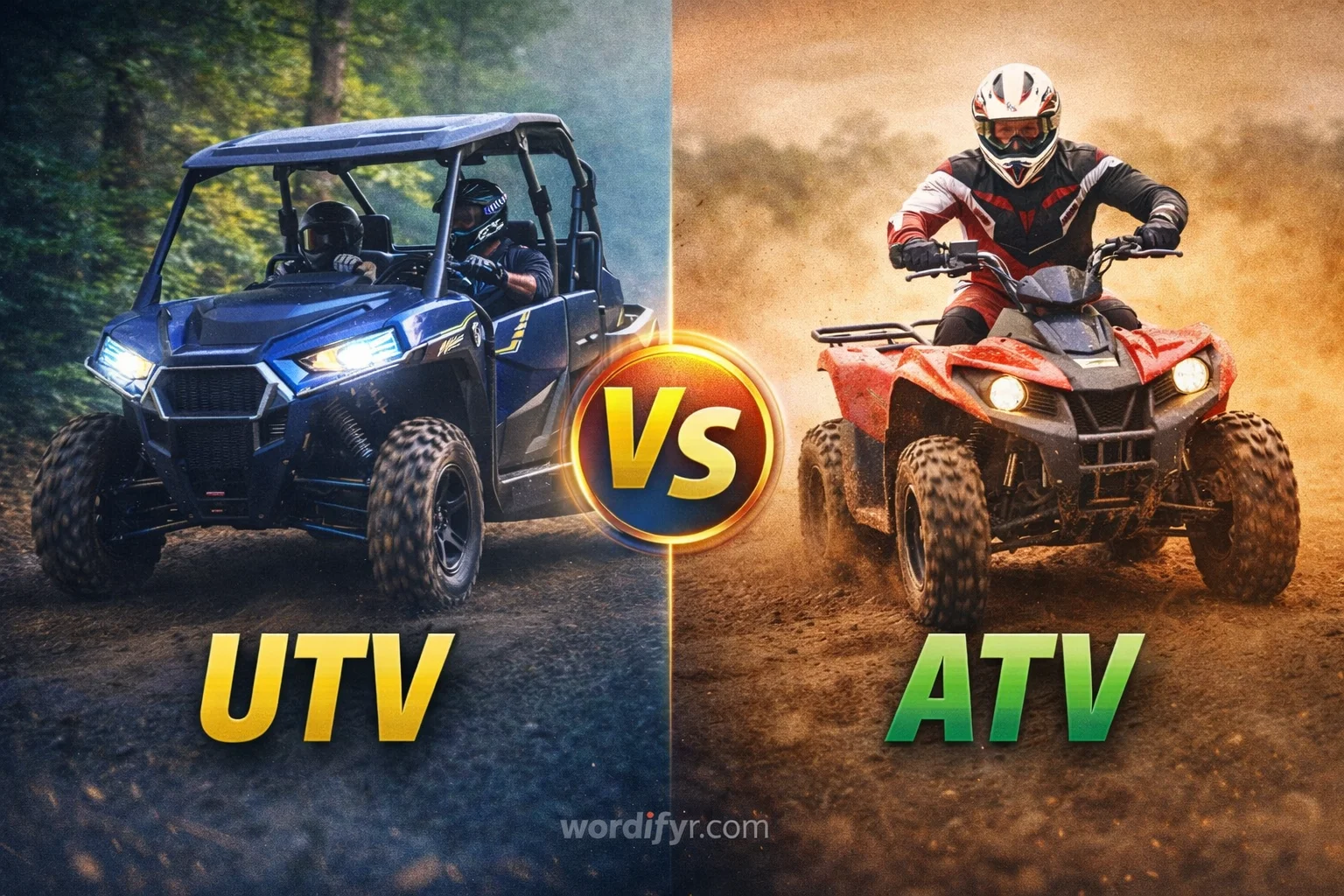
UTV stands for Utility Task Vehicle. It is a side-by-side off-road vehicle designed primarily for work, hauling, and group transportation rather than solo riding.
A UTV typically has:
- Side-by-side seating
- A steering wheel
- Seat belts
- A cargo bed in the back
- Roll cage or protective frame
In simple terms:
- UTV = work-focused, multi-passenger off-road vehicle
How It’s Used
UTVs are commonly used for:
- Farming and agriculture
- Construction and industrial work
- Hunting and outdoor expeditions
- Property maintenance
- Recreational trail riding with passengers
Because of their stability and cargo capacity, UTVs are ideal for tasks that require tools, supplies, or multiple people.
Where UTVs Are Used
UTVs are popular in:
- United States
- Canada
- Australia
- Rural and agricultural regions worldwide
Many states allow UTVs on private land, and some allow limited road use with proper registration.
Examples in Sentences
- “The farmer uses a UTV to carry equipment across the field.”
- “We took a UTV on the mountain trail with four passengers.”
- “UTVs are perfect for job sites and outdoor work.”
Short Usage History
UTVs became popular in the early 2000s as demand grew for a safer, more versatile alternative to traditional ATVs—especially for work environments.
What Is an ATV?
Meaning and Definition
ATV stands for All-Terrain Vehicle. It is a single-rider (sometimes two-up) off-road vehicle that is controlled using handlebars, similar to a motorcycle.
Key features of an ATV include:
- Straddle-style seating
- Handlebar steering
- No enclosed cabin
- Smaller frame
- High maneuverability
In simple terms:
- ATV = rider-focused, agile off-road vehicle
How It’s Used
ATVs are commonly used for:
- Recreational trail riding
- Racing and sport riding
- Light utility work
- Hunting and scouting
- Exploring narrow or rugged terrain
ATVs are designed for speed, agility, and control, making them popular with thrill-seekers.
Where ATVs Are Used
ATVs are widely used in:
- United States
- Europe
- Asia
- Off-road parks and trails worldwide
They are usually restricted to off-road use only.
Examples in Sentences
- “He rides his ATV on forest trails every weekend.”
- “ATVs are great for navigating narrow paths.”
- “She learned to ride an ATV at a young age.”
Regional and Legal Notes
Many regions have age restrictions, helmet laws, and safety regulations specifically for ATVs due to their handling style.
Key Differences Between UTV and ATV
Understanding UTV vs ATV becomes easy once you compare them side by side.
Quick Bullet-Point Differences
- UTV is built for work and passengers
- ATV is built for individual riding
- UTVs use a steering wheel
- ATVs use handlebars
- UTVs have seat belts and roll cages
- ATVs rely on rider balance and skill
- UTVs carry cargo more efficiently
- ATVs excel in tight, technical terrain
Comparison Table (Mandatory)
| Feature | UTV | ATV |
|---|---|---|
| Full Name | Utility Task Vehicle | All-Terrain Vehicle |
| Seating | Side-by-side (2–6 people) | Single rider (sometimes 2) |
| Steering | Steering wheel | Handlebars |
| Safety | Seat belts, roll cage | Helmet recommended |
| Cargo Capacity | High (rear cargo bed) | Limited |
| Best For | Work, hauling, groups | Recreation, agility |
| Terrain | Wide trails, farms | Narrow trails, hills |
| Learning Curve | Easy | Moderate to high |
Real-Life Conversation Examples
Dialogue 1
A: “Should I buy a UTV or ATV for my farm?”
B: “A UTV would be better for hauling tools and supplies.”
🎯 Lesson: UTVs are ideal for work tasks.
Dialogue 2
A: “Why do racers prefer ATVs?”
B: “They’re lighter and more agile.”
🎯 Lesson: ATVs are built for performance riding.
Dialogue 3
A: “Can my family ride together?”
B: “Only in a UTV—ATVs are mostly solo.”
🎯 Lesson: UTVs support multiple passengers.
Dialogue 4
A: “Which is safer for beginners?”
B: “UTVs, because of seat belts and stability.”
🎯 Lesson: UTVs offer more built-in safety features.
Dialogue 5
A: “Why does my ATV feel harder to control?”
B: “It requires body balance and riding technique.”
🎯 Lesson: ATVs demand more rider skill.
When to Use UTV vs ATV
Use a UTV When:
- You need to carry tools or cargo
- You plan to ride with passengers
- Safety and stability are priorities
- You’re working on farms, job sites, or large properties
- You want comfort for long rides
Memory Trick:
👉 UTV = Utility + Team
Use an ATV When:
- You want solo adventure riding
- You enjoy speed and maneuverability
- Trails are narrow or technical
- You prefer a motorcycle-style experience
- Storage and transport space is limited
Memory Trick:
👉 ATV = Action + Thrill
US vs International Usage
- In the US, both UTVs and ATVs are widely available
- In Europe, ATVs are more common for recreation
- UTV regulations vary by state and country
Always check local laws before riding.
Fun Facts or History
1. UTVs Are Often Called Side-by-Sides
This nickname comes from the seating position, not the drivetrain.
2. ATVs Came First
ATVs became popular in the 1970s, while UTVs evolved later to meet work demands.
Conclusion
The debate between UTV vs ATV isn’t about which one is better—it’s about which one is right for you. UTVs excel in work, safety, and group use, while ATVs shine in agility, recreation, and trail riding. Both are powerful off-road machines, but they serve very different purposes. By understanding their differences, you can make a confident, informed choice that fits your lifestyle and terrain. Next time someone mentions UTV and ATV, you’ll know exactly which one they mean—and why it matters! 🚀