Introduction
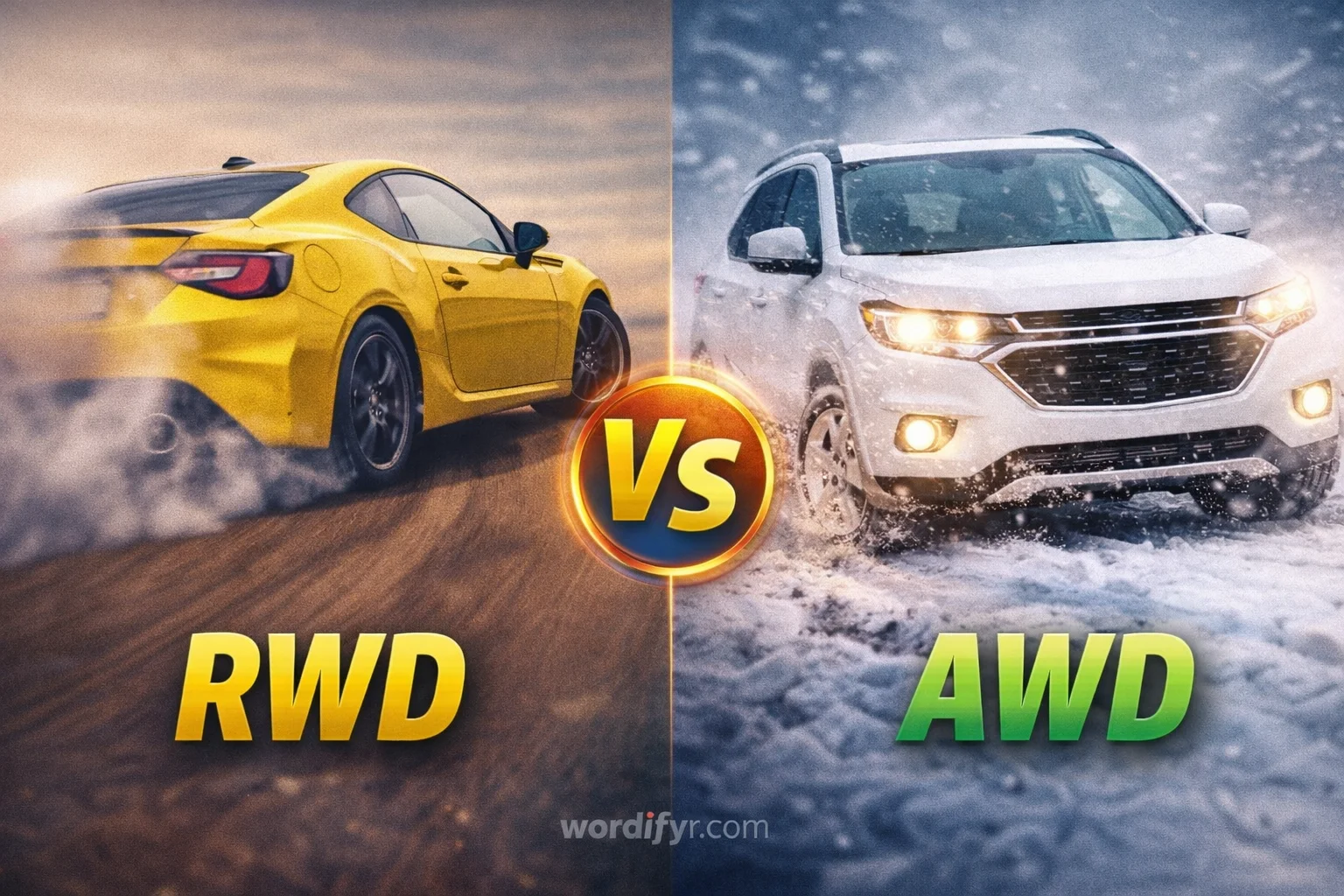
If you’re shopping for a new car or comparing different vehicles, you’ve probably come across the terms RWD vs AWD. At first glance, they may seem like confusing automotive jargon, but understanding the difference can have a significant impact on your driving experience, safety, and long-term ownership costs.
Many people assume that Rear-Wheel Drive (RWD) and All-Wheel Drive (AWD) are simply different ways to power a car. While both systems transfer engine power to the wheels, they do so in very different ways and are designed for different driving conditions.
The confusion often arises because both drivetrains affect traction, handling, acceleration, and vehicle stability. Since both can be found in sedans, SUVs, sports cars, and luxury vehicles, it’s easy to think one is simply an upgraded version of the other. In reality, each drivetrain has its own strengths, weaknesses, and ideal use cases.
Although they look and sound similar, they serve completely different purposes.
In this comprehensive guide, you’ll learn exactly what RWD vs AWD means, how each drivetrain works, their advantages and disadvantages, real-world driving examples, and how to choose the best option based on your lifestyle and climate.
What Is RWD?
Meaning and Definition
RWD stands for Rear-Wheel Drive. In an RWD vehicle, the engine sends power exclusively to the rear wheels, while the front wheels are responsible only for steering.
Simply put:
Rear-Wheel Drive = The rear wheels propel the vehicle forward.
By separating steering and propulsion, RWD creates a balanced driving experience that many enthusiasts appreciate.
How RWD Works
An RWD drivetrain follows a straightforward process:
- The engine produces power.
- The transmission transfers that power.
- A driveshaft carries it to the rear axle.
- The rear differential distributes power to the rear wheels.
- The front wheels remain dedicated to steering.
Because the front wheels aren’t responsible for delivering engine power, steering often feels more precise, especially during spirited driving.
Where RWD Is Commonly Used
Rear-Wheel Drive is most commonly found in:
- Sports cars
- Performance sedans
- Luxury vehicles
- Pickup trucks
- Commercial vans
- Some large SUVs
Manufacturers often choose RWD when handling balance, towing ability, or performance is a priority.
Advantages of RWD
In the RWD vs AWD comparison, Rear-Wheel Drive offers several benefits:
- Better weight distribution
- More engaging driving dynamics
- Excellent acceleration on dry pavement
- Higher towing capability
- Simpler drivetrain with fewer moving parts
- Lower maintenance costs compared to AWD
These advantages explain why many performance-focused vehicles continue to use RWD.
Examples in Sentences
- “Most muscle cars use RWD for better acceleration.”
- “Rear-wheel drive provides excellent handling on dry roads.”
- “Many pickup trucks rely on RWD because it’s ideal for towing.”
Brief History
Rear-Wheel Drive was the standard drivetrain for most automobiles throughout the early 20th century. Even as newer drivetrain technologies emerged, RWD remained the preferred choice for sports cars, luxury sedans, and heavy-duty trucks because of its balance and durability.
What Is AWD?
Meaning and Definition
AWD stands for All-Wheel Drive. Unlike RWD, an AWD system automatically distributes engine power to all four wheels to maximize traction.
Simply put:
All-Wheel Drive = Every wheel can receive engine power when needed.
Most modern AWD systems operate automatically, requiring no action from the driver.
How AWD Works
An AWD system constantly monitors road conditions using sensors.
When the system detects wheel slip, it automatically shifts power to the wheels with the most grip.
This happens within fractions of a second, improving stability on slippery surfaces.
Unlike traditional 4WD systems, drivers usually don’t need to manually activate AWD.
Where AWD Is Commonly Used
AWD is especially popular in:
- Family SUVs
- Crossovers
- Luxury sedans
- Performance cars
- Snowy regions
- Mountain communities
Drivers who frequently encounter rain, snow, ice, or gravel often choose AWD for added confidence.
Advantages of AWD
In the RWD vs AWD debate, AWD stands out because it offers:
- Superior traction
- Better control on slippery roads
- Improved stability during acceleration
- Enhanced confidence in bad weather
- Automatic torque distribution
- Better performance on gravel, mud, and light off-road terrain
These benefits make AWD a popular choice for year-round driving.
Examples in Sentences
- “The AWD system kept the SUV stable during the snowstorm.”
- “Many families choose AWD for extra safety.”
- “AWD improves traction on wet highways.”
Practical Note
Although AWD significantly improves traction, it does not reduce braking distance on snow or ice. Safe driving habits and quality tires remain essential regardless of drivetrain.
Key Differences Between RWD and AWD
Understanding RWD vs AWD becomes much easier when comparing their features side by side.
Quick Differences
- RWD powers only the rear wheels.
- AWD can send power to all four wheels.
- RWD delivers a sportier driving experience.
- AWD provides greater traction in poor weather.
- RWD is generally lighter.
- AWD adds extra mechanical components.
- RWD usually costs less to maintain.
- AWD typically improves driver confidence in rain and snow.
Comparison Table
| Feature | RWD (Rear-Wheel Drive) | AWD (All-Wheel Drive) |
|---|---|---|
| Power Distribution | Rear wheels only | All four wheels |
| Primary Purpose | Performance and towing | Traction and stability |
| Best Road Conditions | Dry pavement | Rain, snow, ice, gravel |
| Fuel Efficiency | Better | Slightly lower |
| Vehicle Weight | Lighter | Heavier |
| Maintenance Costs | Lower | Higher |
| Purchase Price | Usually lower | Usually higher |
| Driving Feel | Sporty and balanced | Stable and confident |
| Towing Capability | Excellent | Good |
| Everyday Driving | Great in mild climates | Excellent in changing weather |
This comparison shows that the best choice depends more on where and how you drive than on which drivetrain is more advanced.
Real-Life Conversation Examples
Dialogue 1
Alex: I’m moving to Colorado. Should I buy an AWD SUV?
Taylor: If you’ll drive through snow regularly, AWD is definitely worth considering.
🎯 Lesson: AWD shines in snowy and icy conditions.
Dialogue 2
Chris: Why do sports cars usually have RWD?
Jordan: Rear-wheel drive offers better balance and a more engaging driving experience.
🎯 Lesson: RWD is designed for performance and handling.
Dialogue 3
Emma: Is AWD always safer?
David: It improves traction, but safe driving and good tires are still the biggest factors.
🎯 Lesson: AWD increases grip—it doesn’t replace careful driving.
Dialogue 4
Sarah: Why does my AWD SUV use more fuel?
Mike: The AWD system adds extra weight and drivetrain components.
🎯 Lesson: Better traction often comes with slightly lower fuel economy.
Dialogue 5
Jason: I live in Arizona. Do I really need AWD?
Mark: Probably not. RWD or even FWD is usually enough in warm, dry climates.
🎯 Lesson: Choose your drivetrain based on your environment—not marketing.
When to Choose RWD vs AWD
Selecting between RWD vs AWD depends on your daily driving habits, local weather, and personal priorities.
Choose RWD If:
- You mainly drive on dry, paved roads.
- You enjoy sporty handling.
- You frequently tow trailers or heavy loads.
- Fuel efficiency is important.
- You want lower maintenance costs.
- You live in a warm climate.
Examples:
- Sports cars
- Pickup trucks
- Luxury performance sedans
- Daily commuting in dry regions
Memory Trick
👉 RWD = Rear Wheels = Racing Feel
Choose AWD If:
- You regularly drive in snow or heavy rain.
- You live in mountainous areas.
- You frequently travel on gravel or dirt roads.
- Safety and traction are your top priorities.
- You want the vehicle to adjust automatically to changing road conditions.
Examples:
- Family SUVs
- Crossovers
- Winter commuting
- Weekend mountain trips
Memory Trick
👉 AWD = All Wheels = All Weather
RWD vs AWD: Which One Is Better?
The answer depends entirely on your driving needs.
Choose RWD if you value:
- Better handling
- Lower ownership costs
- Strong towing performance
- Higher fuel efficiency
- An engaging driving experience
Choose AWD if you value:
- Maximum traction
- Winter driving confidence
- Better stability in rain and snow
- Automatic grip management
- Extra peace of mind on slippery roads
For many urban drivers living in warm climates, AWD may offer few practical benefits. However, for people who frequently face snow, ice, or rough roads, AWD can make everyday driving significantly easier and more confident.
Common Myths About RWD vs AWD
Myth 1: AWD makes you stop faster.
Reality: AWD improves acceleration and traction, but braking performance depends mainly on your tires and brakes.
Myth 2: RWD is dangerous.
Reality: RWD is perfectly safe when driven appropriately and equipped with quality tires.
Myth 3: AWD vehicles never lose traction.
Reality: AWD improves grip but cannot overcome the laws of physics on extremely slippery roads.
Myth 4: AWD is always worth the extra money.
Reality: If you rarely encounter poor road conditions, you may never use AWD’s full potential.
Fun Facts About RWD and AWD
1. AWD Started in Motorsport
Modern AWD systems gained worldwide attention through rally racing, where they dramatically improved performance on snow, gravel, and mud before becoming common in passenger vehicles.
2. Many Supercars Still Prefer RWD
Despite the popularity of AWD, numerous high-performance sports cars continue to use Rear-Wheel Drive because it delivers exceptional balance, steering precision, and driving enjoyment.
Conclusion
Understanding RWD vs AWD helps you choose a vehicle that matches your driving habits instead of simply following trends. Rear-Wheel Drive offers excellent balance, towing capability, lower maintenance costs, and an engaging driving experience, making it a favorite among enthusiasts and drivers in dry climates. All-Wheel Drive, on the other hand, excels in rain, snow, and changing road conditions by automatically distributing power to all four wheels for improved traction and stability.
Neither drivetrain is universally better. The right choice depends on your climate, road conditions, budget, and personal preferences. By understanding how each system works, you can make a confident, informed decision that fits your lifestyle for years to come.
The next time someone mentions RWD vs AWD, you’ll know exactly what they mean—and which drivetrain is the better choice for you. 🚗