Introduction
If you’re planning to finance a car, you’ve probably come across the terms HP vs PCP. At first glance, both options seem similar—they let you drive a car without paying the full price upfront. But once you dig deeper, the structure, flexibility, and long-term costs are quite different.
Many people confuse HP vs PCP because both are popular car finance methods offered by dealerships and banks. They involve monthly payments, contracts, and eventual ownership options, which makes them easy to mix up.
Although they look similar, they serve completely different purposes.
In this guide, we’ll break down HP vs PCP in simple terms—how each works, key differences, real-life examples, and how to choose the right option for your financial situation.
What Is “HP”?
Hire Purchase
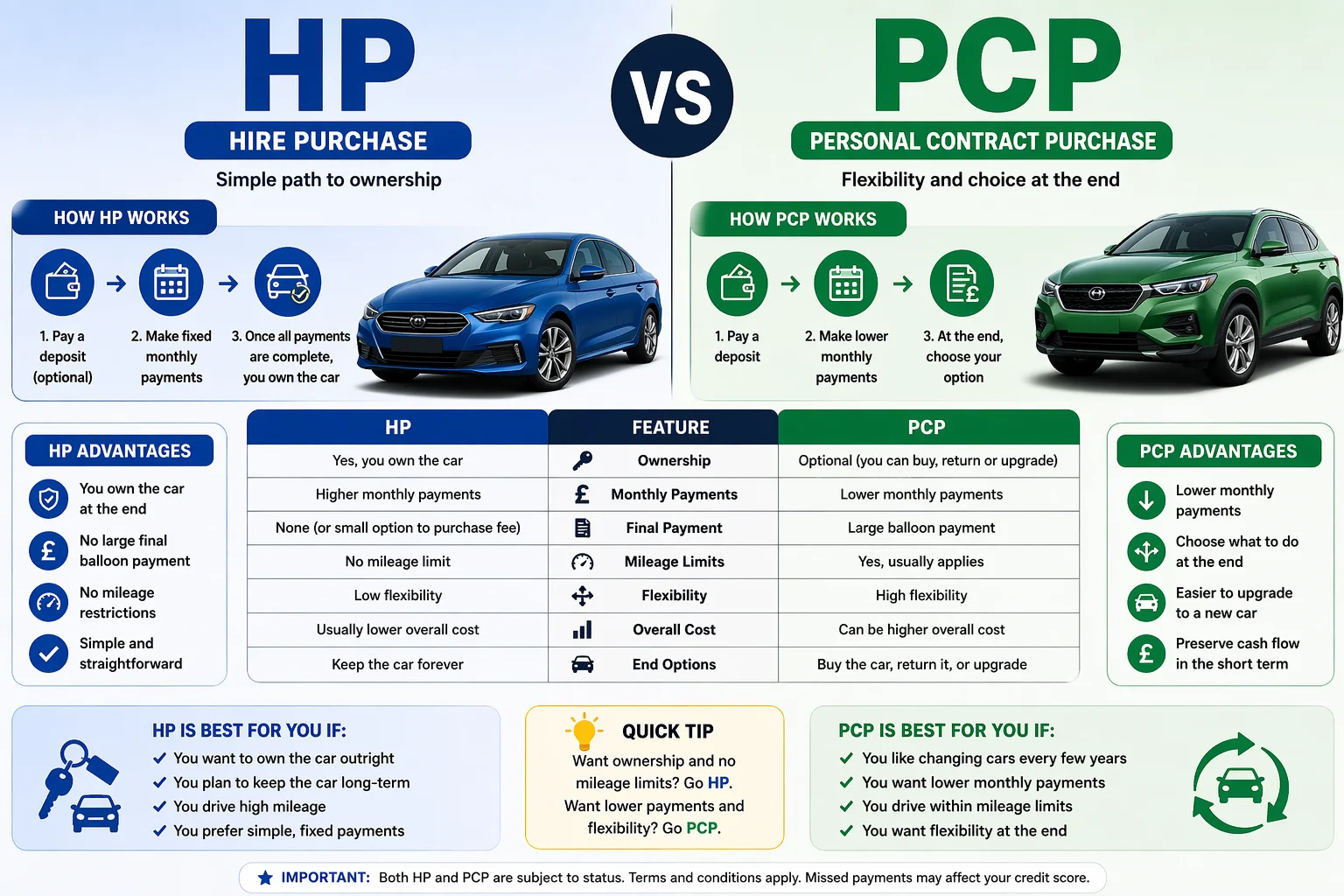
HP (Hire Purchase) is a car financing method where you pay for a vehicle in fixed monthly installments, and once all payments are completed, you automatically own the car.
Meaning & Structure
HP is straightforward:
- Pay a deposit (optional but common)
- Make fixed monthly payments
- Own the car at the end
How HP Is Used
In the HP vs PCP comparison, HP is typically chosen when:
- You want full ownership
- You plan to keep the car long-term
- You prefer simple, predictable payments
Where HP Is Common
HP is widely used in:
- UK and Commonwealth countries
- Traditional dealership financing
Examples in Sentences
- “I chose HP because I want to own the car outright.”
- “HP payments are higher but straightforward.”
- “In HP vs PCP, HP is better for ownership.”
Historical Note
Hire Purchase has been around for decades and was originally used to help consumers afford expensive goods like furniture and vehicles by spreading payments over time.
What Is “PCP”?
Personal Contract Purchase
PCP (Personal Contract Purchase) is a flexible car finance option where you pay lower monthly installments and decide at the end whether to buy, return, or upgrade the car.
Meaning & Structure
PCP works differently:
- Pay a deposit
- Make lower monthly payments
- At the end, choose one of three options:
- Pay a balloon payment to own the car
- Return the car
- Trade it in for a new deal
How PCP Is Used
In the HP vs PCP debate, PCP is chosen when:
- You want lower monthly payments
- You like changing cars every few years
- You want flexibility at the end
Where PCP Is Common
PCP is very popular in:
- UK and Europe
- Modern dealership finance offers
Examples in Sentences
- “I picked PCP because the monthly cost is lower.”
- “With PCP, I can upgrade my car every few years.”
- “In HP vs PCP, PCP is more flexible.”
Historical Note
PCP became popular in the early 2000s as car manufacturers looked for ways to make new vehicles more affordable and encourage repeat customers.
Key Differences Between HP vs PCP
Understanding HP vs PCP is all about ownership, flexibility, and cost structure.
Quick Differences
- HP = Ownership-focused
- PCP = Flexibility-focused
- HP payments are higher
- PCP payments are lower
- HP leads to automatic ownership
- PCP gives end-of-contract choices
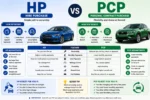
Comparison Table (HP vs PCP)
| Feature | HP | PCP |
|---|---|---|
| Full Name | Hire Purchase | Personal Contract Purchase |
| Ownership | Yes (at end) | Optional |
| Monthly Payments | Higher | Lower |
| Deposit | Usually required | Usually required |
| Final Payment | None (or small fee) | Large balloon payment |
| Flexibility | Low | High |
| Mileage Limits | No | Yes |
| Best For | Long-term ownership | Short-term use & upgrades |
| End Options | Own the car | Buy, return, or upgrade |
| Overall Cost | Often lower long-term | Can be higher overall |
Real-Life Conversation Examples
Dialogue 1
A: “Should I choose HP vs PCP?”
B: “Do you want to own the car?”
A: “Yes.”
B: “Then go with HP.”
🎯 Lesson: HP is best for ownership.
Dialogue 2
A: “Why is PCP cheaper monthly?”
B: “Because you’re not paying the full value upfront.”
🎯 Lesson: PCP lowers monthly costs by deferring value.
Dialogue 3
A: “Can I return the car with HP?”
B: “Not easily—HP is for buying.”
🎯 Lesson: HP is less flexible.
Dialogue 4
A: “I like changing cars every 3 years.”
B: “PCP is perfect for that.”
🎯 Lesson: PCP suits frequent upgrades.
Dialogue 5
A: “Which is cheaper overall?”
B: “In HP vs PCP, HP is usually cheaper long-term.”
🎯 Lesson: PCP convenience can cost more.
When to Use HP vs PCP
Choosing between HP vs PCP depends on your financial goals and lifestyle.
Choose HP If:
✔️ You want full ownership
✔️ You plan to keep the car long-term
✔️ You don’t want mileage restrictions
✔️ You prefer a simple payment structure
Choose PCP If:
✔️ You want lower monthly payments
✔️ You like upgrading cars frequently
✔️ You want flexibility at the end
✔️ You don’t mind mileage limits
Simple Memory Trick
- HP = “Have Permanently” (you own it)
- PCP = “Pay, Choose, Proceed” (flexible options)
Practical Tip
If you:
- Drive a lot → Avoid PCP (mileage limits)
- Want new cars often → Choose PCP
- Want long-term value → Choose HP
Fun Facts About HP vs PCP
1. PCP Drives New Car Sales
PCP has become one of the main reasons more people can afford new cars, thanks to lower monthly payments.
2. HP Is Simpler
HP remains popular among buyers who prefer clarity and ownership without complex end-of-term decisions.
Conclusion
The HP vs PCP decision comes down to one key question: do you want to own the car or just use it for a few years? HP is ideal if ownership and long-term value matter to you. PCP, on the other hand, offers flexibility, lower monthly payments, and the ability to upgrade regularly.
Both options serve different financial strategies, so the right choice depends on your needs and lifestyle.
Next time someone mentions HP vs PCP, you’ll know exactly what they mean!