
Introduction
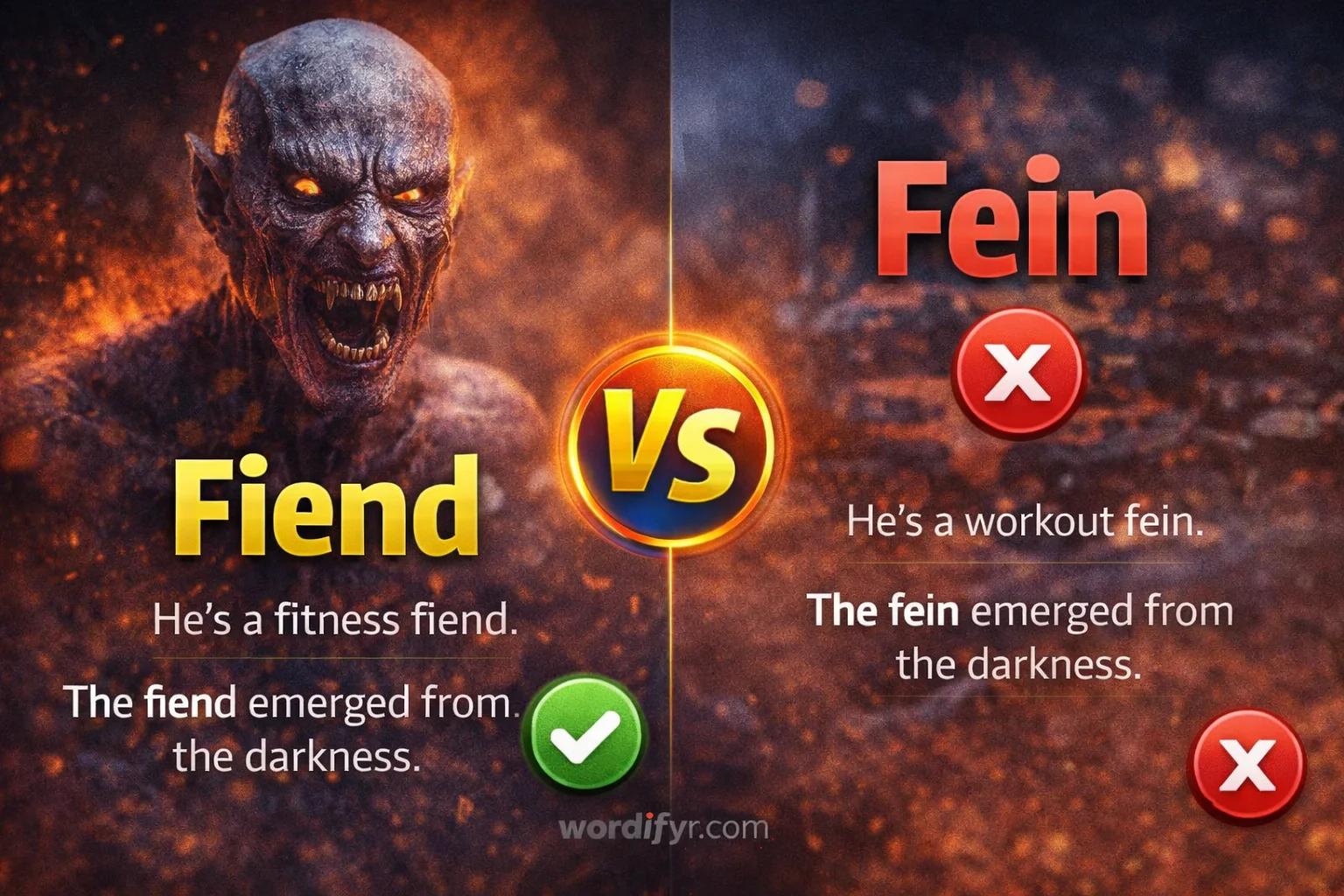
English is full of words that look or sound alike but mean completely different things—and fiend vs fein is a perfect example. Many people encounter these two words online, in comments, lyrics, or casual writing, and assume they’re either interchangeable or spelling variations of the same term. That misunderstanding leads to frequent misuse.
The confusion usually comes from pronunciation and internet slang. While fiend is a legitimate English word with a long history, fein is often mistaken for it due to phonetic spelling or informal usage.
Although they look/sound similar, they serve completely different purposes.
In this guide, we’ll break down what fiend really means, whether fein is actually a word, how each is (or isn’t) used, and how to avoid common mistakes—so you always choose the correct term with confidence. 😈📖
What Is “Fiend”?
Meaning and Definition
Fiend is a noun in standard English. It traditionally refers to:
- An evil spirit or demon
- A cruel or wicked person
- Someone extremely obsessed with a particular activity (modern usage)
In simple terms:
- Fiend = an evil being OR someone intensely addicted to something
How It’s Used
The word fiend is used in:
- Literature
- Horror and fantasy writing
- Everyday informal speech (figurative sense)
- Journalism and storytelling
It can be literal or metaphorical depending on context.
Where It’s Used (Grammar & Context)
Fiend is used in:
- American English
- British English
- Formal and informal writing
It always functions as a noun.
Examples in Sentences
- “The villain was portrayed as a heartless fiend.”
- “He’s a fitness fiend who never skips the gym.”
- “The fiend lurked in the shadows of the old castle.”
In modern speech, the word often carries a playful or exaggerated tone.
Short Historical Note
The word fiend comes from Old English fēond, meaning enemy or devil. Over time, its meaning expanded to describe anyone with extreme or obsessive behavior.
What Is “Fein”?
Meaning and Definition
Fein is not a standard English word.
In most cases:
- Fein = incorrect spelling or slang misuse
- It has no official dictionary meaning in English
However, it sometimes appears in informal internet slang, where people mistakenly use fein instead of fiend because they sound similar when spoken.
Common Reasons People Use “Fein”
People often write fein because:
- They spell words phonetically
- They hear “fiend” in songs or speech
- They assume it’s an alternative spelling
- Slang culture encourages relaxed spelling
Despite this, fein is grammatically incorrect in standard English writing.
Where “Fein” Appears
You might see fein:
- In social media posts
- In song lyrics typed informally
- In comments or chats
- In unedited content
Its presence does not make it correct.
Incorrect Examples
❌ “I’m a coffee fein.”
❌ “He’s a workout fein.”
❌ “She’s a chocolate fein.”
All of these should use fiend, not fein.
Key Differences Between Fiend and Fein
Quick Bullet-Point Differences
- Fiend is a real English word
- Fein is not standard English
- Fiend has historical and modern meanings
- Fein is usually a spelling error
- Fiend appears in dictionaries
- Fein appears mainly in slang or typos
Comparison Table (Mandatory)
| Feature | Fiend | Fein |
|---|---|---|
| Correct English | ✅ Yes | ❌ No |
| Part of Speech | Noun | None |
| Dictionary Listed | Yes | No |
| Meaning | Evil being / obsessed person | No standard meaning |
| Usage | Formal & informal | Slang / incorrect |
| SEO & Professional Writing | ✔️ Acceptable | ❌ Avoid |
Real-Life Conversation Examples
Dialogue 1
A: “He’s a gym fiend.”
B: “Yeah, he works out every day.”
🎯 Lesson: Fiend can mean extreme enthusiasm.
Dialogue 2
A: “Is ‘fein’ correct here?”
B: “No, it should be ‘fiend’.”
🎯 Lesson: Fein is a spelling mistake.
Dialogue 3
A: “Why do people write ‘coffee fein’?”
B: “They mean ‘coffee fiend’.”
🎯 Lesson: Slang doesn’t change correct spelling.
Dialogue 4
A: “The movie villain was terrifying.”
B: “He was a complete fiend.”
🎯 Lesson: Fiend retains its dark, traditional meaning.
Dialogue 5
A: “My editor corrected ‘fein’ to ‘fiend’.”
B: “That’s because ‘fein’ isn’t proper English.”
🎯 Lesson: Professional writing always uses fiend.
When to Use Fiend vs Fein
Use “Fiend” When:
- You mean someone obsessed with something
- You’re describing an evil or cruel character
- You’re writing articles, blogs, or SEO content
- You want grammatically correct English
Memory Trick:
👉 Fiend ends with “end” — obsession never ends
Never Use “Fein” When:
- Writing professionally
- Publishing online content
- Creating SEO articles
- Communicating formally
Simple Rule:
👉 If it’s not in the dictionary, don’t use it
US vs UK Usage
There is no regional difference:
- Fiend is correct everywhere
- Fein is incorrect everywhere
Fun Facts or History
1. “Fiend” Shifted Meaning Over Time
What once meant devil now commonly means enthusiast in casual speech.
2. Music and Slang Spread the Mistake
Many people first encounter “fein” through lyrics or captions, not grammar rules.
Conclusion
The difference between fiend vs fein is straightforward once you know the facts. Fiend is a real English word with both historical and modern meanings, while fein is simply a misspelling or slang misuse with no grammatical legitimacy. Using the correct word not only improves clarity but also strengthens your credibility—especially in professional or SEO writing. Remember this distinction, and you’ll never make the mistake again. Next time someone uses these two words, you’ll know exactly what they mean! 😄