
Introduction
A sore throat can make everyday activities like swallowing, talking, and even eating uncomfortable. But before you reach for medicine, it’s important to know what’s causing your symptoms. One of the most common health questions people ask is about allergies vs strep. Although both conditions can cause throat discomfort, they are completely different in terms of their causes, symptoms, treatment, and seriousness.
Many people mistakenly assume that every sore throat is strep throat, while others dismiss severe symptoms as “just seasonal allergies.” This confusion often leads to delayed treatment or taking medications that won’t help. For example, antibiotics won’t relieve allergy symptoms, and antihistamines won’t cure a bacterial strep infection.
The good news is that once you understand the key differences between allergies vs strep, it’s much easier to recognize which condition you may be dealing with.
In this complete guide, you’ll learn what allergies and strep throat are, what causes them, how their symptoms differ, when to seek medical care, and practical tips to help you tell them apart. Whether you’re experiencing a sore throat yourself or helping a family member, this guide will help you make informed decisions.
What Are Allergies?
Allergies are an immune system reaction to substances that are usually harmless. These substances, known as allergens, trigger your body’s defense system even though they don’t pose a real danger.
Instead of fighting bacteria or viruses, your immune system releases chemicals called histamines, leading to symptoms like sneezing, itchy eyes, and throat irritation.
Simply put:
Allergies = Your immune system overreacting to harmless substances.
Unlike infections, allergies cannot spread from person to person.
What Causes Allergies?
Many everyday substances can trigger allergies.
The most common allergens include:
- Pollen from trees, grass, and flowers
- Dust mites
- Pet dander
- Mold spores
- Certain foods
- Insect stings
- Some medications
Seasonal allergies usually become worse during spring and fall when pollen levels are high.
Indoor allergies, however, can occur throughout the year.
Common Allergy Symptoms
When comparing allergies vs strep, allergy symptoms usually develop gradually and often affect more than just your throat.
Typical symptoms include:
- Itchy throat
- Scratchy throat
- Sneezing
- Runny nose
- Stuffy nose
- Watery eyes
- Itchy eyes
- Postnasal drip
- Mild cough
- Ear pressure
One of the biggest clues is this:
Allergies almost never cause a fever.
How Long Do Allergies Last?
Unlike infections, allergies can continue as long as you’re exposed to the allergen.
Symptoms may last:
- Several days
- Weeks
- Entire allergy seasons
- Year-round for indoor allergies
Fortunately, symptoms usually improve with:
- Antihistamines
- Nasal sprays
- Avoiding allergens
- Air purifiers
- Allergy treatments prescribed by your doctor
Examples of Allergies in Sentences
Here are a few examples of the word allergies used correctly.
- “My allergies always get worse during spring.”
- “Pollen allergies make my throat itchy.”
- “She takes antihistamines every morning for seasonal allergies.”
- “His watery eyes were caused by allergies, not an infection.”
- “Dust allergies make it difficult for him to sleep.”
What Is Strep Throat?
Strep throat is a bacterial infection caused by Group A Streptococcus bacteria.
Unlike allergies, strep throat is contagious and spreads easily through respiratory droplets when an infected person coughs, sneezes, or shares drinks or utensils.
Simply put:
Strep throat = A bacterial infection that affects the throat and tonsils.
Because it’s caused by bacteria, strep throat usually requires antibiotic treatment.
What Causes Strep Throat?
Strep throat develops after infection with Group A Streptococcus bacteria.
The bacteria commonly spread through:
- Coughing
- Sneezing
- Kissing
- Sharing food or drinks
- Close contact
- Touching contaminated surfaces
Children and teenagers are more likely to develop strep throat, especially during the school year.
Common Symptoms of Strep Throat
In the allergies vs strep comparison, strep symptoms usually appear suddenly and become severe quickly.
Common symptoms include:
- Severe sore throat
- Pain while swallowing
- Fever
- Swollen lymph nodes
- Red throat
- White patches on the tonsils
- Headache
- Body aches
- Chills
- Fatigue
Unlike allergies, strep throat usually does not cause:
- Sneezing
- Itchy eyes
- Runny nose
These missing symptoms are often helpful clues.
How Is Strep Diagnosed?
Doctors usually diagnose strep throat using:
- Rapid strep test
- Throat swab
- Throat culture
Because other illnesses can also cause sore throats, testing is the best way to confirm the diagnosis.
How Is Strep Treated?
Most people recover quickly after receiving the proper treatment.
Doctors typically recommend:
- Antibiotics
- Plenty of fluids
- Rest
- Pain relievers
- Warm saltwater gargles
Most patients begin feeling better within 24 to 48 hours after starting antibiotics.
Examples of Strep in Sentences
Here are some examples.
- “The doctor confirmed I had strep throat.”
- “He missed school because of strep.”
- “She started antibiotics after testing positive for strep.”
- “Strep throat made swallowing extremely painful.”
- “Untreated strep can lead to serious complications.”
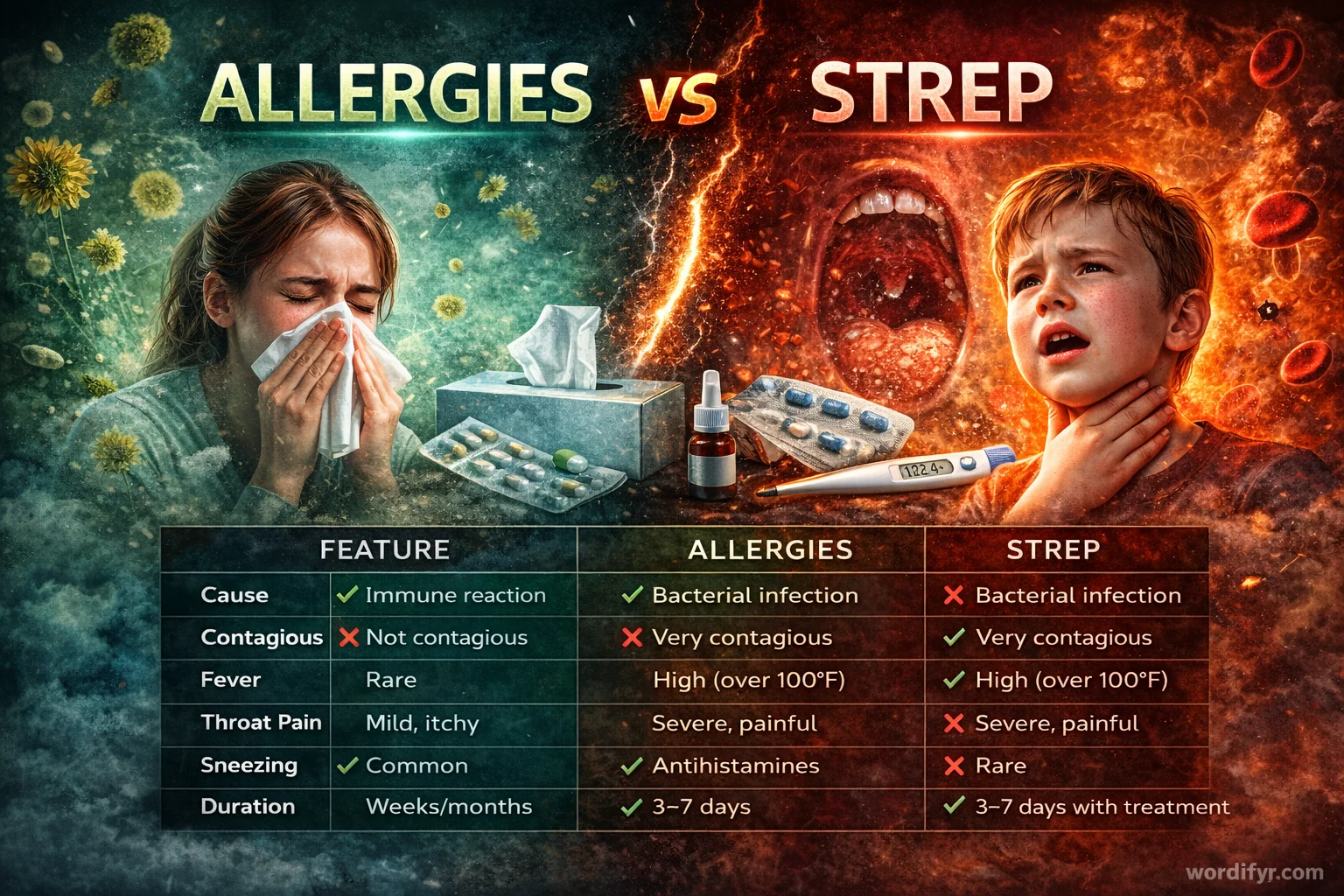
Allergies vs Strep: Key Differences
Although both conditions may cause throat discomfort, they’re very different.
Allergies
- Immune system reaction
- Not contagious
- Itchy throat
- Sneezing is common
- No fever
- Responds to antihistamines
Strep
- Bacterial infection
- Contagious
- Severe throat pain
- Fever is common
- Swollen lymph nodes
- Requires antibiotics
Comparison Table
| Feature | Allergies | Strep Throat |
|---|---|---|
| Cause | Immune reaction | Bacterial infection |
| Contagious | ❌ No | ✔ Yes |
| Fever | Rare | Common |
| Sore Throat | Mild or itchy | Severe and painful |
| Sneezing | Common | Rare |
| Runny Nose | Common | Usually absent |
| Itchy Eyes | Common | Rare |
| Swollen Lymph Nodes | Uncommon | Common |
| White Spots on Tonsils | No | Often present |
| Treatment | Antihistamines | Antibiotics |
| Duration | Days to months | Usually 3–7 days with treatment |
Symptoms That Usually Mean It’s Allergies
Your sore throat is more likely caused by allergies if you also have:
- Sneezing
- Itchy eyes
- Runny nose
- Clear mucus
- Symptoms that worsen outdoors
- No fever
- Symptoms every spring or fall
Many people notice improvement after taking allergy medication.
Symptoms That Usually Mean It’s Strep
You may have strep throat if you experience:
- Sudden severe sore throat
- Fever over 100.4°F (38°C)
- Pain when swallowing
- Swollen neck glands
- White patches on the tonsils
- Body aches
- No sneezing or itchy eyes
These symptoms usually require medical evaluation.
Real-Life Conversation Examples
Dialogue 1
Alex: My throat hurts, but I can’t stop sneezing.
Jamie: That sounds more like allergies than strep.
🎯 Lesson: Sneezing usually points toward allergies.
Dialogue 2
Chris: I have a fever, and swallowing really hurts.
Doctor: Let’s do a rapid strep test.
🎯 Lesson: Fever and severe throat pain are common signs of strep.
Dialogue 3
Emma: Allergy medicine isn’t helping my sore throat.
Sophia: It could be strep instead.
🎯 Lesson: If antihistamines don’t improve symptoms, another cause may be responsible.
Dialogue 4
Ryan: My symptoms have lasted all spring.
Noah: That sounds like seasonal allergies.
🎯 Lesson: Allergies often last much longer than strep.
Dialogue 5
Olivia: My child suddenly developed a high fever and sore throat.
Doctor: We should test for strep immediately.
🎯 Lesson: Sudden symptoms with fever deserve medical attention.
When Should You See a Doctor?
You should contact a healthcare provider if you experience:
- High fever
- Difficulty swallowing
- Difficulty breathing
- White patches on your tonsils
- Symptoms lasting more than a few days
- Severe throat pain
- Swollen lymph nodes
- Symptoms that continue despite treatment
Prompt diagnosis helps prevent complications.
When to Use Allergies vs Strep
Knowing the differences can help you respond appropriately.
It’s Probably Allergies If:
- Your throat feels itchy instead of painful.
- You’re sneezing frequently.
- Your eyes are watery or itchy.
- You don’t have a fever.
- Symptoms appear every allergy season.
- Allergy medicine helps.
Memory Trick:
👉 Itchy + Sneezing = Allergies
It’s Probably Strep If:
- Your sore throat appeared suddenly.
- Swallowing is painful.
- You have a fever.
- Your neck glands are swollen.
- You don’t have itchy eyes or sneezing.
- White patches appear on your tonsils.
Memory Trick:
👉 Pain + Fever = Think Strep
Frequently Asked Questions
Can allergies cause a sore throat?
Yes. Postnasal drip caused by allergies can irritate the throat and make it feel itchy or scratchy.
Can allergies cause fever?
No. Fever usually points to an infection rather than allergies.
Can strep throat go away without antibiotics?
Sometimes symptoms improve naturally, but untreated strep can lead to serious complications. Medical evaluation is recommended.
Can allergies turn into strep?
No. Allergies cannot become strep because one is an immune reaction and the other is a bacterial infection.
Can I have both allergies and strep?
Yes. Although uncommon, it’s possible to have seasonal allergies and develop strep throat at the same time.
Interesting Facts About Allergies and Strep
Allergies Affect Millions Worldwide
According to health experts, seasonal allergies affect hundreds of millions of people around the world and are among the most common chronic health conditions.
Strep Throat Is Most Common in School-Age Children
Children between the ages of 5 and 15 are more likely to develop strep throat because the bacteria spread easily in schools and classrooms.
Untreated Strep Can Lead to Serious Complications
If left untreated, strep throat can sometimes lead to complications such as rheumatic fever or kidney inflammation. This is why early diagnosis and treatment are important.
Final Thoughts
Understanding the difference between allergies vs strep can help you choose the right treatment and avoid unnecessary complications. Allergies are caused by your immune system reacting to harmless substances like pollen or dust, leading to symptoms such as sneezing, itchy eyes, and a scratchy throat. Strep throat, on the other hand, is a contagious bacterial infection that usually causes severe throat pain, fever, swollen lymph nodes, and difficulty swallowing.
Although both conditions can cause throat discomfort, paying attention to accompanying symptoms—especially fever, sneezing, itchy eyes, and sudden throat pain—can provide valuable clues. If your symptoms are severe, persist for several days, or include a high fever or difficulty swallowing, it’s always best to seek medical advice. By recognizing the differences between allergies and strep throat, you can get the appropriate care sooner and recover more quickly.