Introduction
At first glance, started and start seem almost too simple to confuse. They come from the same verb, sound closely related, and appear constantly in everyday English. Yet many learners—and even native speakers—pause when choosing between them, especially in writing. Should you say “I start yesterday” or “I started yesterday”? That tiny -ed makes a big difference. The confusion usually comes from tense, grammar rules, and how English marks time. Although they look/sound similar, they serve completely different purposes.
Understanding started vs start is essential for clear communication, whether you’re writing emails, academic work, blog posts, or casual messages. In this article, we’ll break down the meanings, grammar rules, examples, comparisons, and real-life conversations so you can confidently use the correct form every time.
Section 1: What Is “Start”?
Meaning of Start
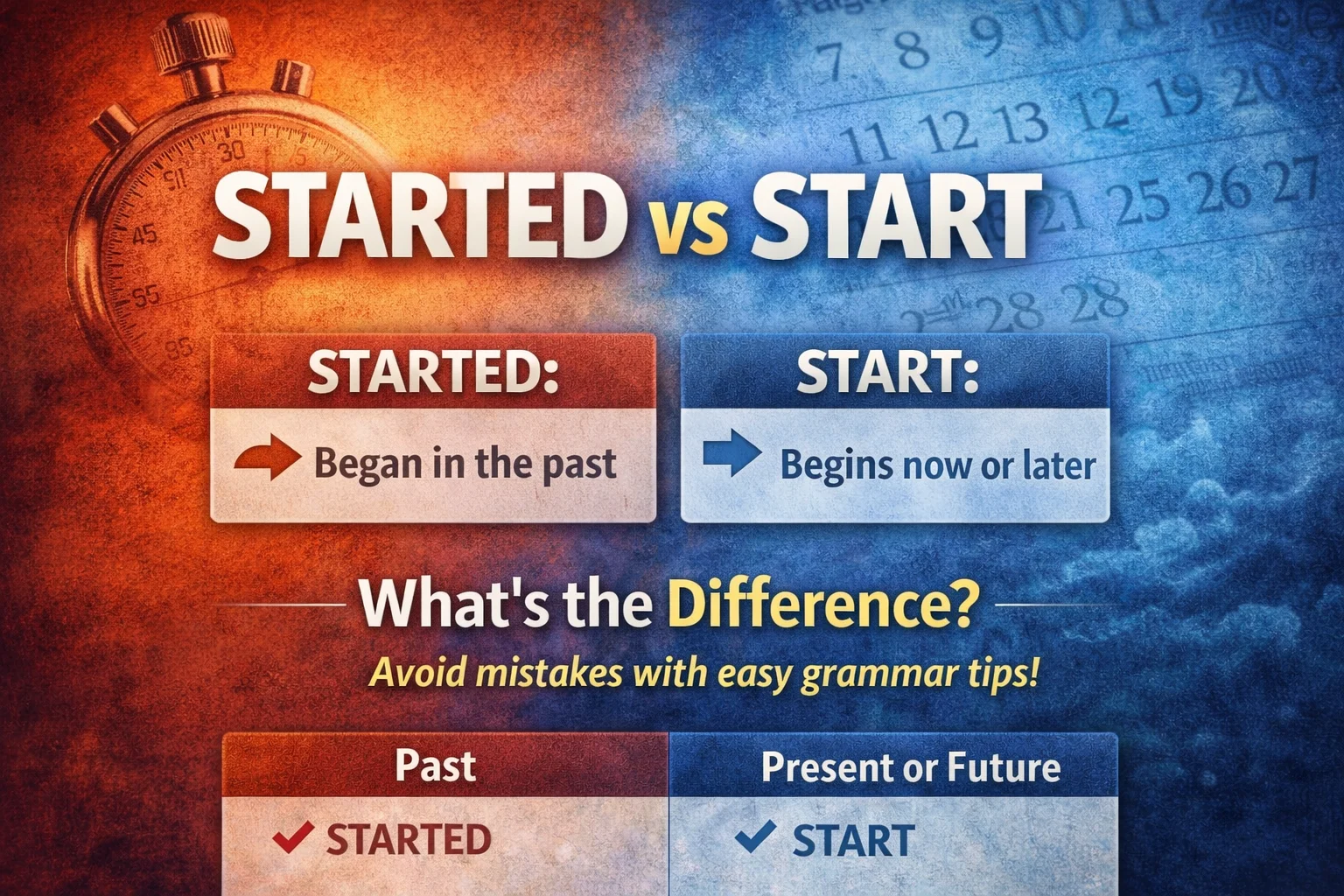
Start is the base form (present tense) of the verb to start. It means to begin something—an action, process, event, or activity. In the started vs start comparison, start is used when talking about the present, future, or general facts.
How It’s Used
You use start when:
- Talking about something happening now
- Referring to something that will happen in the future
- Stating a habit, routine, or general truth
- Using modal verbs (can, will, should, must)
It answers the question: When does it begin (now or generally)?
Where It’s Used (Grammar & Rules)
- Used in simple present tense
- Appears after modal verbs (will start, can start)
- Used in imperatives (commands)
- Same usage in US and UK English
Examples in Sentences
- I start work at 9 a.m. every day.
- We start the meeting now.
- She will start a new job next month.
- Please start the engine.
In started vs start, notice that start does not show past time.
Short Usage Note
The verb start comes from Old English styrtan, meaning “to leap up or move suddenly.” Over time, it evolved to mean beginning an action, which is how we use it today.
Section 2: What Is “Started”?
Meaning of Started
Started is the past tense and past participle form of start. It means that something began in the past. In the started vs start distinction, started always signals completed or past time.
How It’s Used
You use started when:
- Talking about something that began in the past
- Describing a completed action
- Forming perfect tenses (has started, had started)
- Writing in narratives or reports about past events
It answers the question: When did it begin (in the past)?
Spelling, Usage, and Grammar Notes
- Ends with -ed, marking past tense
- Functions as past simple or past participle
- Used with auxiliary verbs (has, have, had)
Examples in Sentences
- I started learning English last year.
- The class started late yesterday.
- She has started her own business.
- They had started the project before the deadline.
In started vs start, started clearly anchors the action in the past.
Regional or Grammatical Notes
There is no difference between American and British English in the use of started. The tense rules are universal.
Key Differences Between Started and Start
Bullet-Point Differences
- Start is present or future-focused
- Started is past-focused
- Start is the base verb form
- Started is the past tense/past participle
- Start is used for habits and commands
- Started is used for completed actions
These distinctions are central to understanding started vs start.
Comparison Table
| Feature | Start | Started |
|---|---|---|
| Verb Form | Base / present | Past tense / past participle |
| Time Reference | Present or future | Past |
| Used with Modals | ✅ Yes | ❌ No |
| Used in Commands | ✅ Yes | ❌ No |
| Example | I start today | I started yesterday |
Real-Life Conversation Examples
Dialogue 1
A: When do you start work?
B: I start at 8 a.m.
🎯 Lesson: Use start for routines or present facts.
Dialogue 2
A: When did you start this project?
B: I started it last week.
🎯 Lesson: Past time requires started.
Dialogue 3
A: Have you started the assignment?
B: Yes, I started it yesterday.
🎯 Lesson: Perfect tenses use started, not start.
Dialogue 4
A: Let’s start the movie now.
B: Okay, it already started once before.
🎯 Lesson: Commands use start; past events use started.
When to Use Started vs Start
Practical Usage Rules
Use start when:
- Talking about the present or future
- Giving instructions or commands
- Describing habits or schedules
- Using modal verbs
Use started when:
- Talking about the past
- Referring to completed actions
- Using has/have/had
- Writing stories or reports about past events
This rule solves almost all started vs start mistakes.
Simple Memory Tricks
- Start = now or next ▶️
- Started = already happened ⏪
If you can add yesterday, last year, ago, choose started.
If you can add now, tomorrow, usually, choose start.
US vs UK Usage
There is no regional difference in started vs start. Both follow the same tense rules in American and British English.
Fun Facts or History
- English verbs mark past tense mainly with -ed, which is why started clearly signals time.
- “Start” is one of the most commonly used verbs in English, especially in spoken language.
These features explain why started vs start is such a fundamental grammar pair.
Conclusion
The difference between started vs start comes down to time and tense. Start is used for the present, future, habits, and commands, while started is used for actions that began in the past or are already completed. They come from the same verb, but they play very different grammatical roles. Once you focus on when the action happens, choosing the correct form becomes easy and automatic. Next time someone uses these two words, you’ll know exactly what they mean!