Introduction
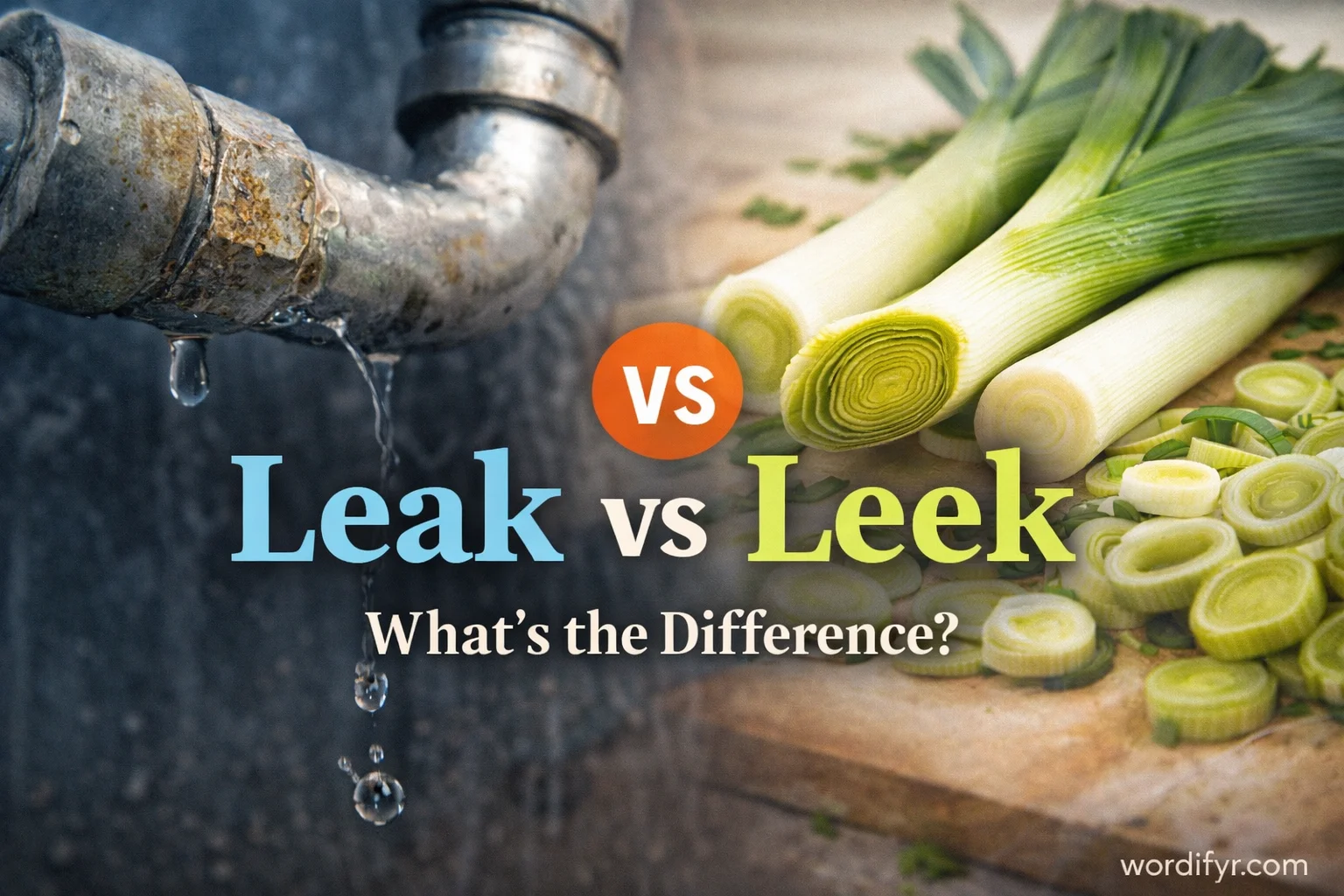
English can be tricky, especially when two words sound exactly the same but mean completely different things. One of the most commonly confused word pairs is leak vs leek. Because they are pronounced identically, many people assume they are interchangeable or simply make spelling mistakes without realizing it.
This confusion often appears in everyday writing, social media posts, news articles, and even professional emails. A single wrong letter can completely change the meaning of a sentence—sometimes in a funny way, sometimes in an embarrassing one. Although they look/sound similar, they serve completely different purposes.
In this guide, we will clearly explain leak vs leek, including their meanings, usage, grammar rules, real-life examples, and easy memory tricks. By the end, you will never mix these two words up again.
What Is “Leak”?
Leak is both a noun and a verb in English. It refers to something escaping unintentionally from where it should be contained.
Meaning
Leak means:
- An accidental escape of liquid, gas, or information
- A hole, crack, or weakness that allows something to escape
How “Leak” Is Used
Leak is commonly used to describe:
- Water or gas escaping from pipes
- Confidential information becoming public
- Technical failures or system breaches
Where “Leak” Is Used
Leak is widely used in:
- Everyday conversation
- News and journalism
- Technology and cybersecurity
- Plumbing and construction
- Business and politics
Examples in Sentences
- “There is a leak in the roof.”
- “The company is investigating a data leak.”
- “Water began to leak from the pipe.”
Short Usage Note
The word leak has been part of English for centuries and originally referred to ships letting in water. Over time, its meaning expanded to include information and data leaks.
What Is “Leek”?
Leek is a noun only and refers to a vegetable. It belongs to the onion family and is commonly used in cooking.
Meaning
Leek is:
- A long, green-and-white vegetable
- A member of the allium family (along with onions and garlic)
How “Leek” Is Used
Leek is used when talking about:
- Cooking
- Recipes
- Food shopping
- Nutrition and health
Where “Leek” Is Used
Leek appears in:
- Culinary contexts
- Food blogs and recipes
- Grocery lists
- Traditional cuisines (especially European)
Examples in Sentences
- “Add chopped leek to the soup.”
- “This recipe uses garlic and leek.”
- “She bought fresh leeks from the market.”
Regional and Cultural Note
Leeks are especially popular in Welsh, French, and Mediterranean cuisines. In Wales, the leek is a national symbol.
Key Differences Between Leak and Leek
Quick Summary Points
- Leak relates to escape or loss
- Leek is a vegetable
- Leak can be a noun or verb
- Leek is always a noun
- Leak appears in technical and abstract contexts
- Leek appears only in food-related contexts
Leak vs Leek Comparison Table
| Feature | Leak | Leek |
|---|---|---|
| Part of Speech | Noun & Verb | Noun only |
| Meaning | Escape of liquid, gas, or information | A vegetable |
| Context | Plumbing, data, media | Cooking, food |
| Plural Form | Leaks | Leeks |
| Verb Form | Leak / Leaked / Leaking | ❌ Not a verb |
| Common Mistake | Confused with leek | Confused with leak |
Real-Life Conversation Examples
Dialogue 1
A: “There’s a water leek in the kitchen.”
B: “You mean a water leak, not a vegetable.”
🎯 Lesson: Leak relates to water escaping, not food.
Dialogue 2
A: “The news reported a major leek.”
B: “That must be a data leak, unless it’s about vegetables.”
🎯 Lesson: Leak is used for information exposure.
Dialogue 3
A: “I added a leak to the soup.”
B: “I hope you meant a leek, not a hole.”
🎯 Lesson: Leek belongs in the kitchen only.
Dialogue 4
A: “Did the report leak online?”
B: “Yes, someone leaked it yesterday.”
🎯 Lesson: Leak can function as a verb.
Dialogue 5
A: “Why does autocorrect mix these up?”
B: “Because they sound the same but mean different things.”
🎯 Lesson: Homophones require careful spelling.
When to Use Leak vs Leek
Use “Leak” When:
- Something escapes unintentionally
- Referring to water, gas, or air
- Talking about confidential information
- Discussing technical or system failures
Examples:
- “The pipe began to leak.”
- “Sensitive data was leaked online.”
- “They fixed the oil leak.”
Memory Trick:
Leak = Loss or escape
Use “Leek” When:
- Talking about cooking or food
- Referring to vegetables
- Writing recipes or grocery lists
Examples:
- “Chop the leek finely.”
- “This dish uses butter and leeks.”
- “Leek soup is very popular.”
Memory Trick:
Leek = Leafy food
US vs UK Usage
There is no difference between American and British English for leak vs leek. Both words are spelled and used the same way in all English-speaking countries.
The confusion exists globally because:
- They are pronounced the same
- They differ by only one letter
- Spellcheck may not catch context errors
Fun Facts and History
1. Leak as Information Exposure
The term “information leak” became popular in the 20th century with journalism and government secrecy.
2. Leek as a National Symbol
The leek is the national symbol of Wales, worn on St. David’s Day and referenced in Welsh history.
Common Mistakes to Avoid
- ❌ “There is a leek in the ceiling.”
- ❌ “The company faced a leek of data.”
- ❌ “She leaked onions into the soup.”
Correct versions:
- ✅ “There is a leak in the ceiling.”
- ✅ “The company faced a data leak.”
- ✅ “She added leeks to the soup.”
Conclusion
The difference between leak vs leek is simple once you understand their meanings. A leak refers to something escaping—water, gas, or information—while a leek is a vegetable used in cooking. They may sound identical, but their usage could not be more different.
By remembering the context—technical versus culinary—you can easily choose the correct word every time. A single letter matters, especially in professional and public writing.
Next time someone uses these two words, you’ll know exactly what they mean!