A healthy, confident smile can leave a lasting impression. It can boost your self-esteem, improve your appearance, and even make social interactions more comfortable. Thanks to modern cosmetic dentistry, achieving your dream smile is now easier than ever. Two of the most popular treatment options are Invisalign and veneers.
At first glance, these treatments may seem similar because both improve the appearance of your smile. However, they solve completely different dental problems. Many people mistakenly believe veneers can straighten crooked teeth or that Invisalign can instantly create a Hollywood smile. These misconceptions often lead to unrealistic expectations and choosing the wrong treatment.
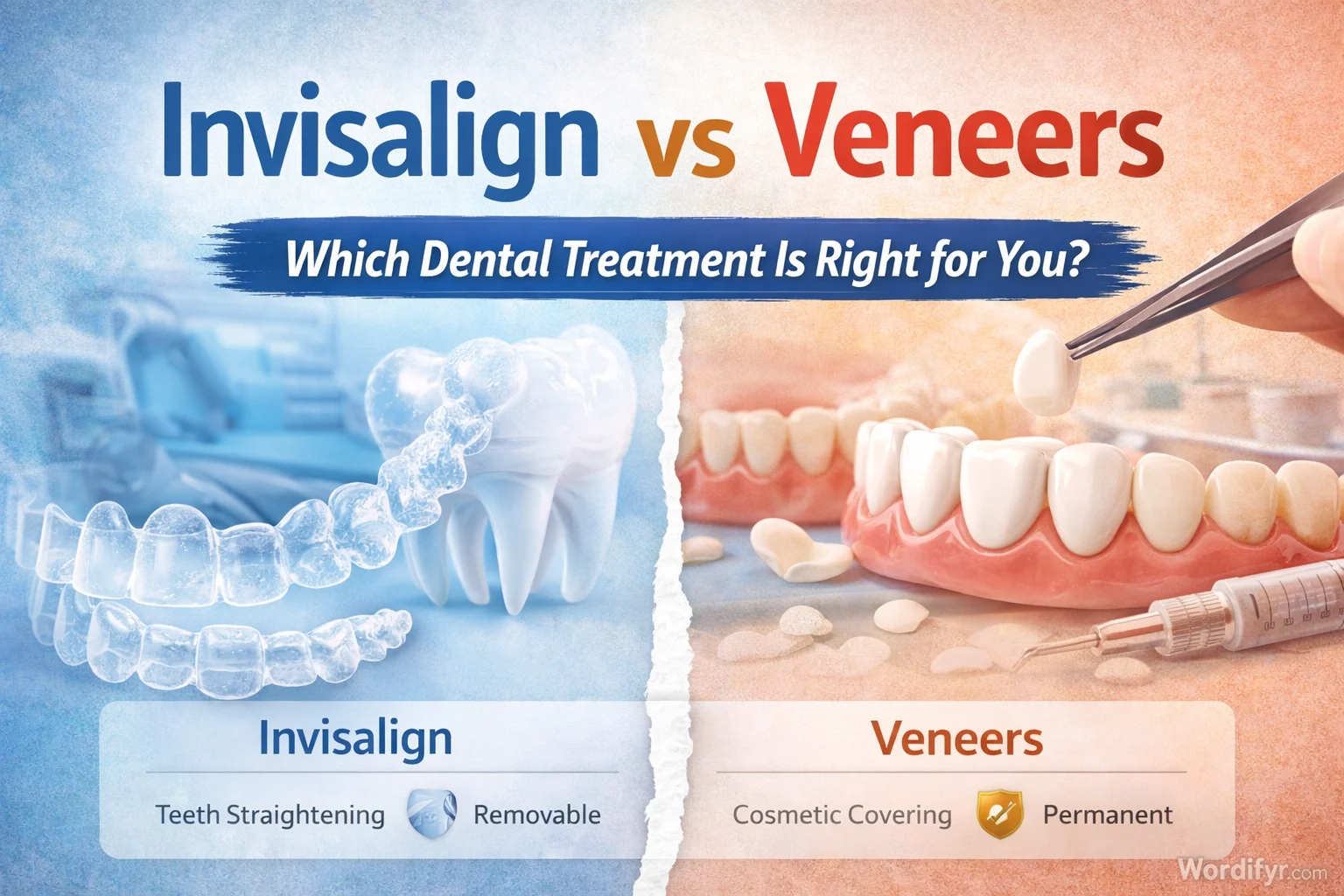
The truth is simple: Invisalign focuses on correcting the position of your teeth, while veneers improve the appearance of the visible surface of your teeth.
Neither treatment is universally better than the other. The right choice depends on your oral health, cosmetic goals, budget, and the condition of your teeth.
In this complete guide, you’ll learn everything you need to know about Invisalign vs veneers, including how they work, their benefits, drawbacks, costs, treatment time, maintenance requirements, and how to decide which option is best for your smile.
What Is Invisalign?
Invisalign is a modern orthodontic treatment that straightens teeth using a series of clear, removable plastic aligners instead of traditional metal braces.
Unlike braces, Invisalign aligners are almost invisible, making them a popular choice for teenagers and adults who want a discreet way to improve their smile.
Meaning
Invisalign is designed to move teeth into their correct positions gradually.
Instead of covering your teeth, it gently shifts them over time using custom-made aligners created specifically for your mouth.
In simple words:
Invisalign = Teeth Straightening
How Does Invisalign Work?
Your dentist or orthodontist begins by taking digital scans or impressions of your teeth.
These scans are used to create a personalized treatment plan.
Custom aligners are then manufactured, and each set is worn for approximately one to two weeks before switching to the next aligner.
Each aligner applies gentle pressure to move your teeth a small distance until they reach the desired position.
For the best results, Invisalign aligners should be worn for 20 to 22 hours every day.
You only remove them when:
- Eating meals
- Drinking anything except water
- Brushing your teeth
- Flossing
Common Dental Problems Invisalign Can Treat
Invisalign is effective for correcting many orthodontic issues, including:
- Crowded teeth
- Crooked teeth
- Gaps between teeth
- Mild overbites
- Underbites
- Crossbites
- Open bites
- Minor relapse after braces
Treatment usually takes 6 to 18 months, although complex cases may require additional time.
Advantages of Invisalign
Many patients choose Invisalign because of its convenience and appearance.
Some major benefits include:
- Nearly invisible aligners
- Comfortable to wear
- Removable during meals
- Easier brushing and flossing
- No food restrictions
- Fewer dental appointments than traditional braces
- Customized treatment using digital technology
Because the aligners are removable, maintaining good oral hygiene is much easier than with metal braces.
Disadvantages of Invisalign
Although Invisalign offers many advantages, it isn’t suitable for everyone.
Some drawbacks include:
- Requires discipline to wear aligners daily
- Can be expensive
- Severe orthodontic problems may still require braces
- Aligners must be cleaned regularly
- Treatment takes several months
Patients who frequently forget to wear their aligners may not achieve the expected results.
What Are Veneers?
Veneers are thin, custom-made shells placed over the front surface of teeth to improve their appearance.
They are designed to create a brighter, more symmetrical, and attractive smile by covering cosmetic imperfections.
Unlike Invisalign, veneers do not move teeth.
Instead, they change how teeth look almost instantly.
In simple words:
Veneers = Cosmetic Smile Enhancement
How Do Veneers Work?
The veneer process usually requires two or three dental visits.
First, the dentist examines your teeth and prepares them by removing a very thin layer of enamel.
Next, impressions or digital scans are taken.
Custom veneers are then manufactured to match the size, shape, and color of your natural teeth.
During the final appointment, the veneers are permanently bonded to the front of your teeth using a strong dental adhesive.
Once bonded, they cannot be removed without replacing them.
Types of Veneers
There are two main types of veneers.
Porcelain Veneers
These are the most popular option because they:
- Look very natural
- Resist stains
- Last 10–15 years or longer
- Reflect light similarly to natural teeth
Composite Veneers
Composite veneers are made from tooth-colored resin.
They:
- Cost less than porcelain
- Can often be completed in one visit
- Usually last 5–7 years
- May stain more easily over time
What Problems Can Veneers Fix?
Veneers are mainly used for cosmetic improvements.
They can improve:
- Severely stained teeth
- Chipped teeth
- Cracked teeth
- Small gaps
- Uneven teeth
- Worn teeth
- Slightly misshapen teeth
- Minor alignment imperfections
If your teeth are healthy but unattractive, veneers can provide a dramatic transformation.
Advantages of Veneers
Many people choose veneers because they produce immediate cosmetic improvements.
Benefits include:
- Instant smile makeover
- Natural appearance
- Long-lasting results
- Stain-resistant porcelain
- Customized color and shape
- Improves confidence
- Requires minimal maintenance
Many celebrities choose porcelain veneers because they create bright, uniform smiles.
Disadvantages of Veneers
Like every dental treatment, veneers also have limitations.
Some disadvantages include:
- Permanent procedure
- Requires enamel removal
- Higher upfront cost
- Cannot fix serious bite problems
- May need replacement after several years
Once enamel is removed, the tooth will always require some form of restoration.
Invisalign vs Veneers: Key Differences
Although both treatments improve smiles, they work in completely different ways.
Here are the biggest differences.
Invisalign
- Straightens teeth naturally
- Moves teeth gradually
- Uses removable aligners
- Does not damage enamel
- Improves bite function
- Treatment takes several months
Veneers
- Covers teeth instantly
- Changes tooth shape and color
- Permanently bonds to teeth
- Requires enamel removal
- Improves cosmetic appearance
- Results appear within weeks
Comparison Table
| Feature | Invisalign | Veneers |
|---|---|---|
| Main Purpose | Straighten teeth | Improve appearance |
| Treatment Type | Orthodontic | Cosmetic |
| Treatment Time | 6–18 months | 2–4 weeks |
| Permanence | Removable | Permanent |
| Enamel Removal | No | Yes |
| Improves Bite | Yes | No |
| Fixes Crooked Teeth | Yes | Minor cases only |
| Covers Stains | No | Yes |
| Repairs Chips | No | Yes |
| Maintenance | Retainers after treatment | Regular dental care |
| Lifespan | Long-term with retainers | 10–15 years |
Which Treatment Looks Better?
This depends on your goals.
If your teeth are healthy but crooked, Invisalign usually produces the most natural smile because your actual teeth are being repositioned.
If your teeth are straight but stained, chipped, or uneven, veneers provide a faster cosmetic improvement.
Many dentists consider Invisalign the healthier option when alignment is the primary concern because it preserves your natural tooth structure.
Can You Get Veneers After Invisalign?
Yes.
In fact, many cosmetic dentists recommend this approach.
Patients first complete Invisalign treatment to straighten their teeth naturally.
After alignment is corrected, veneers can be placed on selected teeth if cosmetic improvements are still desired.
This combination often produces the best long-term results while minimizing unnecessary enamel removal.
Real-Life Conversation Examples
Dialogue 1
A: I want straighter teeth without wearing metal braces.
B: Invisalign is probably the better option.
🎯 Lesson: Invisalign is designed to correct tooth alignment.
Dialogue 2
A: My teeth are straight, but they’re badly stained.
B: Veneers may give you a faster cosmetic improvement.
🎯 Lesson: Veneers improve appearance rather than alignment.
Dialogue 3
A: Can veneers fix my overbite?
B: No. They don’t move teeth. Invisalign or braces would be better.
🎯 Lesson: Veneers cannot correct bite problems.
Dialogue 4
A: I don’t want a permanent treatment.
B: Invisalign aligners are removable, while veneers are permanent.
🎯 Lesson: Invisalign is the more conservative option.
Dialogue 5
A: Can I use both treatments?
B: Absolutely. Many patients straighten their teeth with Invisalign before getting veneers.
🎯 Lesson: Invisalign and veneers can complement each other.
When Should You Choose Invisalign?
Invisalign is usually the better choice if:
- Your teeth are crooked
- You have spacing issues
- Your bite needs correction
- You want to preserve natural teeth
- You prefer a removable treatment
- Long-term oral health is your priority
It is ideal for patients who want gradual, natural improvements without permanently changing their teeth.
When Should You Choose Veneers?
Veneers may be the better option if:
- Your teeth are stained
- Teeth are chipped or cracked
- You want a perfect smile quickly
- Minor gaps need to be hidden
- Tooth shape is uneven
- Cosmetic appearance is your main concern
They are ideal for smile makeovers where alignment is already acceptable.
Simple Memory Trick
Here’s an easy way to remember the difference.
Movement = Invisalign
Makeover = Veneers
If your teeth need to move, think Invisalign.
If your teeth need to look better, think veneers.
Fun Facts
Invisalign Uses Digital Technology
Every Invisalign treatment begins with advanced 3D digital scanning that predicts how your teeth will move throughout treatment.
Veneers Began in Hollywood
The first veneers were created in the 1920s for movie actors who needed flawless smiles on camera.
Modern veneers are much stronger and longer lasting.
Many Patients Choose Both
One treatment doesn’t automatically replace the other.
Many people complete Invisalign first and then use veneers for the final cosmetic touch.
Frequently Asked Questions
Which treatment is cheaper?
Costs vary depending on your location and the complexity of treatment. In many cases, Invisalign and porcelain veneers have similar overall costs, although composite veneers are generally more affordable.
Which lasts longer?
Invisalign results can last a lifetime if you wear your retainers. Porcelain veneers typically last 10 to 15 years before they may need replacement.
Does Invisalign hurt?
Most patients experience mild pressure for a few days after switching to a new aligner, but severe pain is uncommon.
Are veneers painful?
The procedure is usually performed under local anesthesia, so discomfort is minimal. Some patients experience temporary sensitivity afterward.
Which option is better?
Neither treatment is universally better. The right choice depends on whether your goal is to correct tooth alignment or improve cosmetic appearance.
Final Thoughts
Choosing between Invisalign and veneers isn’t about finding the “best” treatment—it’s about selecting the one that matches your dental needs. Invisalign is designed to straighten teeth, improve bite alignment, and preserve your natural smile through gradual movement. Veneers, on the other hand, provide an immediate cosmetic transformation by covering imperfections such as stains, chips, and uneven shapes.
Before making a decision, schedule a consultation with a qualified dentist or orthodontist. They can evaluate your teeth, discuss your goals, and recommend the most suitable treatment plan. In many cases, combining Invisalign with veneers offers the most natural, balanced, and long-lasting smile makeover.
No matter which option you choose, investing in your oral health and smile can improve both your confidence and your quality of life for years to come.