
Introduction
Have you ever paused mid-sentence, wondering whether to write colorful or colourful? You’re not alone. This small spelling difference trips up writers, students, bloggers, and even professionals every day. The confusion usually comes from seeing both versions used online, in books, and across different websites—sometimes even within the same article.
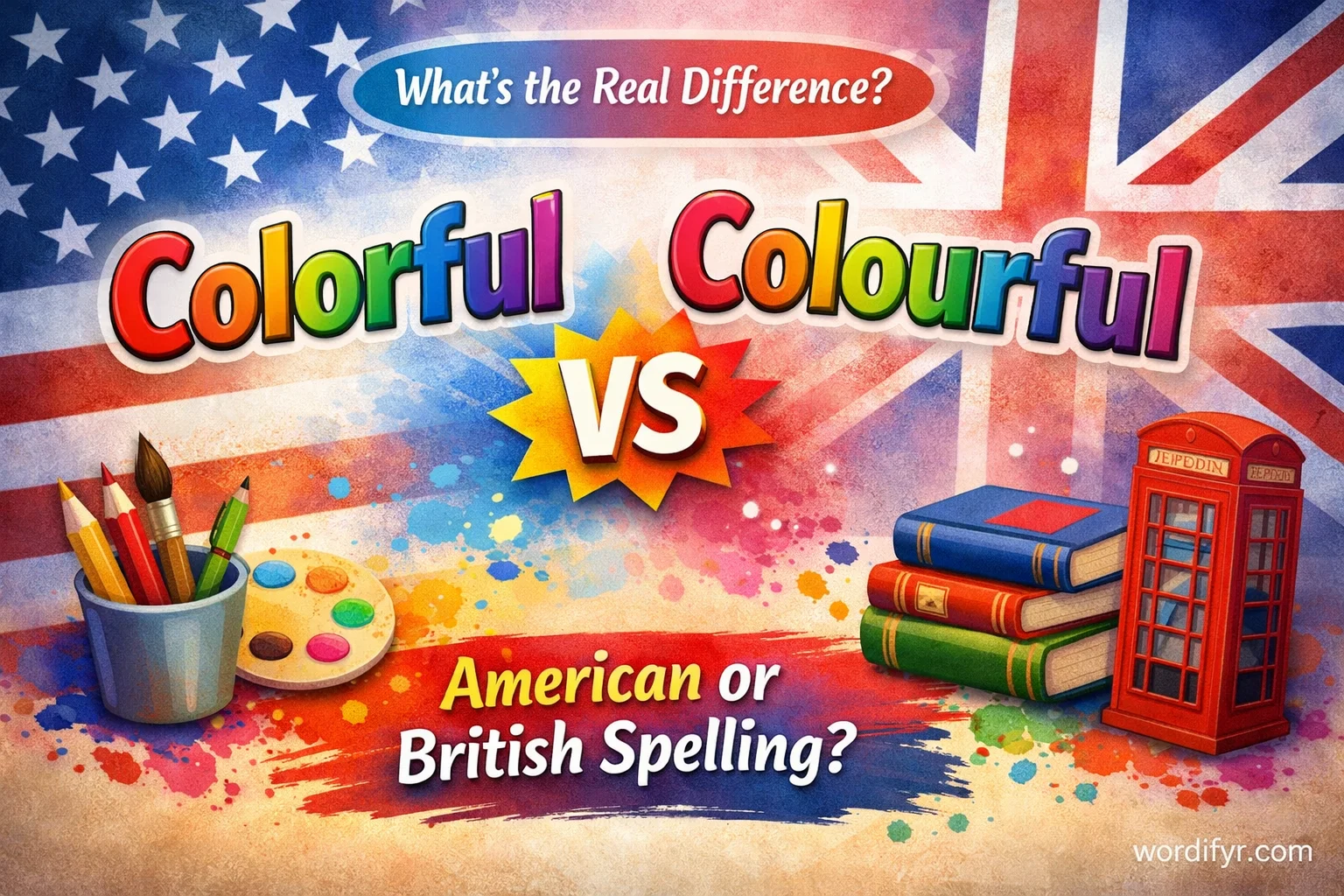
At first glance, colorful vs colourful look like two separate words with different meanings. But here’s the truth: they describe the same idea but follow different spelling conventions. Although they look/sound similar, they serve completely different purposes. One fits American English rules, while the other follows British English traditions.
Understanding when and where to use each spelling can instantly improve your writing clarity, credibility, and SEO performance. In this complete guide, you’ll learn exactly what sets colorful and colourful apart—and how to always choose the right one with confidence 🎯.
What Is Colorful?
Colorful is the American English spelling of the adjective that describes something full of color, brightness, variety, or vivid detail. It’s commonly used in everyday writing, marketing content, academic texts, and digital media targeted at American audiences.
Meaning and Usage
In simple terms, colorful means:
- Having many bright colors
- Being lively, vivid, or interesting
- Describing language, stories, or personalities that are expressive or dramatic
The word colorful is not limited to physical colors. It’s also widely used in a figurative sense, especially in storytelling and journalism.
Where It’s Used
- Standard spelling in United States
- Preferred in American academic writing
- Common in US-based blogs, news outlets, and SEO content
- Recommended for platforms targeting American readers
Example Sentences
- The market was colorful, filled with bright fabrics and smiling faces.
- She gave a colorful description of her childhood adventures.
- The festival turned the city into a colorful celebration of culture.
Short Usage Note
The spelling colorful follows the simplified American spelling system popularized in the early 19th century. American English tends to remove unnecessary letters—like the “u” in colour—to make spelling more direct and consistent.
What Is Colourful?
Colourful is the British English spelling of the same adjective. It carries the exact same meaning as colorful but follows traditional British spelling rules.
Meaning and Usage
Colourful means:
- Rich in bright or striking colours
- Full of variety, excitement, or expressive detail
- Often used to describe art, landscapes, language, and personalities
Just like colorful, colourful can be literal or figurative.
Where It’s Used
- Standard spelling in the United Kingdom
- Used in British, Australian, Canadian, and New Zealand English
- Common in UK-based publications and education systems
- Preferred for audiences accustomed to British spelling norms
Example Sentences
- The artist is known for her colourful paintings.
- He lived a colourful life full of travel and adventure.
- The parade was a colourful display of tradition and pride.
Regional and Grammar Notes
British English retains the “u” in words like colour, flavour, and honour. Therefore, colourful is the grammatically correct form when writing in British English or for international audiences that follow UK conventions.
Key Differences Between Colorful and Colourful
While colorful vs colourful share the same meaning, their differences are entirely about spelling standards and regional usage.
Bullet Point Differences
- Colorful is American English
- Colourful is British English
- Both describe brightness, variety, or vividness
- Neither spelling is incorrect—context determines correctness
- Consistency matters more than preference
Comparison Table
| Feature | Colorful | Colourful |
|---|---|---|
| Meaning | Bright, vivid, expressive | Bright, vivid, expressive |
| English Variant | American English | British English |
| Spelling Style | Simplified | Traditional |
| Used In | USA-based writing | UK & Commonwealth writing |
| SEO Preference | US-targeted content | UK/global content |
Real-Life Conversation Examples
Dialogue 1
A: Is it “colorful” or “colourful”?
B: Depends—are you writing for Americans or Brits?
🎯 Lesson: Audience determines the correct spelling.
Dialogue 2
Editor: Your article mixes colorful and colourful.
Writer: Oops! I’ll make it consistent.
🎯 Lesson: Never mix both spellings in one document.
Dialogue 3
Student: My teacher marked “colorful” wrong.
Friend: You’re in the UK—that’s why.
🎯 Lesson: Follow your region’s spelling rules.
Dialogue 4
Marketer: Which spelling helps SEO?
SEO Expert: Use colorful for US traffic, colourful for UK.
🎯 Lesson: Regional SEO matters.
When to Use Colorful vs Colourful
Choosing between colorful vs colourful is easy once you know the rules.
Practical Usage Rules
- Use colorful when:
- Writing for American readers
- Publishing on US-focused websites
- Following American English style guides
- Use colourful when:
- Writing for UK or international audiences
- Submitting academic work in British English
- Following UK spelling standards
Simple Memory Tricks 🧠
- No “U” = USA → Colorful
- Has “U” = UK → Colourful
US vs UK Writing Tip
If your audience is global, choose one spelling style and stick to it throughout the content. Consistency boosts professionalism and trust.
Fun Facts or History
- The American spelling colorful became popular after spelling reform movements aimed at simplifying English.
- British English preserved colourful to maintain historical and linguistic tradition.
- Search engines treat colorful vs colourful as related keywords, making regional optimization essential for SEO.
Conclusion
The difference between colorful vs colourful isn’t about meaning—it’s about where and how you write. Both words describe the same vivid, lively, and expressive qualities, but they follow different regional spelling rules. Colorful belongs to American English, while colourful fits British and Commonwealth usage.
Once you understand your audience, choosing the correct spelling becomes effortless. Stay consistent, follow regional norms, and your writing will instantly look more polished and professional. Next time someone uses these two words, you’ll know exactly what they mean! 😊