Planning a trip to the American Southwest often leads to one burning question: Zion or Bryce? These two Utah giants are separated by only 85 miles, yet they feel like different planets. While one offers the adrenaline of scaling massive cliffs, the other provides a quiet, surreal walk through a forest of stone spires.
Although they look similar in photos, they serve completely different purposes for travelers. Zion is the high-energy “extrovert” park built for active adventure, while Bryce Canyon is the “introverted” sanctuary designed for panoramic views and cooler, contemplative hikes. Whether you are a solo backpacker or a family with young kids, understanding the “vibe” of each park is the key to a frustration-free vacation.
What Is Zion?
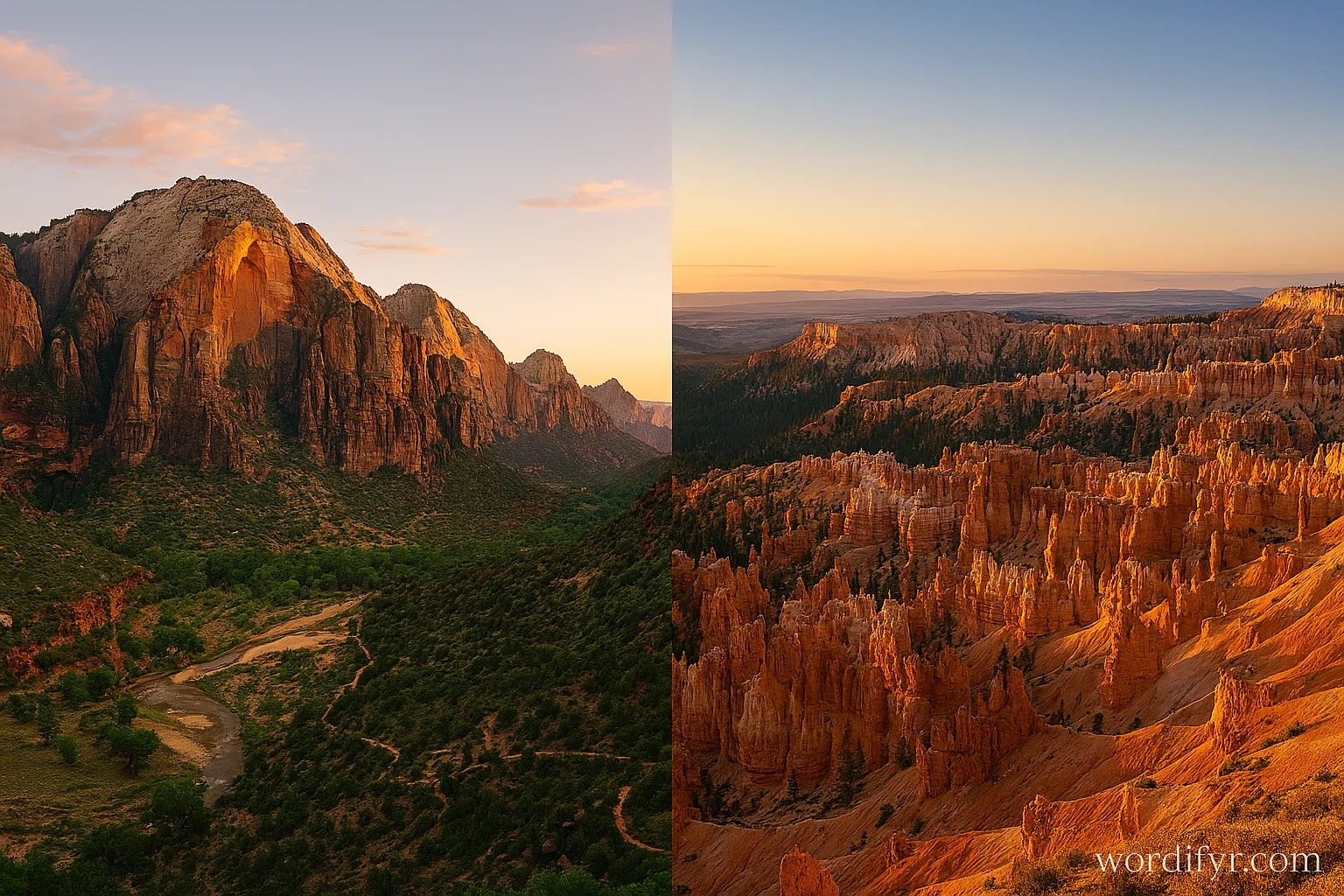
Zion National Park is Utah’s first national park and a masterpiece of massive sandstone cliffs. Located at a lower elevation than Bryce, Zion is characterized by its deep, wide canyon carved by the Virgin River. It is famous for its towering red and white Navajo sandstone walls that rise 2,000 feet into the sky.
How It’s Used
Zion is a hiker’s park. It is primarily used for world-class trekking, technical canyoneering, and photography. Because most of the activity happens on the canyon floor looking up, it provides a sense of immense scale that few other places on Earth can match.
Where It’s Used
Located in Southern Utah near the town of Springdale, Zion is the more “developed” of the two. It features a robust shuttle system (required for most of the year) and a lively gateway town filled with breweries, gear shops, and hotels.
Examples in Sentences
- “We spent all morning wading through the Virgin River in Zion‘s famous Narrows.”
- “If you want to hike Angel’s Landing in Zion, you need to apply for a permit months in advance.”
- “The shuttle in Zion makes it easy to hop between different trailheads without worrying about parking.”
Historical Note
The name “Zion” was given by Mormon pioneers who felt the canyon was a place of refuge and peace. Today, it is one of the most visited parks in the U.S., often feeling like a bustling “Disneyland for Hikers” during the peak summer months.
What Is Bryce Canyon?
Bryce Canyon National Park is not actually a single canyon, but a collection of massive natural amphitheatres. It is famous for its hoodoos—tall, thin spires of rock that look like a “forest of stone.” Sitting at an elevation of 8,000 to 9,000 feet, it is significantly higher and cooler than Zion.
How It’s Used
Bryce is a viewpoint park. While it has incredible trails, much of its beauty can be experienced from the rim. It is used for stargazing (it’s a certified Dark Sky Park), sunrise photography, and “top-down” exploration where you hike from the rim down into the formations.
Where It’s Used
Situated about two hours northeast of Zion, Bryce is more remote. The nearby Bryce Canyon City is smaller and more “developing” than Springdale. Because of its high altitude, it is a popular winter destination for snowshoeing and seeing the orange hoodoos topped with fresh white snow.
Examples in Sentences
- “The sunrise at Bryce Canyon turned the hoodoos into glowing pillars of fire.”
- “We hiked the Navajo Loop in Bryce to see the famous ‘Wall Street’ section.”
- “It was much cooler at Bryce than it was at Zion, so we needed light jackets even in June.”
Usage Note
Unlike Zion, where you spend your time at the bottom of a canyon looking up, at Bryce, you stand on the rim and look down. This makes it much more accessible for those who prefer driving and short walks over intense mountain climbing.
Key Differences Between Zion and Bryce
If you only have a few days, you need to know which park aligns with your physical ability and travel style.
The Breakdown:
- Perspective: In Zion, you are in the canyon looking up. In Bryce, you are on the rim looking down.
- Climate: Bryce is roughly 10–15 degrees cooler than Zion due to its high altitude.
- Crowds: Zion is significantly busier. You will likely wait in shuttle lines. Bryce is quieter and easier to navigate by car.
- Hiking Level: Zion features “epic,” high-stakes hikes like Angel’s Landing (scary heights). Bryce offers “magical” but manageable loops through the hoodoos.
Comparison Table
| Feature | Zion National Park | Bryce Canyon National Park |
| Primary Attraction | Massive cliffs & river canyons | Thousands of stone “hoodoos” |
| Elevation | ~4,000 feet (Warmer) | ~8,000+ feet (Much Cooler) |
| Transportation | Mandatory Shuttles (mostly) | Drive your own car (mostly) |
| Famous Hike | The Narrows / Angel’s Landing | Navajo Loop / Queen’s Garden |
| Vibe | High-energy, social, adventurous | Quiet, artistic, surreal |
| Best For | Adrenaline seekers & serious hikers | Families, photographers, & stargazers |
Real-Life Conversation Examples
Dialogue 1: The Temperature Shock
A: “I’m packing shorts and tanks for our trip to Zion and Bryce next week.”
B: “Keep the shorts for Zion, but you’ll want a hoodie for Bryce.”
A: “Really? They’re so close together!”
B: “Yeah, but Bryce is almost twice as high up. It’s a literal mountain climate.”
🎯 Lesson: Elevation changes everything; pack layers for Utah.
Dialogue 2: The “Hike” Decision
A: “I want to do the most famous hike in Utah. Should I head to Zion?”
B: “If you want a river walk or a cliff-side climb, yes, go to Zion.”
A: “What about the spiky rock things?”
B: “Those are hoodoos, and they are only in Bryce. That hike is much easier on the nerves!”
🎯 Lesson: Zion is for “epic” adventure; Bryce is for “otherworldly” scenery.
Dialogue 3: Logistics and Planning
A: “Can we see both Zion and Bryce in one day?”
B: “You can, but you’ll spend 4 hours driving. I’d give Zion two days and Bryce one.”
A: “Why more time for Zion?”
B: “Because the Zion shuttle system takes time to navigate, and the hikes are much longer.”
🎯 Lesson: Zion requires more logistical planning than the “drive-and-see” nature of Bryce.
When to Use Zion vs Bryce
Choose Zion if:
- You want to challenge yourself with legendary hikes.
- You enjoy a lively atmosphere with restaurants and shops nearby.
- You are visiting in the winter (it stays milder and mostly snow-free on the canyon floor).
- You want to see the famous “Wall of Tears” and weeping rocks.
Choose Bryce if:
- You want to avoid the intense summer heat of the desert.
- You prefer driving to viewpoints rather than taking shuttles.
- You are an amateur astronomer looking for the best night skies in the country.
- You want a “fairytale” landscape that feels like a different planet.
Simple Memory Trick: * Zion is for Zipping up cliffs (Active).
- Bryce is for Beholding the views (Visual).
Fun Facts
- Oldest vs. Youngest: Zion was Utah’s first National Park (1919), while Bryce was established later (1928).
- The Hoodoo Capital: Bryce Canyon has the highest concentration of hoodoos found anywhere on Earth.
- The Subway: Zion has a famous hike called “The Subway” that is so exclusive it requires a lottery-based permit system.
Conclusion
The Zion vs Bryce debate isn’t about which park is better, but which one fits your mood. If you have the energy to tackle the heights of Zion, you will be rewarded with some of the most dramatic landscapes in America. If you prefer a cooler, more whimsical escape where you can wander through a maze of orange spires, Bryce is your destination. Both parks are essential stops on any Southwest “Mighty 5” road trip.
Whether you’re wading through a river or standing on a high-altitude rim, Utah’s beauty will leave you speechless. Next time someone asks about these two parks, you’ll know exactly what they mean!