Introduction
You’re writing an article, report, or piece of software documentation, and suddenly you pause: should it be visualisation or visualization? Spellcheck might highlight one, your editor might suggest the other, and Google search results show both. It’s no surprise this word pair confuses writers, students, developers, and content creators worldwide.
The confusion exists because these two words look almost identical, sound exactly the same, and mean the same thing—yet they’re not interchangeable in every context. The difference isn’t about meaning; it’s about regional spelling conventions and audience expectations. Although they look/sound similar, they serve completely different purposes.
In this guide, we’ll break down visualisation vs visualization, explain where each spelling is used, show real-life examples, and help you choose the right one every time—especially for SEO, academic writing, and professional communication.
What Is Visualisation?
Visualisation is the British English spelling of the word that means forming a mental image or representing data, ideas, or processes visually.
Meaning and Definition
Visualisation refers to:
- Creating mental images (imagination or psychology)
- Representing data visually (charts, graphs, diagrams)
- Explaining abstract ideas using visuals
The meaning is identical to visualization—the difference is spelling, not function.
How It’s Used
In discussions about visualisation vs visualization, visualisation is commonly used in:
- UK academic writing
- European publications
- Australian and New Zealand English
- British software documentation
Where It’s Used
Visualisation follows British spelling rules, which favor “-ise” endings:
- organise
- analyse
- visualise
Example Sentences
- “Data visualisation improves decision-making.”
- “She used visualisation techniques to reduce stress.”
- “When comparing visualisation vs visualization, region matters.”
Short Historical or Usage Note
The “-ise” spelling comes from Greek and Latin roots and was standardized in British English long before American spelling reforms simplified many words.
What Is Visualization?
Visualization is the American English spelling of the same word, used widely in the United States and countries influenced by US English.
Meaning and Definition
Visualization means:
- Creating images in the mind
- Displaying information through visual formats
- Making complex data easier to understand visually
Again, the meaning is exactly the same as visualisation.
How It’s Used
In visualisation vs visualization comparisons, visualization dominates in:
- US-based content
- Technical documentation
- Data science and programming
- SEO-focused web content
Where It’s Used
Visualization follows American spelling conventions, which prefer “-ize” endings:
- organize
- analyze
- visualize
Example Sentences
- “Data visualization is critical in analytics.”
- “The app includes real-time visualization tools.”
- “SEO writers often choose visualization over visualisation.”
Regional or Grammatical Notes
Most programming languages, libraries, and frameworks (like Python, JavaScript, Tableau) use American English, making “visualization” the dominant spelling in tech.
Key Differences Between Visualisation and Visualization
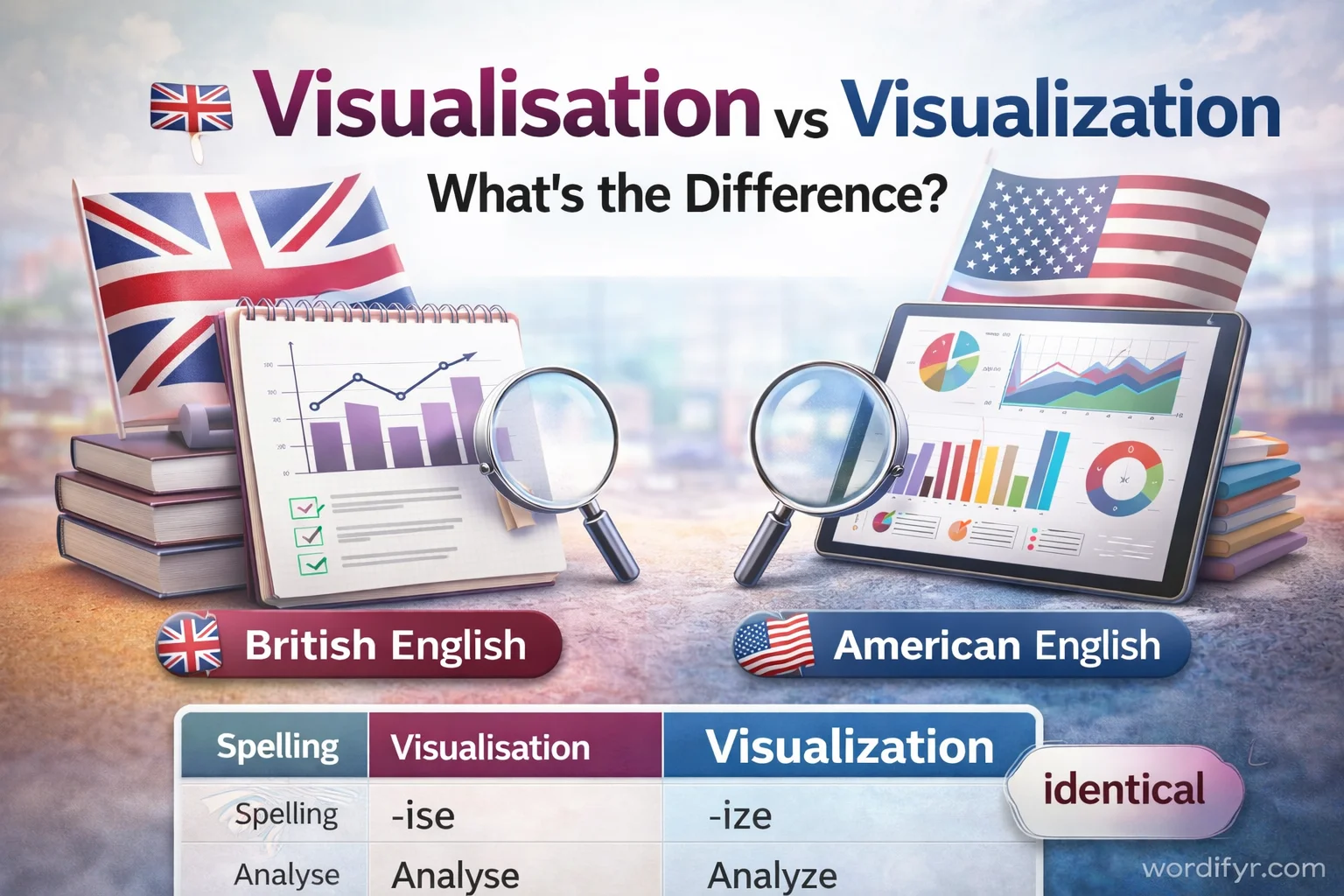
The core distinction in visualisation vs visualization lies in regional usage, not meaning.
Key Differences (Bullet Points)
- Same pronunciation
- Same meaning
- Different spelling standards
- Visualisation = British English
- Visualization = American English
- Audience determines correct usage
Comparison Table (Mandatory)
| Feature | Visualisation | Visualization |
|---|---|---|
| English Variant | British | American |
| Spelling Style | “-ise” | “-ize” |
| Meaning | Identical | Identical |
| Used In | UK, EU, AU | US, global tech |
| SEO Preference | UK websites | US & global SEO |
| Academic Usage | Common | Very common |
Real-Life Conversation Examples
Dialogue 1
A: “Why is my editor flagging ‘visualisation’?”
B: “You’re writing for a US audience—use visualization.”
🎯 Lesson: Audience determines visualisation vs visualization.
Dialogue 2
A: “Is visualization more correct?”
B: “No, it’s just American English.”
🎯 Lesson: Neither spelling is wrong.
Dialogue 3
A: “My professor prefers visualisation.”
B: “They’re probably following British English.”
🎯 Lesson: Academic standards affect spelling choice.
Dialogue 4
A: “Which spelling is better for SEO?”
B: “Visualization ranks better globally.”
🎯 Lesson: SEO strategy matters in visualisation vs visualization.
When to Use Visualisation vs Visualization
Practical Usage Rules
Use visualisation when:
- Writing for UK or European audiences
- Following British academic style guides
- Publishing on UK-based websites
Use visualization when:
- Writing for US or global audiences
- Creating technical or software documentation
- Optimizing content for search engines
Simple Memory Tricks
- S = Standard UK spelling 🇬🇧
- Z = Z-America 🇺🇸
Writing for US vs UK
For international SEO and tech content, visualization is usually the safer choice. For local UK publications, visualisation feels more natural and professional.
Fun Facts or History
- Google search data consistently shows “visualization” has higher global search volume.
- Many British publishers now accept both spellings, depending on audience reach.
Conclusion
The debate over visualisation vs visualization isn’t about right or wrong—it’s about context, audience, and regional standards. Both spellings mean the same thing and are grammatically correct. The key is consistency and awareness. If you’re writing for a UK audience, visualisation fits naturally. If your content targets a global or US-based audience, visualization is the smarter SEO choice. Once you understand this distinction, you’ll never second-guess the spelling again.
Next time someone uses these two words, you’ll know exactly what they mean!