
Introduction
English is full of word pairs that look almost identical but behave very differently—and sooth vs soothe is a classic example. At first glance, the difference is just one extra “e”, which makes many writers assume they mean the same thing. That small spelling difference, however, changes everything. One word is rare and mostly historical, while the other is common in everyday speech, writing, and even medicine. Although they look/sound similar, they serve completely different purposes.
The confusion usually happens because both words feel emotionally related and come from old English roots. But using the wrong one can make a sentence sound awkward or even incorrect. In this guide, we’ll clearly break down sooth vs soothe with meanings, examples, comparisons, dialogues, and memory tricks—so you can confidently choose the right word every time 😊
Section 1: What Is “Sooth”?
Meaning of Sooth
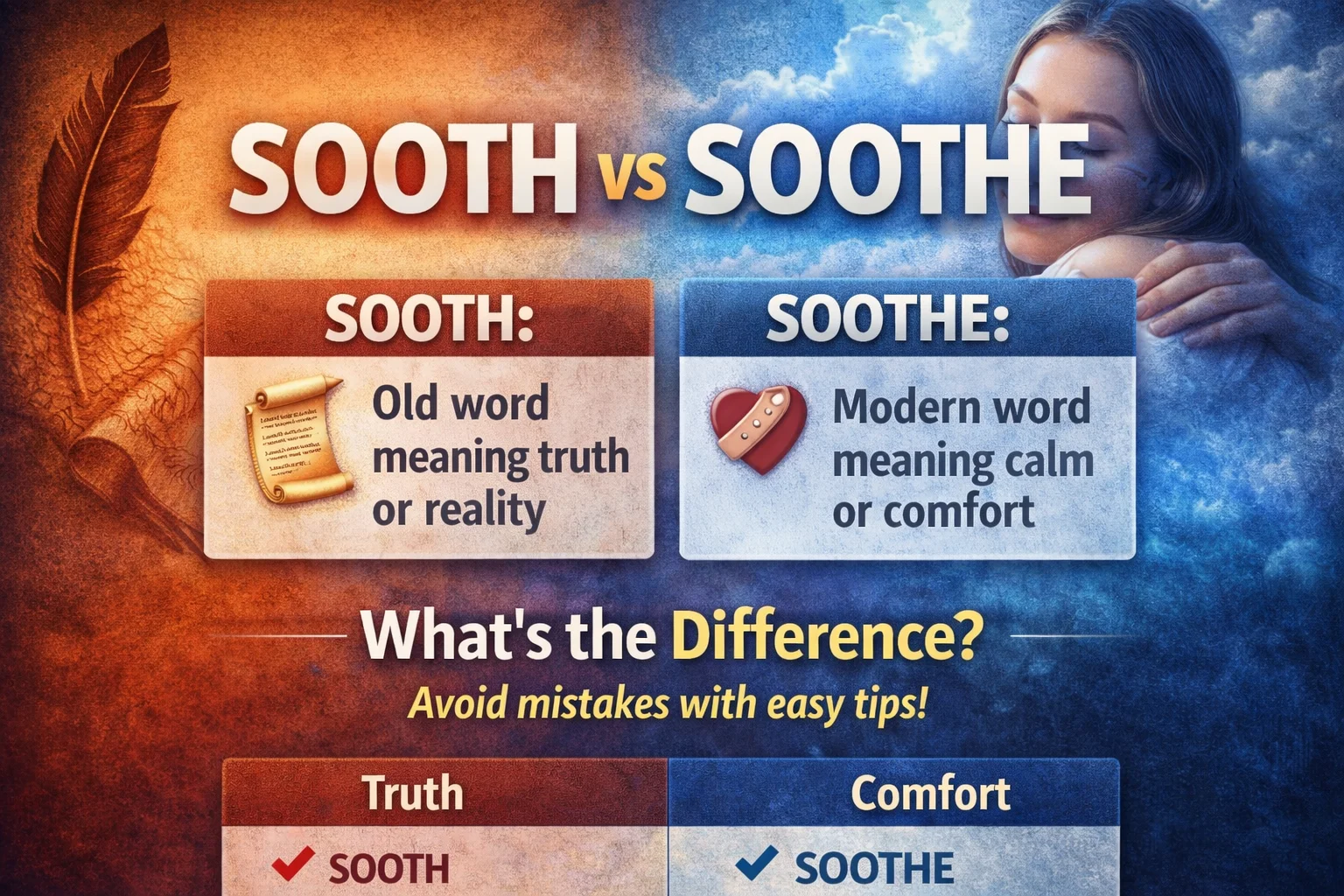
Sooth is an old or literary word that means truth, reality, or fact. It can also function as a verb meaning to tell the truth or confirm something as true. In modern English, sooth is rarely used outside of poetry, historical texts, or fixed expressions.
In the sooth vs soothe comparison, sooth has nothing to do with comfort or calming—it’s about truthfulness.
How It’s Used
You use sooth when:
- Referring to truth or reality (mostly archaic)
- Writing poetry, fantasy, or historical content
- Using fixed phrases like “in sooth”
It answers the question: Is this true?
Where It’s Used (Grammar & Context)
- Found mainly in old English, literature, and poetry
- Rare in everyday conversation
- Used the same way in US and UK English, though uncommon in both
Examples in Sentences
- In sooth, the knight spoke bravely.
- She told him the sooth, no matter how painful.
- The prophecy revealed the hidden sooth.
In sooth vs soothe, notice how sooth relates to truth, not emotions.
Short Historical or Usage Note
The word sooth comes from Old English sōþ, meaning “true” or “real.” Over time, it faded from daily use as words like truth replaced it, but it still survives in literary and poetic language.
Section 2: What Is “Soothe”?
Meaning of Soothe
Soothe means to calm, comfort, or reduce pain, stress, or discomfort. It is a very common modern verb used in emotional, physical, and psychological contexts.
In the sooth vs soothe contrast, soothe is the word you’ll use almost all the time in daily English.
How It’s Used
You use soothe when:
- Calming someone emotionally
- Reducing physical pain or irritation
- Creating comfort or relief
It answers the question: How can I make this feel better?
Spelling, Usage, and Grammar Notes
- Ends with -e, which changes pronunciation slightly
- Functions as a verb
- Widely used in spoken and written English
Examples in Sentences
- The music helped soothe her anxiety.
- Aloe vera can soothe sunburned skin.
- He spoke gently to soothe the crying child.
- A warm drink can soothe your throat.
In sooth vs soothe, soothe is all about comfort and relief.
Regional or Grammatical Notes
There is no difference in meaning or usage between American and British English. Soothe is universally understood.
Key Differences Between Sooth and Soothe
Bullet-Point Differences
- Sooth means truth or reality
- Soothe means to calm or comfort
- Sooth is rare and literary
- Soothe is common and modern
- Sooth relates to facts
- Soothe relates to feelings or pain
These distinctions make sooth vs soothe much clearer.
Comparison Table
| Feature | Sooth | Soothe |
|---|---|---|
| Meaning | Truth, reality | Calm, comfort, relieve |
| Usage Frequency | Rare | Very common |
| Context | Literary, historical | Emotional, physical |
| Part of Speech | Noun or verb | Verb |
| Modern Use | ❌ Limited | ✅ Widespread |
| Example | Speak the sooth | Soothe the pain |
Real-Life Conversation Examples
Dialogue 1
A: This herbal tea helps me relax.
B: Yes, it really soothes the nerves.
🎯 Lesson: Comfort and calm always use soothe, not sooth.
Dialogue 2
A: Is that story true?
B: In sooth, it happened exactly like that.
🎯 Lesson: Truth-related meanings use sooth.
Dialogue 3
A: The baby won’t stop crying.
B: Try soothing her with soft music.
🎯 Lesson: Emotional calming = soothe.
Dialogue 4
A: He spoke the sooth, even when it hurt.
B: At least honesty matters.
🎯 Lesson: Sooth is about honesty, not comfort.
When to Use Sooth vs Soothe
Practical Usage Rules
Use sooth when:
- Writing poetic, archaic, or fantasy-style English
- Referring to truth or reality
- Using phrases like “in sooth”
Use soothe when:
- Talking about comfort, calm, or relief
- Describing emotional or physical healing
- Writing modern English content
This rule covers nearly all sooth vs soothe situations.
Simple Memory Tricks
- Soothe has an extra “e” → think ease 😌
- Sooth sounds like truth in old stories 📜
If it reduces pain or stress, choose soothe.
If it reveals truth, choose sooth.
US vs UK Usage
There is no regional difference in sooth vs soothe. The distinction is purely about meaning and context, not geography.
Fun Facts or History
- The phrase “in sooth” survives mostly in fantasy novels and Shakespearean-style writing.
- Soothe evolved from the same root as sooth but shifted meaning toward comfort instead of truth.
This shared origin explains why sooth vs soothe still feel connected today.
Conclusion
The confusion between sooth vs soothe comes down to history and spelling, not meaning. Sooth is an old, literary word tied to truth and honesty, while soothe is a modern, everyday verb meaning to calm or relieve discomfort. One deals with facts; the other deals with feelings. By remembering their core purposes and using simple memory tricks, you can avoid mistakes and write with confidence. Next time someone uses these two words, you’ll know exactly what they mean!