
Introduction
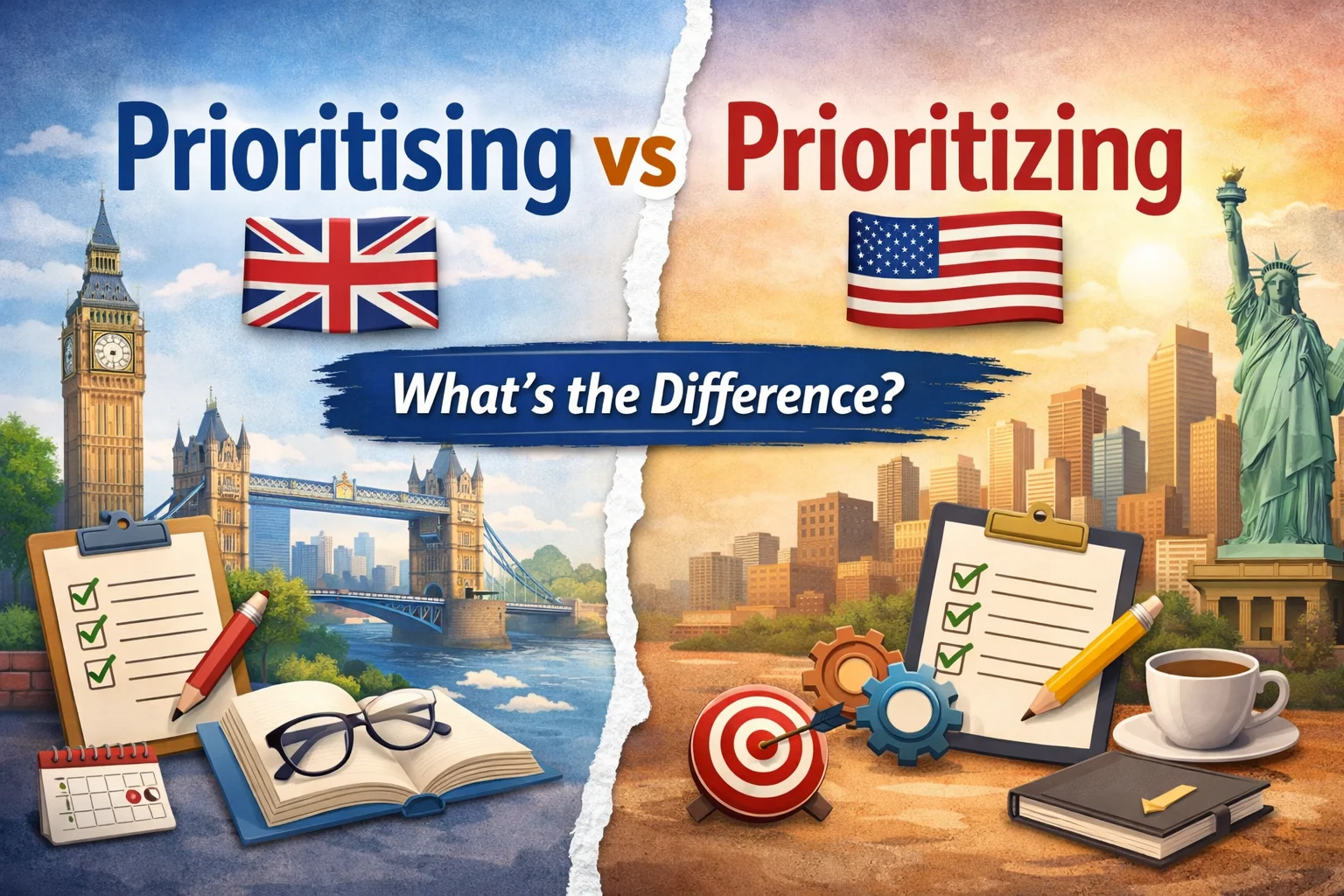
Have you ever paused mid-sentence, fingers hovering over the keyboard, wondering whether to write prioritising or prioritizing? You are not alone. This pair of words confuses writers, students, professionals, and even native English speakers on a daily basis. They look nearly identical, sound exactly the same, and carry the same meaning, yet people still worry about using the “wrong” one.
The confusion usually appears when writing emails, academic papers, blog posts, or professional documents for an international audience. Spell-checkers do not always help, and online examples often contradict each other.
Although they look similar, they serve completely different purposes.
In this guide, you will learn the exact difference between prioritising vs prioritizing, how each spelling is used, where it is preferred, and how to choose the correct one confidently every time. Let’s remove the confusion once and for all.
What Is “Prioritising”?
Prioritising is the British English spelling of the verb prioritise. It means deciding what is most important and dealing with those things first.
Meaning
Prioritising refers to the act of ranking tasks, goals, or responsibilities in order of importance. It focuses on time management, decision-making, and efficiency.
In simple terms:
Prioritising = choosing what matters most first
How It’s Used
- Always used as a verb
- Common in formal, academic, and professional writing
- Frequently appears in project management, education, healthcare, and business contexts
Where It’s Used
Prioritising follows British English spelling rules and is commonly used in:
- United Kingdom
- Ireland
- Australia
- New Zealand
- Pakistan
- India
- South Africa
- Other Commonwealth countries
If you are writing for a UK-based company, university, or audience, prioritising is the correct choice.
Examples in Sentences
- “She is prioritising her mental health this year.”
- “The manager focused on prioritising urgent client requests.”
- “Students should start prioritising revision topics before exams.”
- “We are prioritising quality over speed.”
Short Historical or Usage Note
The spelling prioritising follows the traditional British “-ise” verb ending, which came into English through French and Latin influences. British English retains this structure across many verbs, such as organising, realising, and recognising. While “-ize” also exists in British English, “-ise” remains more common and widely accepted in everyday usage.
What Is “Prioritizing”?
Prioritizing is the American English spelling of the same verb. It carries the exact same meaning as prioritising but follows a different spelling convention.
Meaning
Prioritizing means identifying tasks, goals, or actions that should be handled before others based on urgency or importance.
In short:
Prioritizing = focusing on what comes first
How It’s Used
- Used strictly as a verb
- Dominant in American academic, professional, and digital content
- Standard spelling in US English style guides
Where It’s Used
Prioritizing is preferred in:
- United States
- American companies and institutions
- US-based blogs, media outlets, and publications
If your audience is American or global with a US focus, prioritizing is the safer and more expected spelling.
Examples in Sentences
- “She is prioritizing customer satisfaction.”
- “The team is prioritizing high-impact features.”
- “I am prioritizing my studies this semester.”
- “The company is prioritizing long-term growth.”
Spelling and Grammar Notes
American English consistently favors “-ize” endings over “-ise.” This spelling reform was popularized in the 19th century to simplify English spelling. As a result, American English uses prioritizing, organizing, analyzing, and optimizing almost exclusively.
Key Differences Between Prioritising and Prioritizing
While the meaning stays the same, the difference lies in spelling preference and regional usage.
Quick Differences (Bullet Points)
- Prioritising is British English spelling
- Prioritizing is American English spelling
- Both are verbs, never nouns
- Meaning is identical in all contexts
- Choice depends on audience and region, not grammar
Comparison Table
| Feature | Prioritising | Prioritizing |
|---|---|---|
| English Variant | British English | American English |
| Spelling Style | -ise ending | -ize ending |
| Part of Speech | Verb | Verb |
| Meaning | Ranking tasks by importance | Ranking tasks by importance |
| Used In | UK, Commonwealth countries | United States |
| Academic Acceptance | ✔️ Yes | ✔️ Yes |
| Pronunciation | Same | Same |
Real-Life Conversation Examples
Dialogue 1
A: “Why did my editor change prioritising to prioritizing?”
B: “Because the article is for a US audience.”
🎯 Lesson: Use prioritizing when writing for Americans.
Dialogue 2
A: “Is prioritising wrong English?”
B: “No, it’s British English. It depends on your audience.”
🎯 Lesson: Both spellings are correct in the right region.
Dialogue 3
A: “I keep mixing up prioritising vs prioritizing.”
B: “Just match the spelling to the country you’re writing for.”
🎯 Lesson: Region determines spelling, not meaning.
Dialogue 4
A: “Should I use prioritising in my university assignment?”
B: “Yes, if your institution follows UK standards.”
🎯 Lesson: Academic style guides matter.
Dialogue 5
A: “Google flagged prioritising as incorrect.”
B: “Your document is set to US English.”
🎯 Lesson: Language settings influence spell-check results.
When to Use Prioritising vs Prioritizing
Choosing between prioritising vs prioritizing becomes easy once you apply a few practical rules.
Use “Prioritising” When:
- Writing for a UK or Commonwealth audience
- Following British English style guides
- Creating academic or professional UK-based content
- Maintaining consistent “-ise” spellings
Examples:
- “The organisation is prioritising sustainability.”
- “We are prioritising safety measures.”
Use “Prioritizing” When:
- Writing for a US audience
- Publishing on American websites or platforms
- Following APA or US corporate style guides
- Using American English consistently
Examples:
- “The company is prioritizing innovation.”
- “She is prioritizing her career goals.”
Simple Memory Tricks
- S = Standard British spelling → prioritising
- Z = USA preference → prioritizing
Another helpful tip:
Match the spelling to other words in your content (organising vs organizing).
Writing for US vs UK Audiences
- US audience: Always choose prioritizing
- UK audience: Prefer prioritising
- Global audience: Pick one and stay consistent
Consistency improves readability, professionalism, and SEO credibility.
Fun Facts and History
1. Both Spellings Come from Greek
The root word priority comes from the Latin prior, meaning “earlier” or “more important.” The verb form evolved later, adopting different spellings across regions.
2. British English Also Accepts “-ize”
Interestingly, British English technically allows prioritizing, but modern UK usage strongly prefers prioritising, especially in everyday writing.
Conclusion
The difference between prioritising vs prioritizing is not about meaning, correctness, or grammar. It is purely about regional spelling preferences. Prioritising follows British English conventions, while prioritizing is standard in American English. Both words describe the same action: deciding what matters most and acting on it first.
Once you identify your audience, the correct choice becomes obvious. Stay consistent, match your spelling to your region, and your writing will look professional and polished.
Next time someone uses these two words, you’ll know exactly what they mean!