Introduction
If you’ve ever shopped for jewelry, researched precious metals, or followed the automotive or investment markets, you’ve probably come across platinum vs palladium and wondered what really sets them apart. At first glance, they look almost identical—both are shiny, silver-white metals with a premium feel. Even their names sound closely related, which adds to the confusion. Many people assume they’re interchangeable or that one is just a cheaper version of the other.
But that’s far from the truth. Although they look/sound similar, they serve completely different purposes. From jewelry and catalytic converters to investment portfolios and industrial uses, platinum vs palladium is a comparison with real-world consequences. In this guide, we’ll break everything down clearly and simply, so you’ll never mix them up again. Let’s dive in. ✨
What Is Platinum?
Platinum is a rare, naturally occurring precious metal known for its durability, density, and resistance to corrosion. It belongs to the platinum-group metals (PGMs) and has been prized for centuries.
Meaning and Characteristics
Platinum is a heavy, silver-white metal that does not tarnish or rust. It’s chemically stable, making it ideal for applications where strength and longevity matter.
How It’s Used
Platinum is widely used across several industries:
- Jewelry: High-end rings, necklaces, and wedding bands
- Automotive: Catalytic converters (especially in diesel vehicles)
- Medical: Pacemakers, chemotherapy drugs, and surgical tools
- Investment: Bars, coins, and ETFs
In the platinum vs palladium discussion, platinum is often associated with luxury and long-term durability.
Where It’s Used
Platinum is mined mainly in:
- South Africa (largest producer)
- Russia
- Zimbabwe
Its global scarcity directly affects pricing and demand.
Examples in Sentences
- “Her engagement ring is made of platinum, which makes it extremely durable.”
- “Platinum prices surged due to supply constraints.”
- “Doctors rely on platinum-based tools for precision.”
Short Historical Note
Platinum was used by ancient South American civilizations, but Europeans initially dismissed it as “unripe silver.” By the 18th century, its true value was recognized, and it became a symbol of prestige. In the long-running platinum vs palladium comparison, platinum historically held the crown as the more valuable metal.
What Is Palladium?
Palladium is another precious metal from the platinum group, but it is lighter, less dense, and more reactive than platinum.
Meaning and Characteristics
Palladium is a bright, silver-white metal that absorbs hydrogen easily. It has a lower melting point and is more flexible in certain industrial applications.
How It’s Used
Palladium’s primary uses include:
- Automotive: Catalytic converters (especially in gasoline cars)
- Electronics: Capacitors, connectors, and circuit boards
- Dentistry: Dental alloys
- Investment: Coins, bars, and financial instruments
In the platinum vs palladium debate, palladium often stands out for its industrial demand.
Where It’s Used
Palladium is mainly sourced from:
- Russia (largest producer)
- South Africa
- Canada
Its supply is more limited, which has caused dramatic price spikes in recent years.
Examples in Sentences
- “Palladium is essential for reducing emissions in modern cars.”
- “Investors turned to palladium when prices overtook platinum.”
- “Electronics manufacturers rely on palladium for reliability.”
Regional and Usage Notes
Unlike platinum, palladium is used far more heavily in gasoline engines, especially in the US and Asia. This difference plays a major role in the platinum vs palladium market dynamics.
Short Historical Note
Discovered in 1803 by William Hyde Wollaston, palladium was named after the asteroid Pallas. For decades, it was cheaper and less famous than platinum—until demand skyrocketed in the 21st century.
Key Differences Between Platinum and Palladium
When comparing platinum vs palladium, the differences go beyond appearance.
Quick Bullet Points
- Weight: Platinum is heavier; palladium is lighter
- Durability: Platinum is more wear-resistant
- Price Volatility: Palladium prices fluctuate more
- Primary Use: Platinum = jewelry & diesel cars; Palladium = gasoline cars
- Rarity: Both are rare, but palladium supply is more constrained
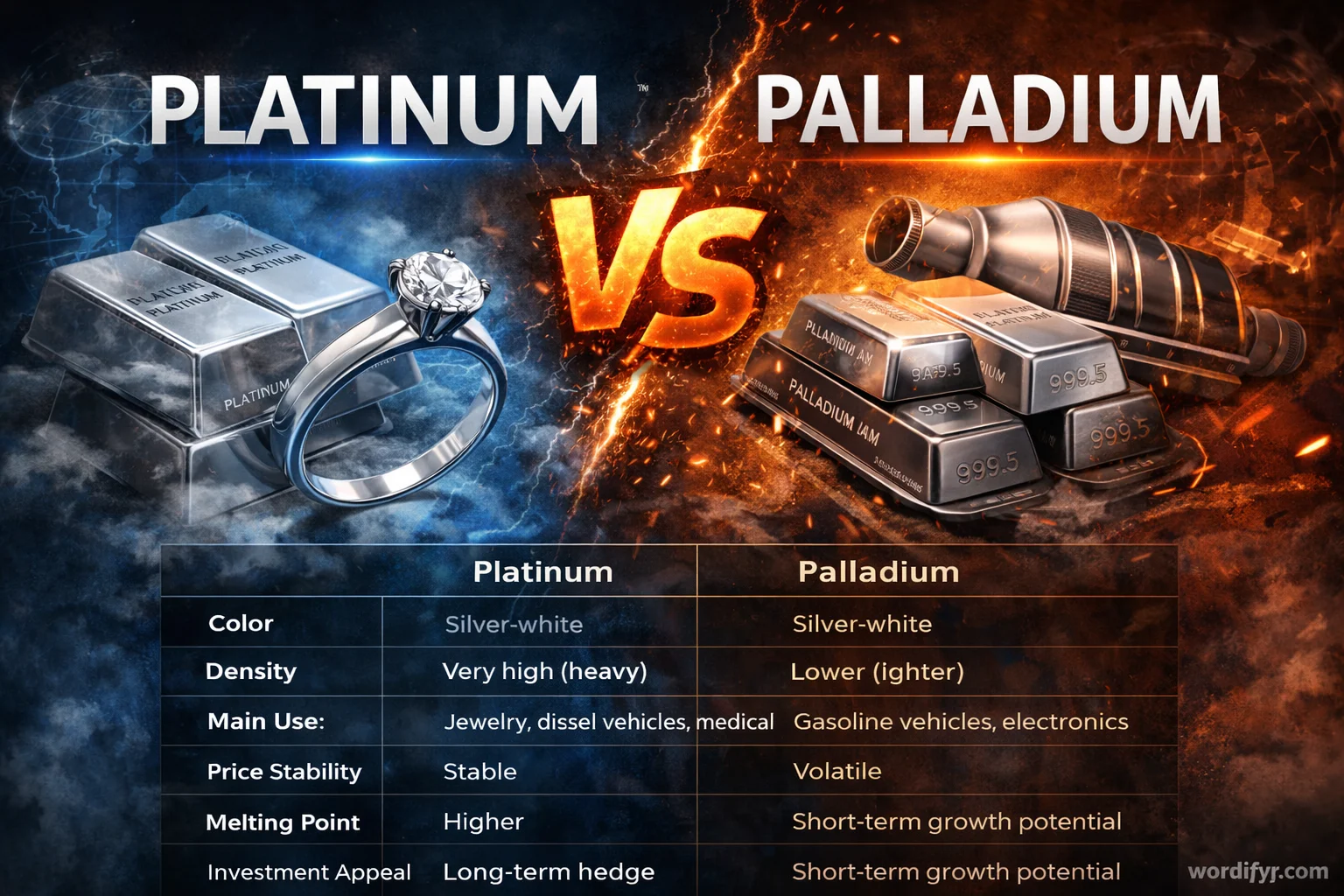
Comparison Table
| Feature | Platinum | Palladium |
|---|---|---|
| Color | Silver-white | Silver-white |
| Density | Very high (heavy) | Lower (lighter) |
| Main Use | Jewelry, medical, diesel vehicles | Gasoline vehicles, electronics |
| Price Stability | More stable historically | Highly volatile |
| Melting Point | Higher | Lower |
| Investment Appeal | Long-term hedge | Short-term growth potential |
This table highlights why platinum vs palladium is not just a cosmetic comparison—it’s about function and value.
Real-Life Conversation Examples
Dialogue 1
Alex: “I bought a platinum ring.”
Sam: “Nice! Isn’t palladium cheaper though?”
Alex: “Yes, but platinum lasts longer.”
🎯 Lesson: Platinum is often chosen for durability in jewelry.
Dialogue 2
Jamie: “Why is palladium so expensive right now?”
Chris: “Because car manufacturers need it for emissions.”
🎯 Lesson: Palladium demand is driven by the automotive industry.
Dialogue 3
Mia: “Platinum and palladium look the same to me.”
Leo: “True, but their uses are totally different.”
🎯 Lesson: Appearance doesn’t define function in platinum vs palladium.
Dialogue 4
Nina: “Should I invest in platinum or palladium?”
Mark: “Platinum is steadier; palladium is riskier but faster.”
🎯 Lesson: Investment goals matter when choosing between the two.
When to Use Platinum vs Palladium
Choosing between platinum vs palladium depends on your purpose.
Use Platinum When:
- You want long-lasting jewelry
- You prefer price stability
- You’re focused on medical or luxury applications
- You want a long-term investment
Memory Trick:
👉 Platinum = Premium & Permanent
Use Palladium When:
- You’re dealing with automotive or electronics manufacturing
- You want exposure to industrial demand
- You’re okay with market volatility
- You’re making lighter jewelry designs
Memory Trick:
👉 Palladium = Practical & Performance
Regional Considerations
- US & Asia: Higher palladium demand (gasoline cars)
- Europe: More platinum use (diesel engines)
Understanding geography helps clarify the platinum vs palladium supply-demand balance.
Fun Facts & History
- 🚗 Palladium once became more expensive than gold and platinum combined due to automotive demand.
- 💍 Platinum jewelry doesn’t wear away—it only displaces, which is why antique rings still hold value.
These facts show how dynamic the platinum vs palladium story really is.
Conclusion
The debate around platinum vs palladium isn’t about which metal is “better,” but which one is right for your needs. Platinum shines in durability, luxury, and long-term value, while palladium dominates industrial use and offers high-growth potential. Although they may look alike, their roles in jewelry, technology, and investment couldn’t be more different. Once you understand their properties, uses, and market behavior, the confusion disappears. Next time someone uses these two words, you’ll know exactly what they mean!