Introduction
Have you ever paused while writing and wondered whether to use joyous or joyful? You are not alone. These two words look similar, sound related, and both connect to happiness, which makes them easy to mix up. Many writers, students, and even native English speakers use them interchangeably without realizing that they carry slightly different meanings and tones. That confusion often shows up in essays, blog posts, speeches, and everyday conversations. Although they look/sound similar, they serve completely different purposes. Understanding the difference between joyous vs joyful can instantly improve your writing and help you express emotions more accurately. In this guide, we will break everything down in a clear, friendly way, with examples, dialogues, memory tricks, and practical rules you can actually use.
What Is Joyous?
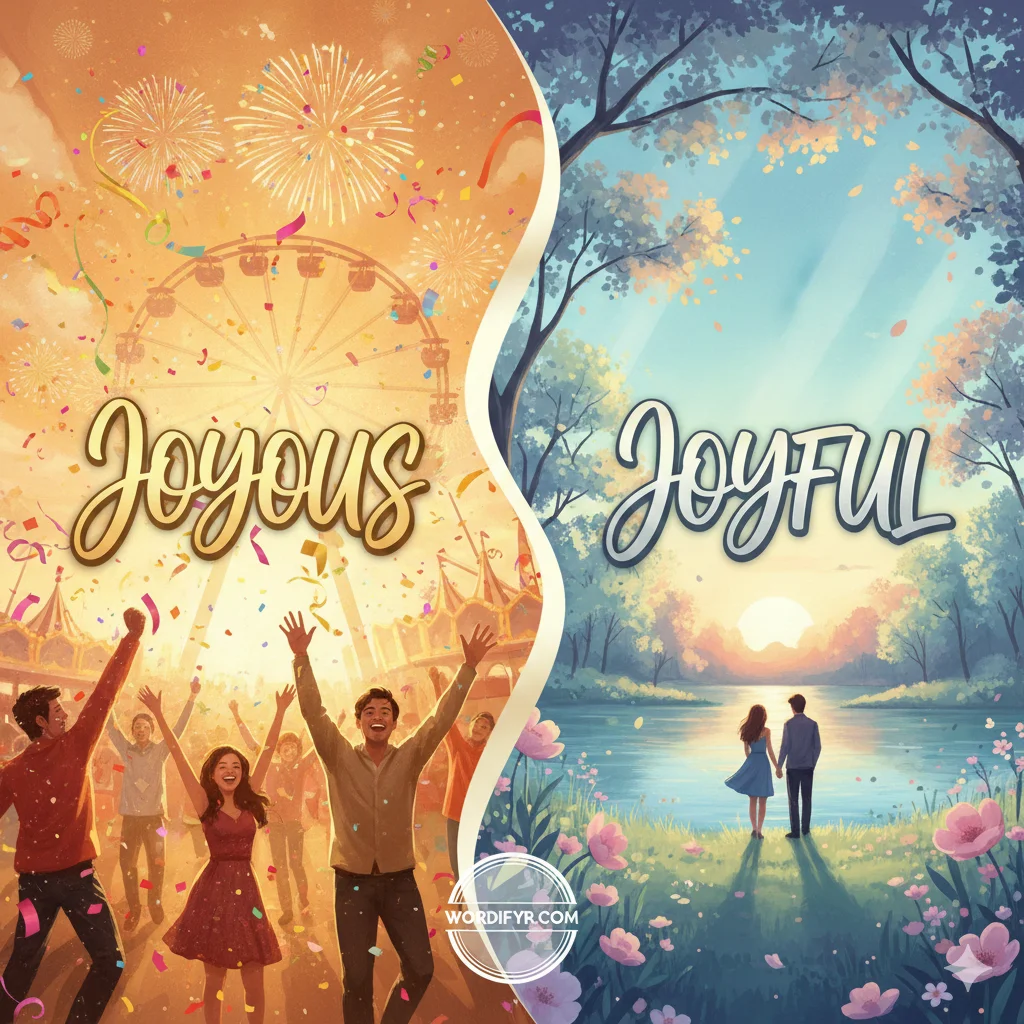
Joyous is an adjective that describes something filled with expressed, outward, or celebratory joy. It often refers to visible happiness that is energetic, emotional, and shared openly with others.
Meaning of Joyous
➡️ Joyous means full of excitement, celebration, or intense happiness that is clearly shown.
How It’s Used
The word joyous is commonly used to describe:
- Events
- Occasions
- Atmospheres
- Groups of people
It focuses on external joy, not quiet feelings.
Where It’s Used
- Common in formal writing, speeches, literature, and announcements
- Used widely in both American and British English
- Often appears in religious, festive, or ceremonial contexts
Examples of Joyous in Sentences
- “The wedding was a joyous occasion for the entire family.”
- “A joyous crowd filled the stadium after the victory.”
- “They shared joyous news with their friends.”
Short Usage Note
Historically, joyous comes from Old French joie, meaning joy or delight. It has long been associated with public celebration, which explains why it often describes events rather than inner feelings.
What Is Joyful?
Joyful is also an adjective, but it focuses more on inner happiness and personal emotional states rather than outward celebration.
Meaning of Joyful
➡️ Joyful means feeling deep, genuine happiness or contentment internally.
How It’s Used
The word joyful is often used to describe:
- A person’s emotional state
- Attitudes or personalities
- Quiet happiness or lasting satisfaction
Where It’s Used
- Common in daily conversation
- Used equally in American and British English
- Popular in self-help, emotional, and reflective writing
Examples of Joyful in Sentences
- “She felt joyful after helping others.”
- “He lives a joyful life despite challenges.”
- “The child’s smile made her heart feel joyful.”
Usage and Grammar Notes
Unlike joyous, joyful is rarely used to describe events. It is more personal and emotional, focusing on how someone feels inside rather than what is happening publicly.
Key Differences Between Joyous and Joyful
Quick Bullet-Point Differences
- Joyous focuses on external celebration
- Joyful focuses on internal emotion
- Joyous is louder and more expressive
- Joyful is calmer and more personal
- Joyous often describes events
- Joyful often describes people
Comparison Table (Mandatory)
| Feature | Joyous | Joyful |
|---|---|---|
| Part of Speech | Adjective | Adjective |
| Focus | External happiness | Internal happiness |
| Common Usage | Events, crowds, celebrations | Feelings, mindset, personality |
| Emotional Tone | Energetic and expressive | Calm and sincere |
| Example | “A joyous festival” | “A joyful heart” |
| Formality | Slightly more formal | Neutral and conversational |
Real-Life Conversation Examples
Dialogue 1
A: “Was the concert fun?”
B: “Yes, the crowd was absolutely joyous.”
🎯 Lesson: Use joyous for group excitement and celebration.
Dialogue 2
A: “How do you feel after volunteering?”
B: “Honestly, I feel very joyful.”
🎯 Lesson: Use joyful for personal emotions.
Dialogue 3
A: “Should I write ‘joyous moment’ or ‘joyful moment’?”
B: “Was it a celebration or a feeling?”
🎯 Lesson: Events are joyous, feelings are joyful.
Dialogue 4
A: “She has a joyous personality.”
B: “You mean joyful — she’s calm, not loud.”
🎯 Lesson: Personal traits usually pair with joyful.
When to Use Joyous vs Joyful
Use Joyous When:
✔️ Describing celebrations
✔️ Talking about shared happiness
✔️ Writing formal or ceremonial content
✔️ Referring to events or announcements
Examples:
- “A joyous holiday season”
- “The city celebrated with joyous cheers”
Use Joyful When:
✔️ Describing emotions or states of mind
✔️ Writing personal or emotional content
✔️ Talking about long-term happiness
✔️ Writing reflective or motivational pieces
Examples:
- “She lives a joyful life.”
- “Helping others makes me joyful.”
Easy Memory Trick
🧠 Joyous = Noise (loud, shared happiness)
🧠 Joyful = Inside (quiet, personal happiness)
US vs UK Usage
There is no regional difference in spelling or meaning. Both joyous vs joyful are used the same way in American and British English.
Fun Facts or History
1️⃣ Joyous appears more often in classic literature and religious texts because it reflects public celebration.
2️⃣ Joyful became more popular in modern writing due to its emotional and psychological tone.
Conclusion
The difference between joyous vs joyful may seem small, but it plays a big role in clear communication. Joyous describes visible, shared happiness often linked to celebrations and events. Joyful, on the other hand, focuses on inner peace, emotional satisfaction, and personal happiness. Choosing the right word helps your writing sound natural, accurate, and confident. Once you remember that joyous is outward and joyful is inward, the confusion disappears. Next time someone uses these two words, you’ll know exactly what they mean! 😊