
Introduction
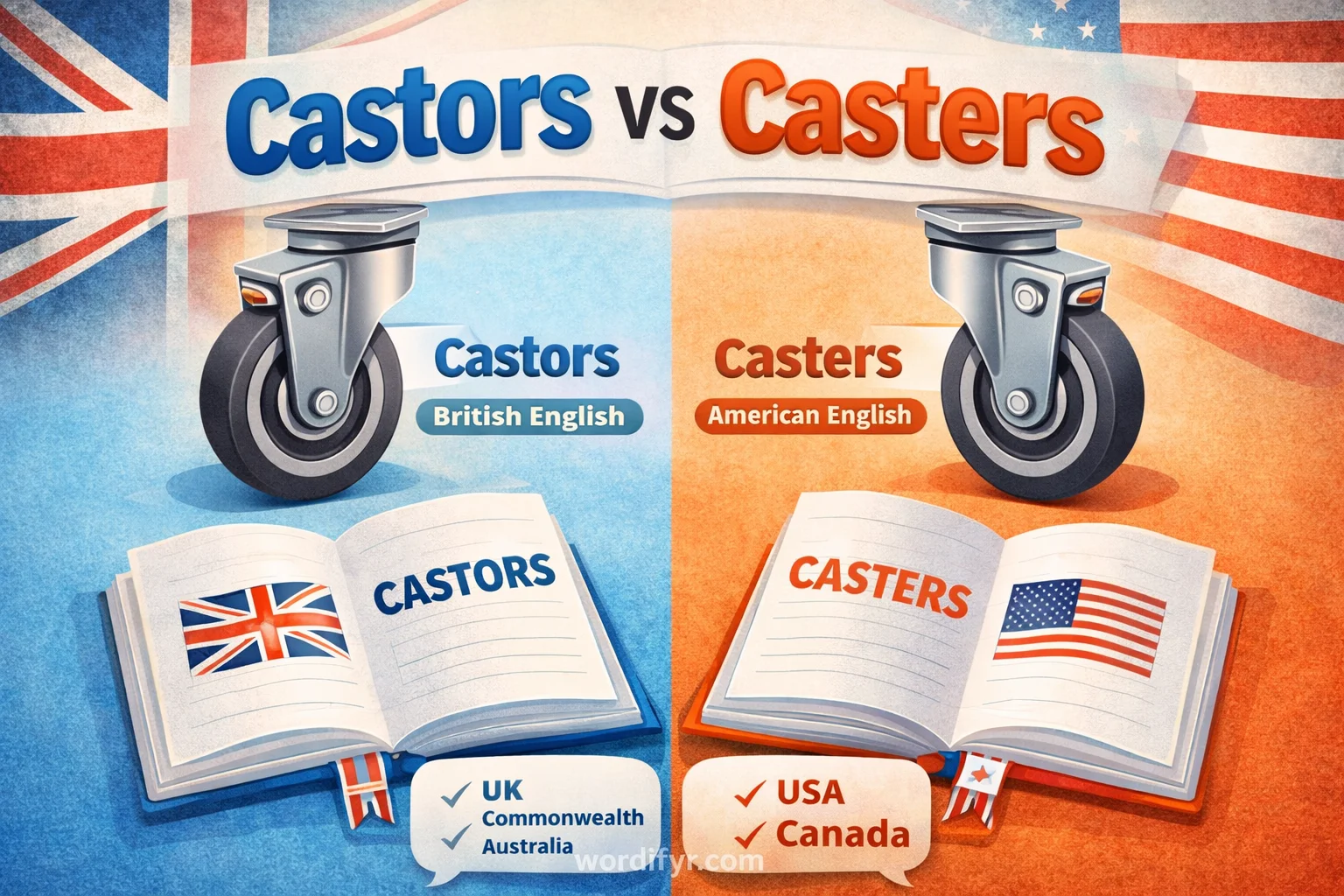
Have you ever stopped mid-sentence while writing and wondered whether castors or casters is the correct spelling? You’re not alone. These two words are commonly confused because they sound identical, look almost the same, and are often used in similar contexts—especially when talking about wheels on furniture or equipment. Even native English speakers frequently mix them up.
The confusion becomes even greater when regional spelling rules come into play. Some people insist one spelling is wrong, while others use both interchangeably. The truth is more nuanced. Although they look/sound similar, they serve completely different purposes. One spelling dominates in American English, while the other has historical and regional significance elsewhere. In this guide, we’ll clearly explain castors vs casters, how each term is used, where it’s preferred, and how to choose the right one every time.
Section 1: What Is “Castors”?
Castors is a noun traditionally used in British English to refer to small wheels attached to furniture or equipment to make them movable.
Clear Meaning
Castors are rotating wheels mounted to the bottom of objects such as chairs, beds, carts, and trolleys.
How It’s Used
In the castors vs casters debate, castors represents the older and more traditional spelling, especially outside the United States.
Where It’s Used
- United Kingdom
- Ireland
- Australia
- New Zealand
- Other Commonwealth countries
In British English writing standards, castors is generally considered the preferred form.
Examples in Sentences
- “The office chair has broken castors.”
- “The hospital bed was fitted with locking castors.”
- “Replace the wooden legs with metal castors for easy movement.”
Short Historical or Usage Note
The word castor comes from Latin castor, meaning “beaver,” whose secretions were once used in medicine and manufacturing. Over time, the spelling castor became associated with rolling mechanisms, particularly in British English.
Section 2: What Is “Casters”?
Casters is the dominant spelling in American English and refers to the same type of small wheels used for mobility.
Clear Meaning
Casters are swiveling wheels fixed to furniture, machinery, or equipment to allow smooth movement.
How It’s Used
In castors vs casters, casters is the standard and preferred American spelling, used in everyday language, technical documentation, and manufacturing.
Where It’s Used
- United States
- Canada (more commonly)
- International product catalogs
- Industrial and mechanical contexts
Spelling and Usage Differences
American English favors simplified spelling, which is why casters replaced castors over time.
Examples in Sentences
- “The cart rolls easily on heavy-duty casters.”
- “Install locking casters for safety.”
- “Most office chairs in the U.S. use nylon casters.”
Regional or Grammatical Notes
In American English:
- Casters is always correct
- Castors is considered uncommon or outdated
Key Differences Between Castors and Casters
Bullet Point Summary
- Castors = British English spelling
- Casters = American English spelling
- Meaning is exactly the same
- Pronunciation is identical
- Choice depends on regional audience
Castors vs Casters Comparison Table
| Feature | Castors | Casters |
|---|---|---|
| Preferred Region | UK & Commonwealth | United States |
| Meaning | Small wheels | Small wheels |
| Pronunciation | Same | Same |
| Spelling Style | Traditional | Simplified |
| Used in US English | Rare | Standard |
| Used in UK English | Standard | Acceptable but less common |
Real-Life Conversation Examples
Dialogue 1
A: “Should I write castors or casters in this manual?”
B: “Who’s your audience?”
A: “Mostly U.S. customers.”
B: “Then use casters.”
🎯 Lesson: Audience determines spelling.
Dialogue 2
A: “My editor changed casters to castors.”
B: “Are you publishing in the UK?”
A: “Yes.”
B: “That’s why.”
🎯 Lesson: British English prefers castors.
Dialogue 3
A: “Are castors and casters different products?”
B: “No, just different spellings.”
A: “Good to know!”
🎯 Lesson: Same object, different spelling.
Dialogue 4
A: “This furniture website uses both spellings.”
B: “That can confuse readers.”
A: “I’ll standardize it.”
🎯 Lesson: Consistency improves clarity.
Dialogue 5
A: “Why does the product box say casters?”
B: “Because it’s made for the U.S. market.”
🎯 Lesson: Manufacturing follows regional norms.
When to Use Castors vs Casters
Use Castors When:
- Writing in British English
- Targeting UK or Commonwealth readers
- Following UK academic or publishing standards
- Writing interior design or furniture content for the UK
Use Casters When:
- Writing in American English
- Targeting U.S. or global audiences
- Creating product listings or manuals
- Writing technical or industrial content
Simple Memory Trick
- C-A-S-T-E-R-S → American “E” for Easy spelling
- C-A-S-T-O-R-S → Original British form
US vs UK Writing Tip
If your content is SEO-focused, match the spelling to your target country’s search behavior. For U.S. SEO, always use casters.
Fun Facts or History
- Industrial Standardization
Most international manufacturers now default to casters because American English dominates global product documentation. - Same Pronunciation Worldwide
No matter how you spell it, castors and casters are pronounced exactly the same—there’s no spoken difference at all.
Conclusion
The difference between castors vs casters is not about meaning—it’s about regional spelling preference. Both words describe the same small wheels that make furniture and equipment mobile. If you’re writing for a British or Commonwealth audience, castors is the traditional and preferred choice. If your audience is American or international, casters is the safer and more widely accepted option. Understanding this distinction helps improve clarity, professionalism, and SEO accuracy. Next time someone uses these two words, you’ll know exactly what they mean!