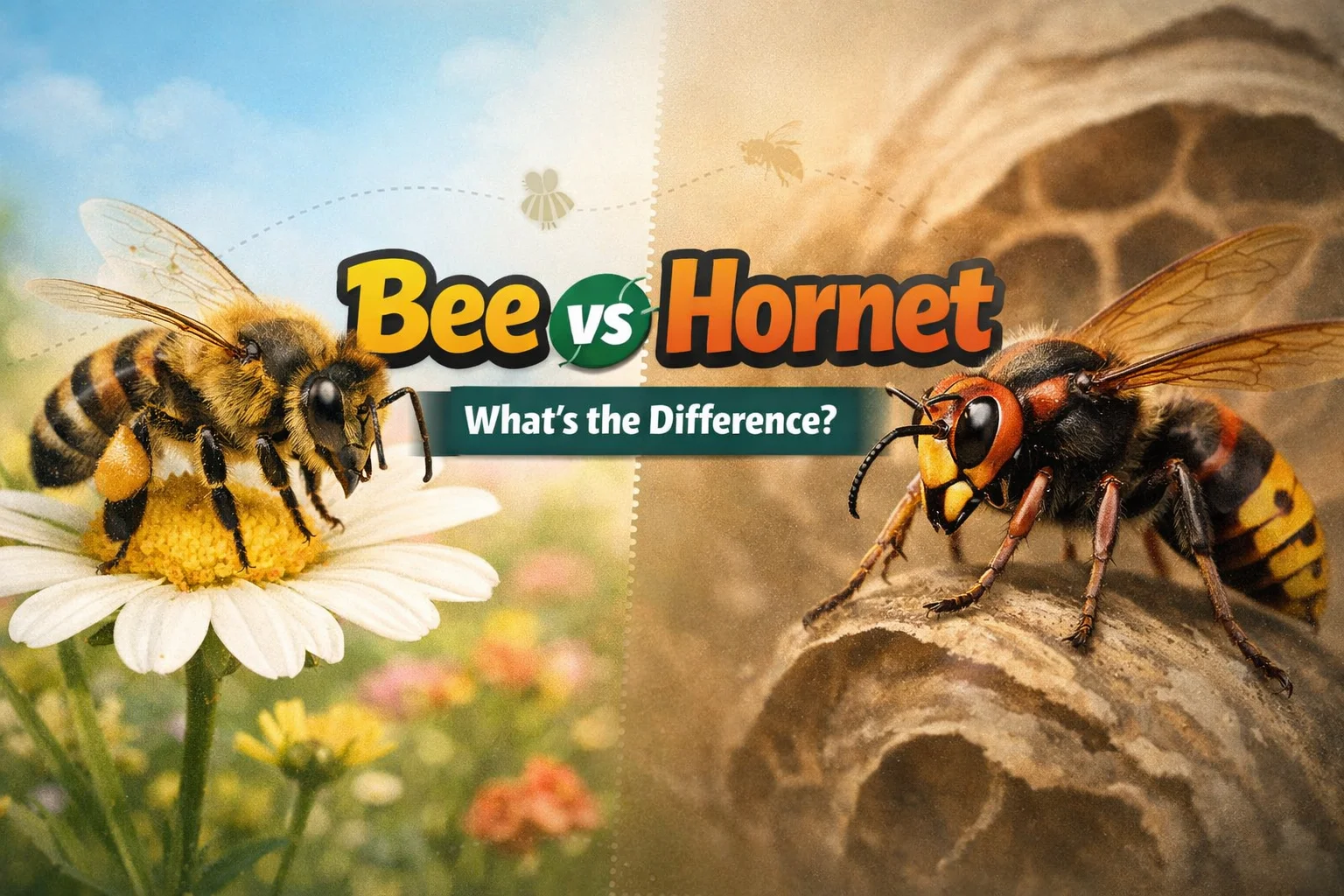
If you’ve ever seen a buzzing insect in your garden, you might have paused to ask yourself: Is that a bee or a hornet? Despite their similar appearance and buzzing sound, these two creatures are often confused, even by nature enthusiasts. Their size, behavior, and sting potency vary, which can make knowing the difference important, especially if you’re managing your garden or allergic to stings.
Although they look and sound similar, they serve completely different purposes. Understanding the distinction is not just a matter of curiosity—it can also affect safety, gardening practices, and even ecological awareness. In this guide, you’ll learn the key differences between bees and hornets, their characteristics, behaviors, habitats, and how to identify them easily. Let’s clear the confusion once and for all!
What Is a Bee? 🐝
Meaning:
A bee is a small, flying insect that belongs to the Apoidea family. Bees are primarily pollinators, feeding on nectar and pollen. They are essential for ecosystems because they help plants reproduce by spreading pollen.
Where and How Bees Are Used in Language:
The word bee is used worldwide in both scientific and casual contexts. In English grammar, it’s a noun, representing the insect or the collective species (e.g., “bees”).
Examples in Sentences:
- “The bee landed on the flower and collected nectar.”
- “Honey bees are crucial for pollination.”
- “She watched a bee buzzing around the garden.”
Historical/Usage Note:
Bees have been revered for thousands of years for their role in pollination and honey production. Ancient Egyptians and Greeks celebrated bees as symbols of diligence and teamwork.
What Is a Hornet? 🐝➡️🐜
Meaning:
A hornet is a type of wasp, typically larger than a bee, with a more aggressive temperament. Hornets are predators and can sting multiple times, unlike bees which usually sting only once. They feed on insects and sometimes sweet substances.
Where and How Hornets Are Used:
The word hornet is used worldwide in zoological contexts and casual English to describe these larger wasps. It is strictly a noun.
Examples in Sentences:
- “A hornet nest was found in the attic.”
- “The hornet chased me across the garden.”
- “Unlike bees, hornets are predators that eat other insects.”
Regional or Grammatical Notes:
The term hornet is universal in English-speaking countries. There’s no verb form associated with it, unlike bees, which are also used metaphorically in expressions like “busy as a bee.”
Historical/Usage Note:
Hornets were first classified in the 18th century as part of the Vespidae family. Their aggressive nature and painful sting have made them a symbol of danger in many cultures.
Key Differences Between Bee and Hornet
Understanding bees and hornets becomes much easier when you compare their features side by side. Here are the essential distinctions:
- Size: Hornets are generally larger than bees.
- Sting: Bees usually sting once and die; hornets can sting multiple times.
- Behavior: Bees are pollinators and peaceful; hornets are predators and aggressive.
- Appearance: Bees are fuzzy and often striped yellow and black; hornets are smooth and have a reddish-brown or dark body with lighter markings.
- Habitat: Bees live in hives or colonies; hornets build large paper-like nests in trees or buildings.
- Diet: Bees feed on nectar and pollen; hornets feed on insects and sugary foods.
Comparison Table: Bee vs Hornet
| Feature | Bee 🐝 | Hornet 🐜 |
|---|---|---|
| Size | Small, 1–1.5 cm | Large, 2–4 cm |
| Sting | Once, then dies | Multiple times, more painful |
| Behavior | Peaceful, pollinator | Aggressive, predator |
| Appearance | Fuzzy, yellow-black stripes | Smooth, reddish-brown or dark |
| Nest | Hive, honeycomb | Large paper-like nest |
| Diet | Nectar, pollen | Other insects, sugary foods |
| Role in Ecosystem | Pollination | Predator control, pest management |
Real-Life Conversation Examples
Dialogue 1
A: “Look at that insect on the flower. Is it a bee or a hornet?”
B: “It’s a bee—it’s fuzzy and collecting pollen.”
🎯 Lesson: Fuzziness and pollen collection are signs of a bee.
Dialogue 2
A: “I saw a huge hornet near the tree. Should I be worried?”
B: “Yes, hornets are aggressive and can sting multiple times.”
🎯 Lesson: Hornets are more dangerous than bees due to their aggressive nature.
Dialogue 3
A: “Why does the honeybee only sting once?”
B: “Because it dies after stinging, unlike a hornet that can sting repeatedly.”
🎯 Lesson: Bees die after stinging; hornets do not.
Dialogue 4
A: “Both are buzzing insects—how can I tell them apart quickly?”
B: “Check the size and fuzziness. Bees are smaller and fuzzy; hornets are larger and smooth.”
🎯 Lesson: Size and body texture are easy visual cues.
Dialogue 5
A: “Can hornets pollinate flowers like bees?”
B: “No, hornets are predators. Bees are the true pollinators.”
🎯 Lesson: Only bees are effective pollinators; hornets are not.
When to Use Bee vs Hornet
Practical Usage Rules:
- Use bee when referring to pollinating insects, honey production, or metaphors like “busy as a bee.”
- Use hornet when describing larger wasps or aggressive stinging insects.
Simple Memory Tricks:
- B = Buzzing pollinator (bee)
- H = Huge and hostile (hornet)
Writing for US vs UK:
- The words bee and hornet are consistent in both American and British English. The main difference is contextual knowledge, not spelling.
Fun Facts About Bees and Hornets
- Bees can communicate through dance. Honeybees perform a “waggle dance” to tell other bees the location of flowers.
- Hornets make paper-like nests. They chew wood fibers mixed with saliva to create a strong, protective nest structure.
Conclusion
The difference between a bee and a hornet is clear once you know the key traits. Bees are smaller, fuzzy, and peaceful pollinators that die after stinging. Hornets are larger, smooth, and aggressive predators capable of multiple stings. Both play important roles in nature but serve very different purposes. Remember the simple trick: B = Buzzing pollinator, H = Huge and hostile.
Next time someone mentions bees or hornets, you’ll know exactly which insect they mean—and how to stay safe around them!