Introduction
If you’ve ever watched a courtroom drama or followed a real criminal case, you’ve probably heard the terms bail and bond used almost interchangeably. Many people assume they mean the same thing—and in casual conversation, they’re often treated that way. But legally speaking, they are not identical, and confusing them can lead to misunderstandings about how the justice system actually works.
The confusion usually arises because both bail and bond involve money and temporary release from jail. Add to that media oversimplification and regional legal practices, and it’s easy to see why people mix them up. Although they look/sound similar, they serve completely different purposes.
In this guide, we’ll break down bail vs bond in simple, conversational English. You’ll learn what each term really means, how they’re used in real life, and exactly when to use one over the other—whether you’re studying law, writing content, or just curious.
What Is “Bail”?
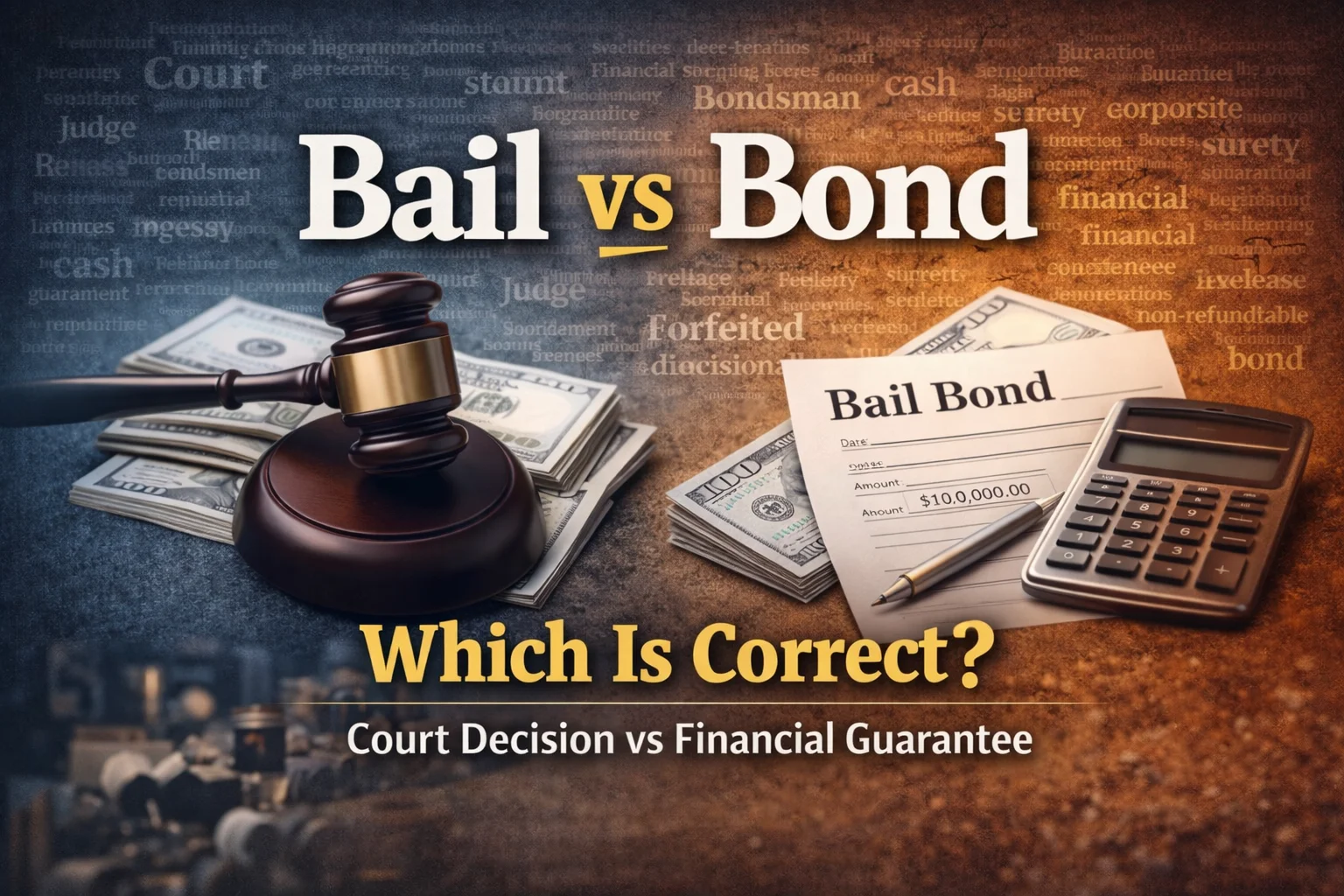
Bail is the amount of money or condition set by a court to allow a defendant to be temporarily released from jail while awaiting trial. The core purpose of bail is not punishment, but assurance—the court wants to ensure the accused will return for all required court appearances.
In the bail vs bond discussion, bail is the legal right or option granted by the court. It represents the permission to be released under specific conditions.
How Bail Is Used
- Set by a judge during a bail hearing
- Based on factors like crime severity, flight risk, and criminal history
- Can be paid in cash or fulfilled through other conditions
Where Bail Is Used
- Criminal courts worldwide
- Common in the United States, UK, Canada, and many other legal systems
- Used in both minor and serious offenses (unless bail is denied)
Examples in Sentences
- The judge granted bail set at $10,000.
- She was released on bail pending trial.
- Failure to appear in court violates bail conditions.
Short Legal or Usage Note
The concept of bail dates back hundreds of years and is rooted in the principle of “innocent until proven guilty.” In the bail vs bond framework, bail is the decision or condition, not necessarily the payment method.
What Is “Bond”?
A bond is a financial instrument or guarantee used to pay bail on behalf of the defendant. In simple terms, a bond is one way to satisfy bail requirements—often when the defendant cannot afford to pay the full bail amount upfront.
In the bail vs bond comparison, a bond is the mechanism, while bail is the requirement.
How Bond Is Used
- Issued through a bail bondsman or bonding agency
- Usually requires a non-refundable fee (often 10–15%)
- Acts as a promise that the defendant will appear in court
Where Bond Is Used
- Common in the United States
- Particularly prevalent in states that allow commercial bail bonding
- Rare or illegal in some countries
Examples in Sentences
- He posted a bond through a licensed bail bondsman.
- The family paid a 10% fee for the bond.
- If the defendant skips court, the bond is forfeited.
Regional or Legal Notes
Not all countries allow bail bonds. In some legal systems, bond may refer more broadly to a written promise or surety. Still, in modern US usage, the bail vs bond distinction is clear and legally significant.
Key Differences Between Bail and Bond
Although related, bail vs bond differs in definition, function, and legal role.
Quick Differences
- Bail = Court-set condition for release
- Bond = Financial method used to meet bail
- Bail is decided by a judge
- Bond is arranged through a bondsman or surety
Comparison Table (Mandatory)
| Feature | Bail | Bond |
|---|---|---|
| Meaning | Permission/condition for release | Financial guarantee |
| Set By | Judge or court | Bail bondsman or surety |
| Purpose | Ensure court appearance | Pay bail on defendant’s behalf |
| Refundable | Usually yes (if conditions met) | Fee is usually non-refundable |
| Legal Role | Judicial decision | Financial tool |
| Used Without Money? | Sometimes (personal bail) | No |
This table clarifies the bail vs bond distinction at a glance.
Real-Life Conversation Examples
Dialogue 1
A: “He got bail today.”
B: “Did he pay cash or use a bond?”
🎯 Lesson: Bail is the decision; bond is the payment method.
Dialogue 2
A: “Why did they call a bondsman?”
B: “They couldn’t afford the full bail.”
🎯 Lesson: Bonds help cover bail costs.
Dialogue 3
A: “Is bail always money?”
B: “No, sometimes it’s just a promise to appear.”
🎯 Lesson: Bail doesn’t always require payment.
Dialogue 4
A: “They lost the bond?”
B: “Yes, he skipped court.”
🎯 Lesson: Bonds can be forfeited if conditions are violated.
When to Use Bail vs Bond
Knowing when to use bail vs bond depends on what you’re describing: the legal decision or the financial method.
Practical Usage Rules
- Use bail when referring to:
- Court decisions
- Release conditions
- Legal rights
- Use bond when referring to:
- Bail bondsmen
- Financial guarantees
- Fees paid to secure release
Simple Memory Tricks
- Bail = Judge’s decision
- Bond = Bank or bondsman
US vs International Usage
In the US, both terms are common and distinct. In many other countries, bond may not exist in the commercial sense, making bail the more universal term in the bail vs bond comparison.
Fun Facts or History
- The commercial bail bond industry is largely unique to the United States.
- Some jurisdictions are reforming or eliminating cash bail to reduce inequality in the justice system.
Conclusion
Understanding the difference between bail vs bond clears up a major legal misconception. Bail is the court’s authorization for temporary release, while bond is a financial tool used to meet bail requirements when full payment isn’t possible. They work together—but they are not the same. Knowing this distinction helps you follow legal news accurately, write with authority, and avoid common errors. Once you grasp how bail and bond function, the legal system becomes a lot easier to understand. Next time someone uses these two words, you’ll know exactly what they mean!