
Introduction
Have you ever filled out an insurance form, read a legal document, or browsed vehicle policies and stopped at the words automobile and commercial, wondering if they mean the same thing? You’re not alone. The confusion around automobile vs commercial is extremely common, especially because both terms are often used in contexts involving vehicles, transport, and insurance.
At first glance, they may seem interchangeable. After all, both relate to vehicles on the road. But in reality, they point to very different categories, purposes, and legal meanings. Although they look/sound similar, they serve completely different purposes.
Understanding the difference between automobile vs commercial is essential if you’re dealing with insurance, registration, business operations, or even everyday conversations. This guide breaks everything down in simple, clear language—so you’ll always know which term to use and why 🚗📄.
What Is Automobile?
Automobile refers to a personal motor vehicle designed primarily for private use and transportation of individuals.
Meaning and Usage
An automobile is:
- A passenger vehicle such as a car or SUV
- Used mainly for personal or family transportation
- Not primarily intended for business operations
The term automobile is often used in formal, legal, and insurance contexts rather than casual speech (where people usually say “car”).
Where It’s Used
- Personal auto insurance policies
- Vehicle registration documents
- Traffic laws and regulations
- Consumer-focused automotive discussions
Example Sentences
- She purchased automobile insurance for her new car.
- His automobile is used only for commuting and family trips.
- Automobile safety standards have improved significantly.
Short Historical or Usage Note
The word automobile comes from Greek auto (self) and Latin mobilis (movable). Over time, it became the formal term for self-propelled passenger vehicles, especially in legal and technical language.
What Is Commercial?
Commercial, in this context, refers to vehicles, activities, or usage intended for business or profit-making purposes rather than personal use.
Meaning and Usage
Commercial describes:
- Vehicles used for business operations
- Transportation of goods, passengers, or equipment
- Activities tied to income generation
Unlike automobile, commercial is not a vehicle type by itself—it’s a usage category.
Where It’s Used
- Commercial vehicle insurance
- Business transport and logistics
- Legal and regulatory classifications
- Fleet management and operations
Example Sentences
- The company operates several commercial vehicles.
- He needs commercial insurance for his delivery van.
- Commercial transport laws are stricter than personal ones.
Regional or Grammatical Notes
A single vehicle can shift from automobile to commercial classification depending on how it’s used. For example, a car used for ride-sharing may be considered commercial.
Key Differences Between Automobile and Commercial
The automobile vs commercial distinction is based on purpose, usage, and legal treatment, not just the vehicle itself.
Bullet Point Differences
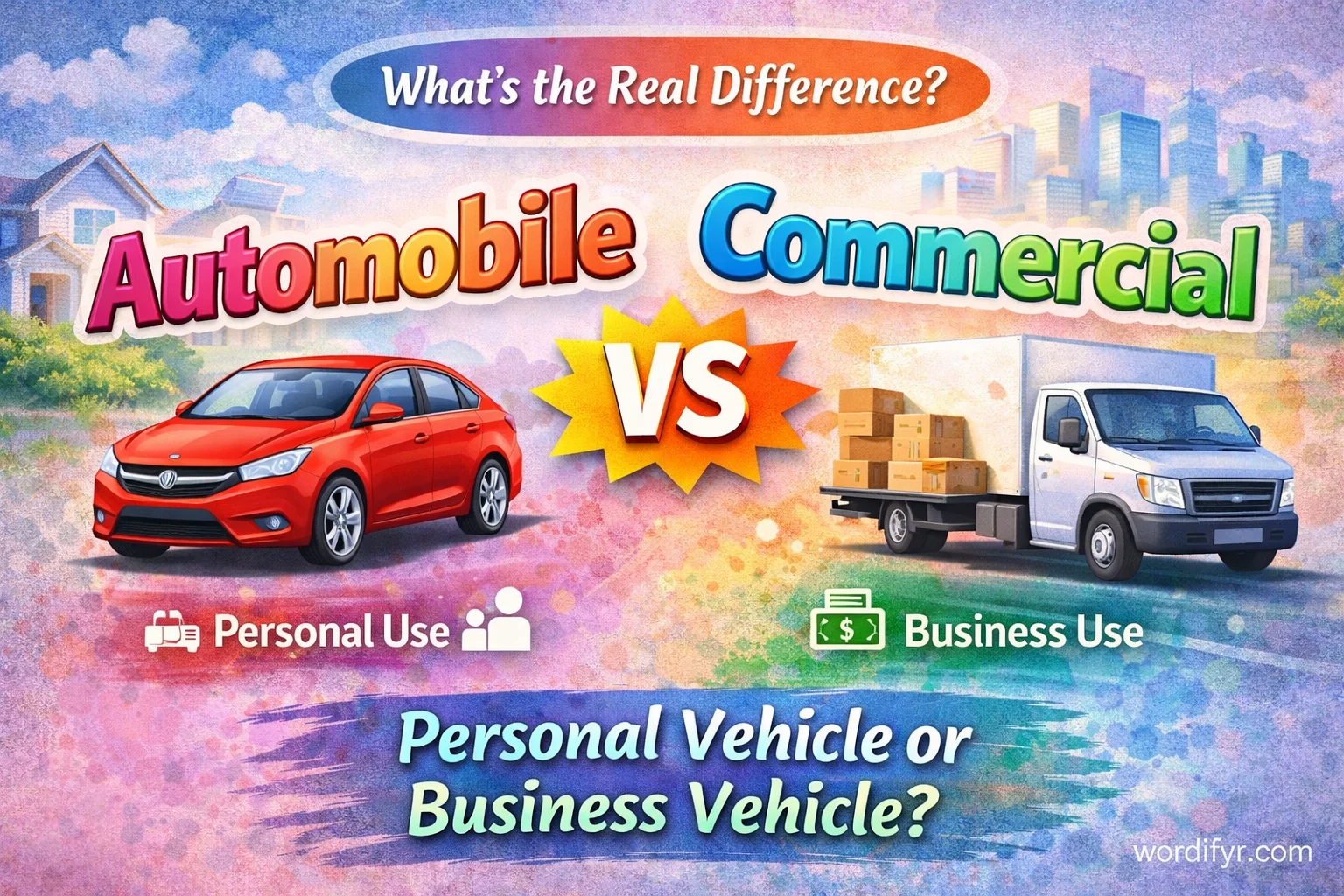
- Automobile is for personal use; commercial is for business use
- Commercial vehicles face stricter regulations
- Insurance requirements differ significantly
- One describes a vehicle type, the other describes usage
- Commercial use often involves higher risk and liability
Comparison Table
| Feature | Automobile | Commercial |
|---|---|---|
| Definition | Personal passenger vehicle | Business-related use or activity |
| Primary Purpose | Private transportation | Profit or business operations |
| Insurance Type | Personal auto insurance | Commercial vehicle insurance |
| Regulations | Standard traffic laws | Stricter legal requirements |
| Examples | Family car, personal SUV | Delivery van, taxi, company truck |
Real-Life Conversation Examples
Dialogue 1
Agent: Is the car for personal or business use?
Client: Just personal—an automobile.
🎯 Lesson: Automobile refers to personal use.
Dialogue 2
Owner: I use my car for deliveries.
Insurer: Then it counts as commercial.
🎯 Lesson: Usage determines classification.
Dialogue 3
Driver: Why is my insurance so expensive?
Broker: Because it’s commercial coverage.
🎯 Lesson: Commercial use increases risk and cost.
Dialogue 4
Friend: Can’t I insure it as an automobile?
You: Not if you use it for business.
🎯 Lesson: You can’t mix personal and commercial use legally.
When to Use Automobile vs Commercial
Knowing when to use automobile vs commercial is crucial in legal, insurance, and business contexts.
Practical Usage Rules
Use Automobile when:
- The vehicle is used only for personal reasons
- No business, delivery, or paid service is involved
- You’re referring to private car ownership
Use Commercial when:
- The vehicle supports a business
- Money is earned using the vehicle
- Goods or passengers are transported for profit
Simple Memory Tricks 🧠
- Automobile = Alone or family use
- Commercial = Cash or company use
Writing and Legal Tip
Always describe vehicle usage accurately. Mislabeling a commercial vehicle as an automobile can lead to insurance denial or legal penalties.
Fun Facts or History
- The same car model can be insured as either automobile or commercial depending on usage.
- Ride-sharing apps blurred the line between personal automobiles and commercial vehicles.
- Commercial vehicle laws exist to protect public safety due to higher usage risk.
Conclusion
The difference between automobile vs commercial isn’t about the vehicle itself—it’s about how and why it’s used. An automobile is meant for personal transportation, while commercial refers to business-related use involving income, services, or goods. Understanding this distinction helps you make better decisions in insurance, legal matters, and everyday communication.
Once you know the purpose behind the vehicle, choosing the correct term becomes simple and logical. Next time someone uses these two words, you’ll know exactly what they mean! 🚘✅