Introduction
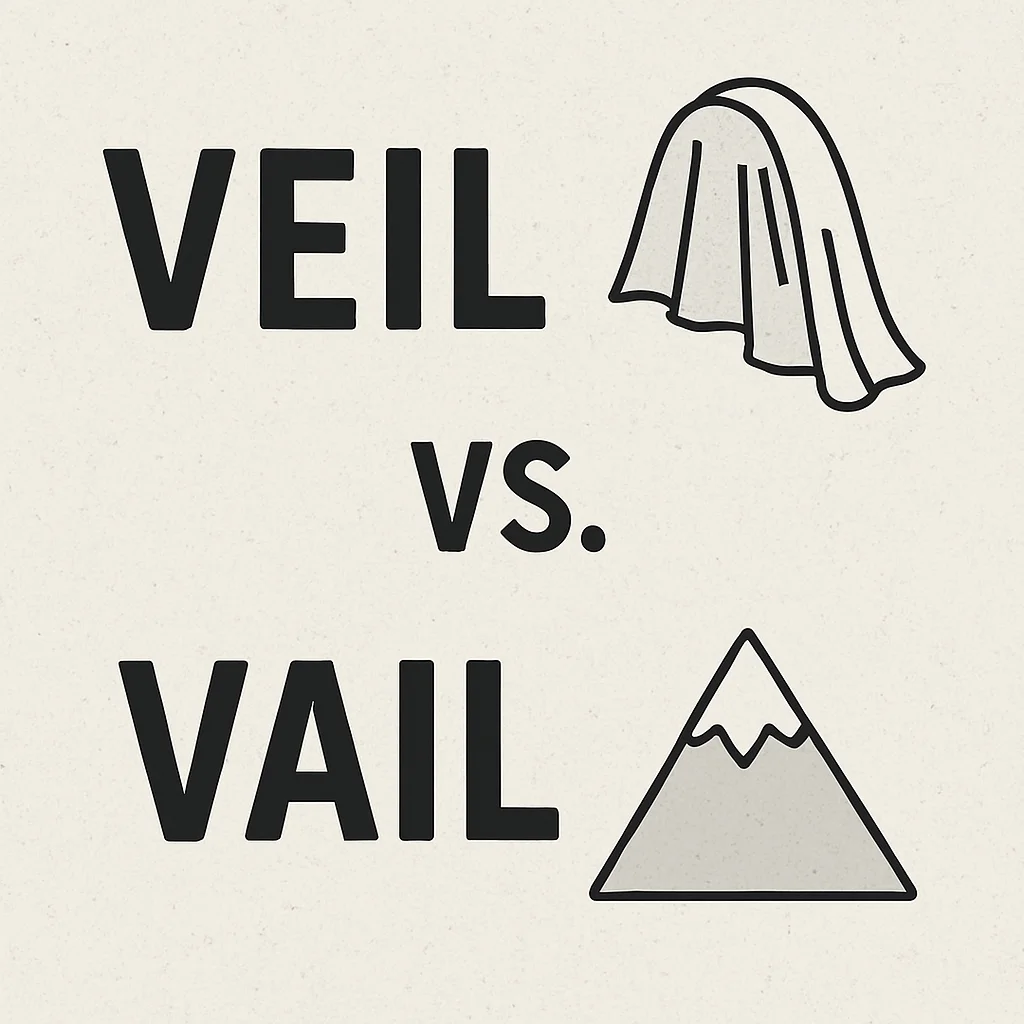
English can be confusing, especially when two words sound exactly the same but mean entirely different things. One such pair that often trips people up is veil vs vail. You might see these words misused in writing, headlines, or even formal documents simply because they’re pronounced identically. At first glance, they look interchangeable—but they’re not.
The confusion usually arises because one word is common and familiar, while the other is rare and formal. As a result, many people use veil when they actually mean vail, or vice versa. Although they look/sound similar, they serve completely different purposes. One refers to covering or hiding something, while the other relates to lowering or yielding. In this guide, we’ll clearly explain veil vs vail, with meanings, examples, differences, and practical tips so you never confuse them again.
Section 1: What Is “Veil”?
Veil is a commonly used noun and verb that refers to covering, hiding, or concealing something.
Clear Meaning
A veil is a piece of fabric or covering, or metaphorically, anything that hides or obscures something from view.
How It’s Used
In the veil vs vail comparison, veil is the word you’ll encounter most often in everyday English.
Where It’s Used
- General English (US & UK)
- Fashion and weddings
- Literature and journalism
- Figurative or symbolic language
Examples in Sentences
- “The bride wore a beautiful white veil.”
- “Fog veiled the mountains.”
- “She spoke behind a veil of secrecy.”
Short Historical or Usage Note
The word veil comes from Latin velum, meaning “sail” or “curtain.” Over centuries, it evolved to describe both physical coverings and abstract concealment.
Section 2: What Is “Vail”?
Vail is a rare verb that means to lower, yield, or give way, often out of respect or submission.
Clear Meaning
To vail means to lower something (such as eyes or flags) or to concede to someone or something.
How It’s Used
In veil vs vail, vail is far less common and appears mostly in formal, literary, or historical contexts.
Where It’s Used
- Formal writing
- Legal or historical texts
- Poetry and literature
- Fixed phrases (e.g., vail one’s bonnet)
Spelling and Usage Differences
Unlike veil, vail is almost never used as a noun. It functions strictly as a verb.
Examples in Sentences
- “He refused to vail his pride.”
- “The knight vailed his helmet before the king.”
- “All flags were vailed at sunset.”
Regional or Grammatical Notes
- Used in both British and American English
- Considered archaic or formal
- Rare in spoken English
Key Differences Between Veil and Vail
Bullet Point Summary
- Veil = to cover or conceal
- Vail = to lower or yield
- Veil is common; vail is rare
- Same pronunciation, different meanings
- Context is critical
Veil vs Vail Comparison Table
| Feature | Veil | Vail |
|---|---|---|
| Part of Speech | Noun & verb | Verb only |
| Meaning | Cover, hide, obscure | Lower, yield, submit |
| Common Usage | Very common | Rare / formal |
| Context | Fashion, secrecy, metaphor | Historical, literary |
| Pronunciation | Same | Same |
| Interchangeable? | ❌ No | ❌ No |
Real-Life Conversation Examples
Dialogue 1
A: “The truth was veiled from the public.”
B: “That makes sense—it was hidden.”
🎯 Lesson: Use veil for concealment.
Dialogue 2
A: “Should I write veil or vail here?”
B: “Are you talking about hiding or surrendering?”
🎯 Lesson: Meaning decides the spelling.
Dialogue 3
A: “The soldier vail his flag.”
B: “Yes, vail fits because it means lowering.”
🎯 Lesson: Vail often relates to lowering something.
Dialogue 4
A: “She wore a vail at her wedding.”
B: “No—that should be veil.”
🎯 Lesson: Wedding coverings are veils.
Dialogue 5
A: “This word vail sounds outdated.”
B: “It is—mostly used in older texts.”
🎯 Lesson: Vail is formal and rare.
When to Use Veil vs Vail
Use Veil When:
- Referring to covering or hiding
- Talking about clothing or fabric
- Using figurative language
Examples:
- “A veil of mist covered the lake.”
- “They veiled their intentions.”
Use Vail When:
- Talking about lowering or yielding
- Writing formal, historical, or literary content
- Referring to symbolic submission
Examples:
- “He would not vail his honor.”
- “The banner was vail’d in respect.”
Simple Memory Trick
- Veil = hide (both have ‘e’)
- Vail = yield (both imply giving way)
US vs UK Usage
There is no regional difference, but vail is rare everywhere, while veil is universally common.
Fun Facts or History
- Vail Is Disappearing
Many dictionaries label vail as archaic because it has largely fallen out of everyday use. - Veil Is Both Literal and Symbolic
Unlike vail, veil is widely used both physically and metaphorically.
Conclusion
The difference between veil vs vail lies entirely in meaning and usage. Veil is the familiar word used for covering, hiding, or obscuring—both literally and figuratively. Vail, on the other hand, is a rare and formal verb meaning to lower or yield, often found in older or literary texts. Although they sound identical, these words should never be used interchangeably. Once you remember that veil hides and vail yields, the confusion disappears. Next time someone uses these two words, you’ll know exactly what they mean!