
Introduction
If you have ever followed a recipe, explored traditional cooking, or researched natural skincare, you have probably seen the terms tallow and lard used interchangeably. That is where the confusion begins. Both are animal fats, both have been used for centuries, and both are enjoying a modern comeback in kitchens and wellness routines. Because they look similar and serve overlapping roles, many people assume they are the same thing.
However, that assumption leads to mistakes in cooking, nutrition, and even skincare formulations. Although they look/sound similar, they serve completely different purposes. Understanding the distinction between tallow vs lard helps you choose the right fat for flavor, health, and performance. In this complete guide, we will break down what each one is, how it is used, and when to use one over the other—clearly and practically.
What Is Tallow?
Tallow is a rendered animal fat that comes specifically from beef or mutton (sheep). It is produced by slowly heating suet—the hard fat found around the kidneys and loins—until the fat melts and impurities are removed.
Meaning and Characteristics
Tallow is solid at room temperature and has a firm, waxy texture. It is typically white to pale yellow and becomes liquid when heated. Compared to other fats, tallow is highly stable, making it resistant to oxidation.
How Tallow Is Used
In the tallow vs lard debate, tallow is often chosen for:
- High-heat cooking such as deep frying
- Traditional baking (especially savory recipes)
- Soap making and candle production
- Natural skincare and balms
Where Tallow Is Commonly Used
Tallow has strong roots in:
- European traditional cooking
- British and French cuisine
- Historical American cooking
- Modern ancestral and carnivore diets
Examples in Sentences
- “French fries cooked in tallow have a richer flavor.”
- “This moisturizer uses grass-fed tallow for skin repair.”
- “Historically, tallow was used to make candles and soap.”
Historical Note
Before vegetable oils became industrialized, tallow was one of the most widely used fats in the world. In fact, early fast-food chains originally fried foods in beef tallow for flavor and shelf stability.
What Is Lard?
Lard is rendered fat derived from pork, specifically from the belly or back fat of a pig. It has been a staple in home kitchens for generations.
Meaning and Characteristics
Lard is softer than tallow and often has a smooth, creamy consistency. It is usually white and melts at a lower temperature than tallow, which affects how it behaves in cooking.
How Lard Is Used
In the tallow vs lard comparison, lard is preferred for:
- Baking pastries and pie crusts
- Frying at medium heat
- Traditional home cooking
- Cultural and regional dishes
Where Lard Is Commonly Used
Lard is especially popular in:
- Mexican cuisine
- Southern American cooking
- Eastern European recipes
- Traditional Asian dishes
Examples in Sentences
- “This pie crust is flaky because it uses lard.”
- “The beans were cooked slowly in lard for flavor.”
- “Many traditional tortillas rely on lard.”
Regional and Usage Notes
Unlike tallow, lard is not commonly used in skincare due to its softer structure and shorter shelf life. However, it remains highly valued in baking for texture.
Key Differences Between Tallow and Lard
Understanding tallow vs lard becomes simple when you compare their source, texture, and use.
Key Differences (Bullet Points)
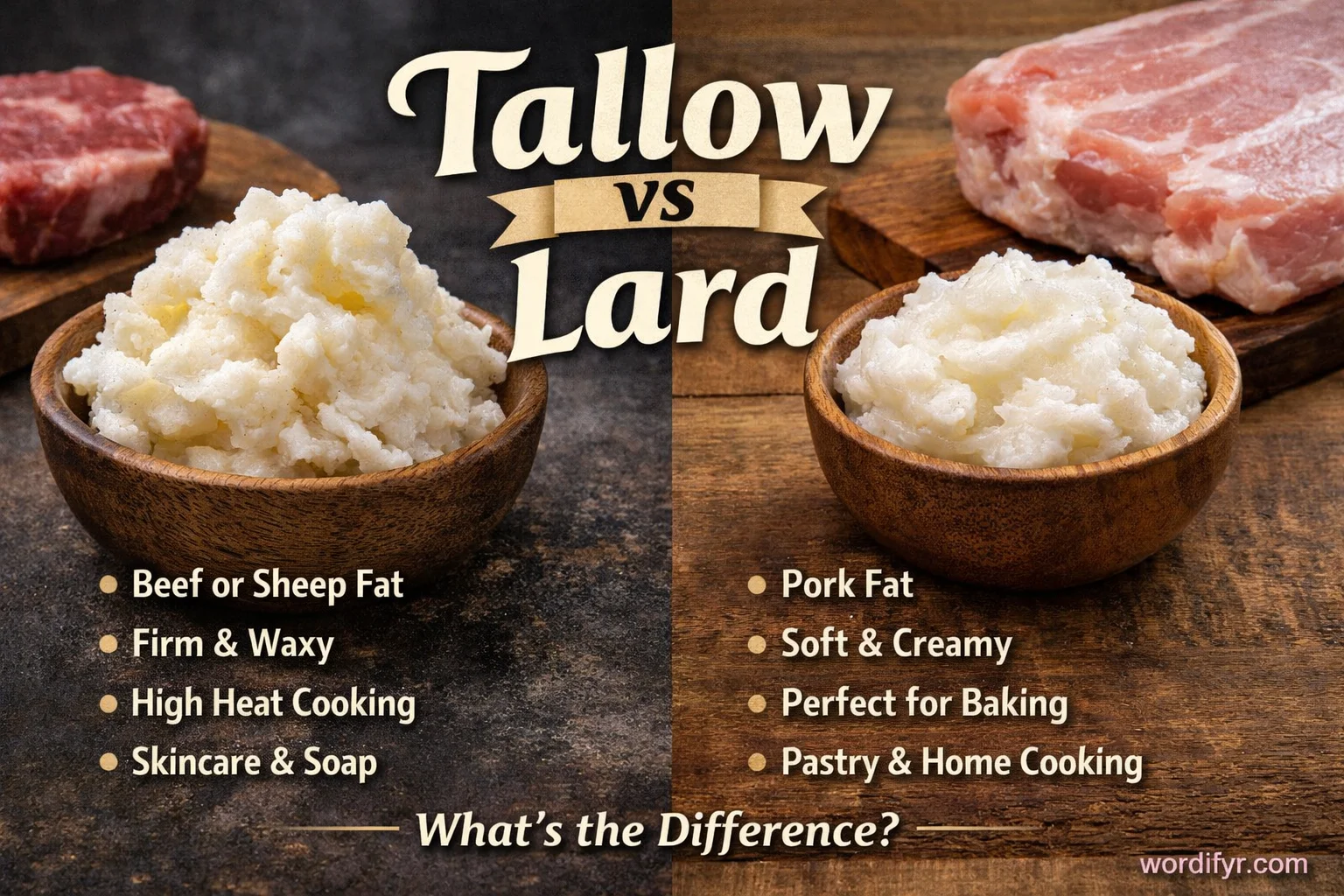
- Source: Tallow comes from beef or sheep; lard comes from pork
- Texture: Tallow is firm and waxy; lard is soft and creamy
- Flavor: Tallow has a neutral, beefy taste; lard has a mild pork flavor
- Heat Stability: Tallow handles higher heat better
- Non-Food Uses: Tallow is widely used in skincare and soap; lard rarely is
Comparison Table
| Feature | Tallow | Lard |
|---|---|---|
| Animal Source | Beef or sheep | Pork |
| Texture | Hard, waxy | Soft, creamy |
| Melting Point | High | Lower |
| Best for Cooking | Deep frying, roasting | Baking, sautéing |
| Shelf Stability | Very high | Moderate |
| Skincare Use | Common | Rare |
| Traditional Use | Candles, soap, frying | Pastries, home cooking |
Real-Life Conversation Examples
Dialogue 1
A: “Can I use lard instead of tallow for frying?”
B: “You can, but tallow handles higher heat better.”
🎯 Lesson: Tallow is more heat-stable than lard.
Dialogue 2
A: “Why does this pie recipe ask for lard?”
B: “Because lard makes the crust flakier than tallow.”
🎯 Lesson: Lard is better for delicate baking.
Dialogue 3
A: “This soap recipe says tallow, not lard.”
B: “That’s because tallow lasts longer and firms the bar.”
🎯 Lesson: Tallow is preferred for non-food uses.
Dialogue 4
A: “Are tallow and lard both animal fats?”
B: “Yes, but from different animals with different properties.”
🎯 Lesson: Source matters in the tallow vs lard debate.
When to Use Tallow vs Lard
Use Tallow When:
- Cooking at high temperatures
- Frying foods that need crispiness
- Making soap, candles, or skincare
- Following ancestral or carnivore diets
Memory Trick:
Tallow = Tough heat + Tough texture
Use Lard When:
- Baking pastries or pie crusts
- Cooking traditional home recipes
- Wanting softer texture and mild flavor
- Making tortillas or biscuits
Memory Trick:
Lard = Light, flaky layers
US vs Global Usage
In the United States, lard is more common in home cooking, while tallow is popular in niche health communities. Globally, both are traditional fats with region-specific uses.
Fun Facts and History
- Fast-Food Fact: Early French fries were originally cooked in beef tallow for superior taste.
- Cultural History: Lard was once so valuable that families rendered and stored it year-round for cooking.
These traditions explain why the tallow vs lard discussion still matters today.
Conclusion
The difference between tallow vs lard comes down to source, texture, and purpose. Tallow is a firm, heat-stable fat from beef or sheep, ideal for frying, skincare, and long-term storage. Lard, made from pork, is softer and excels in baking and traditional home cooking. While they may look similar, they are not interchangeable in every situation. Choosing the right one improves flavor, performance, and results. Next time someone uses these two words, you’ll know exactly what they mean!