Introduction
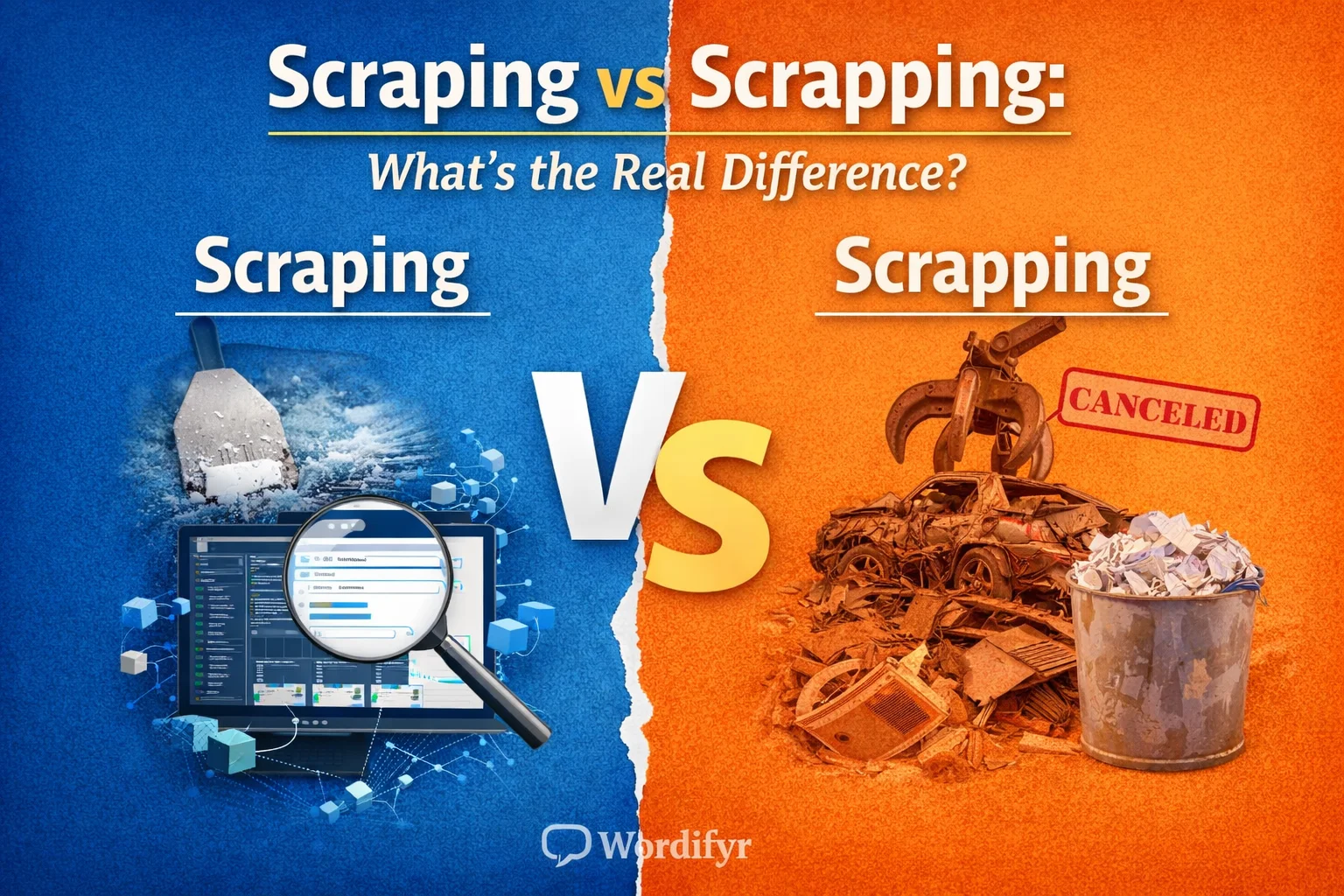
Have you ever typed scraping when you meant scrapping—or the other way around—and then paused, unsure if it was correct? You’re definitely not alone. These two words look almost identical, sound similar when spoken quickly, and often appear in overlapping contexts like technology, writing, business, and everyday conversation. That’s exactly why so many people confuse them.
The confusion becomes even more common online, where both terms are widely used but often misunderstood. One small spelling change can completely alter the meaning of a sentence—and sometimes even its legality or professionalism.
Although they look/sound similar, they serve completely different purposes.
In this complete guide, we’ll break down scraping vs scrapping, explain their meanings, show how and where each word is used, provide real-life examples, and help you remember the difference effortlessly.
What Is “Scraping”?
Meaning of Scraping
Scraping means removing something from a surface or collecting data by extracting it, often forcefully or systematically. The word can be used both physically and digitally.
At its core, scraping involves pulling, removing, or gathering information or material from somewhere it already exists.
How Scraping Is Used
The word scraping is used in multiple contexts:
- Physical actions (cleaning, removing layers)
- Digital processes (data or web scraping)
- Figurative language (getting by with difficulty)
Where Scraping Is Used
- Common in both American and British English
- Frequently used in:
- Technology & programming
- Data analysis
- Cleaning & maintenance
- Informal conversation
Examples of Scraping in Sentences
- He was scraping ice off his windshield early in the morning.
- The company uses web scraping to collect product prices.
- She injured her knee after scraping it on the pavement.
- The startup relied on data scraping to analyze market trends.
- They’re barely scraping by on their current income.
Short Usage / History Note
The word scrape dates back to Old Norse skrapa, meaning “to scratch or erase.” Over time, it evolved to include both physical removal and digital extraction—especially with the rise of automation and data-driven industries.
What Is “Scrapping”?
Meaning of Scrapping
Scrapping means discarding, abandoning, or getting rid of something, usually because it’s no longer useful, effective, or valuable. It can also mean fighting or arguing informally.
In simple terms, scrapping = throwing away or canceling.
How Scrapping Is Used
Scrapping is commonly used when talking about:
- Canceling plans or ideas
- Disposing of old items
- Ending projects or systems
- Informal fights or disputes
Where Scrapping Is Used
- Common in British English
- Used in American English as well, but slightly less frequently
- Found in:
- Business decisions
- Project management
- News headlines
- Casual conversation
Examples of Scrapping in Sentences
- The company is scrapping the old marketing strategy.
- They decided to scrap the project due to budget issues.
- The government announced plans for scrapping outdated laws.
- He sold the car for parts instead of scrapping it.
- The two teams were scrapping over contract terms.
Spelling & Grammar Notes
- Scrap = base verb
- Scrapping = present participle
- Scrapped = past tense
Despite sounding similar to scraping, scrapping has nothing to do with removing material from a surface.
Key Differences Between Scraping and Scrapping
Quick Bullet Summary
- Scraping = removing or extracting
- Scrapping = discarding or canceling
- Scraping often involves collection
- Scrapping always involves rejection
- Scraping is common in tech & data
- Scrapping is common in business & decisions
- Mixing them up can change the meaning completely
Scraping vs Scrapping Comparison Table
| Feature | Scraping | Scrapping |
|---|---|---|
| Core Meaning | Removing or extracting | Discarding or canceling |
| Type of Action | Collection or removal | Elimination |
| Common Fields | Tech, data, cleaning | Business, planning |
| Physical Use | ✔️ Yes | ✔️ Yes |
| Digital Use | ✔️ Very common | ❌ Rare |
| Implies Reuse? | Often yes | No |
| Example | Web scraping data | Scrapping a project |
Real-Life Conversation Examples
Dialogue 1
A: Are we scraping the old website design?
B: No, we’re scrapping it completely.
🎯 Lesson: Scrapping means abandoning, not extracting.
Dialogue 2
A: Is web scrapping legal?
B: You mean scraping. Yes, but it depends on the website.
🎯 Lesson: Data collection uses scraping, not scrapping.
Dialogue 3
A: Why are you scraping this plan?
B: I’m not scraping it—I’m scrapping it. It won’t work.
🎯 Lesson: Scrapping is about canceling ideas.
Dialogue 4
A: He’s always scraping with his coworkers.
B: You mean scrapping—they argue a lot.
🎯 Lesson: Informal fighting uses scrapping.
Dialogue 5
A: What does the tool do?
B: It’s for scraping public data, not scrapping content.
🎯 Lesson: Scraping collects; scrapping removes.
When to Use Scraping vs Scrapping
Use Scraping When:
- You’re removing material from a surface
- You’re extracting data or information
- You’re discussing:
- Web scraping
- Screen scraping
- Data mining
- You mean collecting, not canceling
Examples:
- Web scraping prices from competitors
- Scraping paint off a wall
- Scraping together enough money to survive
Use Scrapping When:
- You’re discarding or canceling something
- You’re ending a:
- Project
- Policy
- Plan
- System
- You’re talking about informal fighting
Examples:
- Scrapping outdated rules
- Scrapping a failed startup idea
- Two rivals scrapping over territory
Simple Memory Tricks 🧠
- Scrap = Trash → Scrapping = throwing away
- Scrape = Scratch → Scraping = removing or collecting
- If data is involved → Scraping
- If cancellation is involved → Scrapping
US vs UK Usage Notes
- Both words are correct in US and UK English
- Scrapping appears slightly more often in British news
- Scraping dominates in tech and global usage
- Context matters more than region
Fun Facts & History
1️⃣ Why the Confusion Exists
Both words come from similar Old English and Scandinavian roots, which is why they sound alike—but their meanings diverged over time.
2️⃣ “Web Scraping” Changed Everything
The rise of automation and AI made scraping a mainstream technical term, increasing confusion with scrapping in modern writing.
Conclusion
The difference between scraping vs scrapping is all about intent. If you’re removing, collecting, or extracting something—physically or digitally—you’re scraping. If you’re canceling, discarding, or abandoning something, you’re scrapping it. One letter completely changes the meaning, tone, and clarity of your sentence.
Once you know this distinction, you’ll never mix them up again.
Next time someone uses these two words, you’ll know exactly what they mean! 😊