Introduction
When it comes to skincare, few comparisons create as much confusion as retinol vs collagen. Both are widely praised for anti-aging, smoother skin, and a youthful glow. Walk into any skincare store or scroll online, and you’ll see countless products promising miracles with one or the other. Because they are often mentioned together and target similar skin concerns, many people assume they do the same thing. That assumption leads to incorrect product choices and disappointing results. Although they look/sound similar, they serve completely different purposes. One works by stimulating skin renewal at a cellular level, while the other focuses on hydration and structural support. Understanding the real difference between retinol vs collagen is essential if you want effective, science-backed skincare results rather than marketing hype.
Section 1: What Is Retinol?
Retinol is a vitamin A derivative and one of the most researched and proven ingredients in modern skincare.
Clear Meaning
Retinol is an active skincare ingredient that accelerates cell turnover and boosts collagen production within the skin.
How It’s Used
Retinol is primarily used to:
- Reduce fine lines and wrinkles
- Improve skin texture
- Treat acne and clogged pores
- Fade dark spots and uneven tone
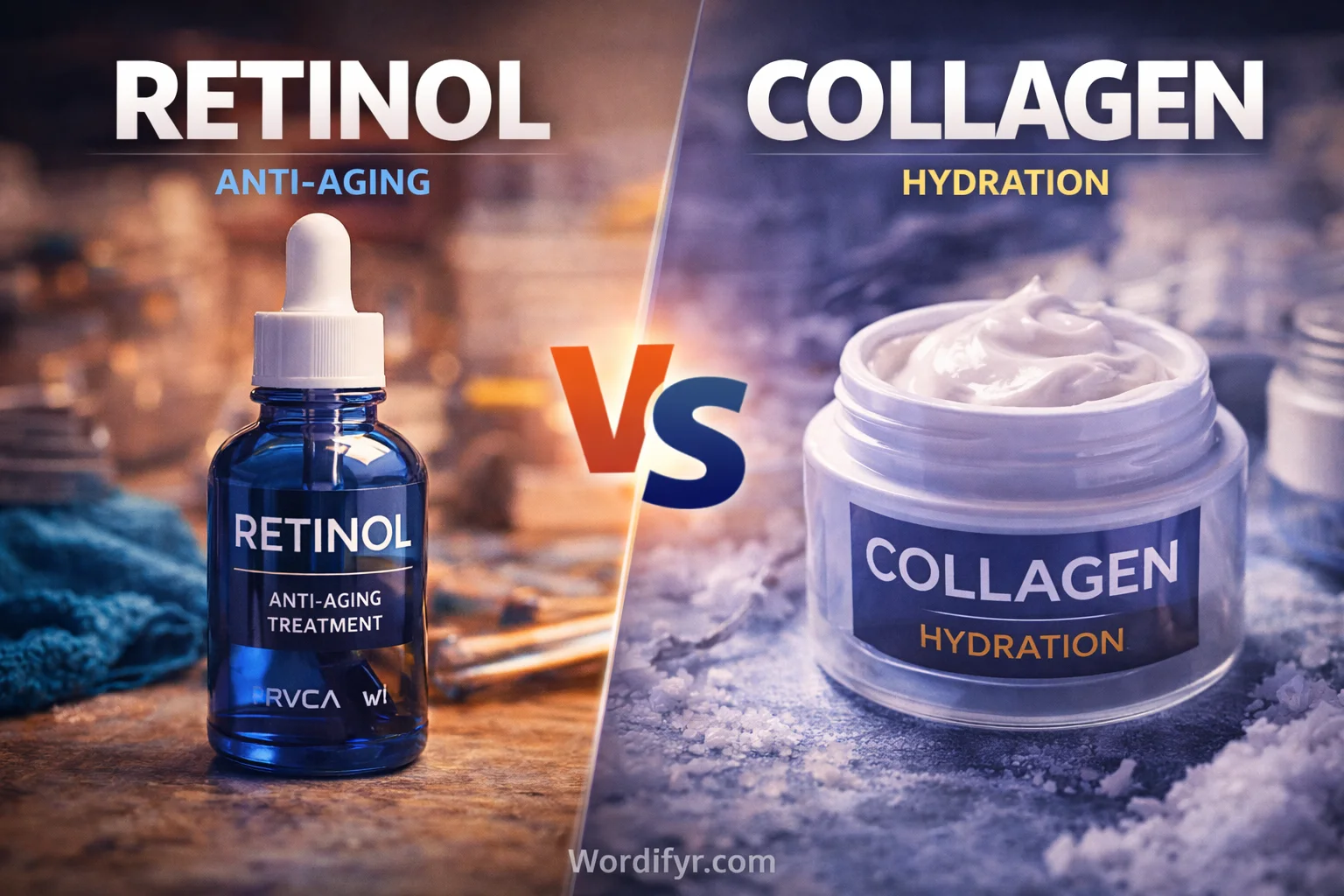
In the retinol vs collagen discussion, retinol is considered a corrective and treatment-focused ingredient.
Where It’s Used
- Common in night creams and serums
- Widely recommended by dermatologists
- Suitable for most skin types with gradual use
Examples in Sentences
- “Retinol helps smooth fine lines over time.”
- “In the retinol vs collagen debate, retinol treats skin at a deeper level.”
- “Dermatologists often recommend retinol for aging skin.”
Short Historical or Usage Note
Retinol has been used in dermatology for decades. Prescription-strength retinoids were first introduced to treat acne, and their anti-aging benefits were later scientifically confirmed.
Section 2: What Is Collagen?
Collagen is a natural protein found in the body that provides structure, firmness, and elasticity to the skin.
Clear Meaning
Collagen is a structural protein, not an active treatment ingredient like retinol. It helps maintain skin strength and hydration.
How It’s Used
Collagen in skincare is used to:
- Improve hydration
- Plump the skin temporarily
- Support skin barrier function
- Enhance smoothness
In the retinol vs collagen comparison, collagen plays a supportive and cosmetic role rather than a corrective one.
Where It’s Used
- Found in moisturizers, masks, and serums
- Common in anti-aging and hydrating products
- Popular in both topical and supplement form
Examples in Sentences
- “Collagen helps skin look plumper.”
- “Between retinol vs collagen, collagen focuses on hydration.”
- “Collagen creams give an instant smooth feel.”
Regional or Usage Notes
Topical collagen does not penetrate deeply into the skin. Instead, it works on the surface to retain moisture and improve appearance.
Key Differences Between Retinol vs Collagen
Bullet Point Summary
- Retinol is an active treatment; collagen is a supporting protein
- Retinol stimulates natural collagen production; collagen hydrates the surface
- Retinol works long-term; collagen gives short-term results
- Retinol can cause irritation; collagen is generally gentle
- Collagen cannot replace retinol’s anti-aging power
Comparison Table (Mandatory)
| Feature | Retinol | Collagen |
|---|---|---|
| Type | Vitamin A derivative | Structural protein |
| Primary Function | Cell renewal & anti-aging | Hydration & firmness |
| Penetration | Deep (cellular level) | Surface level |
| Speed of Results | Gradual (weeks to months) | Immediate but temporary |
| Irritation Risk | Moderate | Very low |
| Best For | Wrinkles, acne, texture | Dry, dull skin |
Real-Life Conversation Examples
Dialogue 1
A: “Should I use retinol or collagen?”
B: “Retinol treats aging; collagen hydrates.”
🎯 Lesson: Retinol vs collagen depends on your skin goal.
Dialogue 2
A: “My collagen cream isn’t reducing wrinkles.”
B: “That’s what retinol is for.”
🎯 Lesson: Collagen doesn’t correct wrinkles.
Dialogue 3
A: “Retinol makes my skin sensitive.”
B: “Pair it with collagen for hydration.”
🎯 Lesson: They work best together.
Dialogue 4
A: “Can collagen replace retinol?”
B: “No, they do different jobs.”
🎯 Lesson: Retinol and collagen are not substitutes.
Dialogue 5
A: “Which one is anti-aging?”
B: “Retinol—collagen supports it.”
🎯 Lesson: Retinol drives anti-aging results.
When to Use Retinol vs Collagen
Use Retinol If:
- You want to reduce wrinkles
- You have acne or uneven texture
- You want long-term skin improvement
- You are focused on prevention and repair
Memory Trick:
Retinol = Renewal
Use Collagen If:
- Your skin feels dry or tight
- You want instant plumping
- You have sensitive skin
- You need hydration support
Memory Trick:
Collagen = Cushion
Can You Use Both Together?
Yes. In the retinol vs collagen discussion, the best results often come from using both—retinol at night for treatment and collagen-based products to support hydration and comfort.
Fun Facts or History
- Collagen Decline Starts Early
Natural collagen production begins decreasing in your mid-20s, which is why anti-aging products become more important over time. - Retinol Is FDA-Recognized
Retinoids are among the few skincare ingredients officially recognized for treating signs of aging.
Conclusion
The choice between retinol vs collagen is not about picking one and ignoring the other. Retinol works at a deeper level to repair, renew, and stimulate collagen production, making it the true anti-aging powerhouse. Collagen, on the other hand, supports hydration and gives skin a smoother, plumper appearance. Understanding their roles allows you to build a smarter, more effective skincare routine. When used correctly, they complement each other rather than compete. Next time someone uses these two terms, you’ll know exactly what they mean!