Introduction
If you’re planning a road trip or dreaming about life on the open road, you’ve probably heard the terms motorhome and trailer. At first glance, both seem like the same thing — mobile homes designed for travel and camping. Because they both fall under the category of recreational vehicles (RVs), many people confuse them when choosing the right option for their adventures.
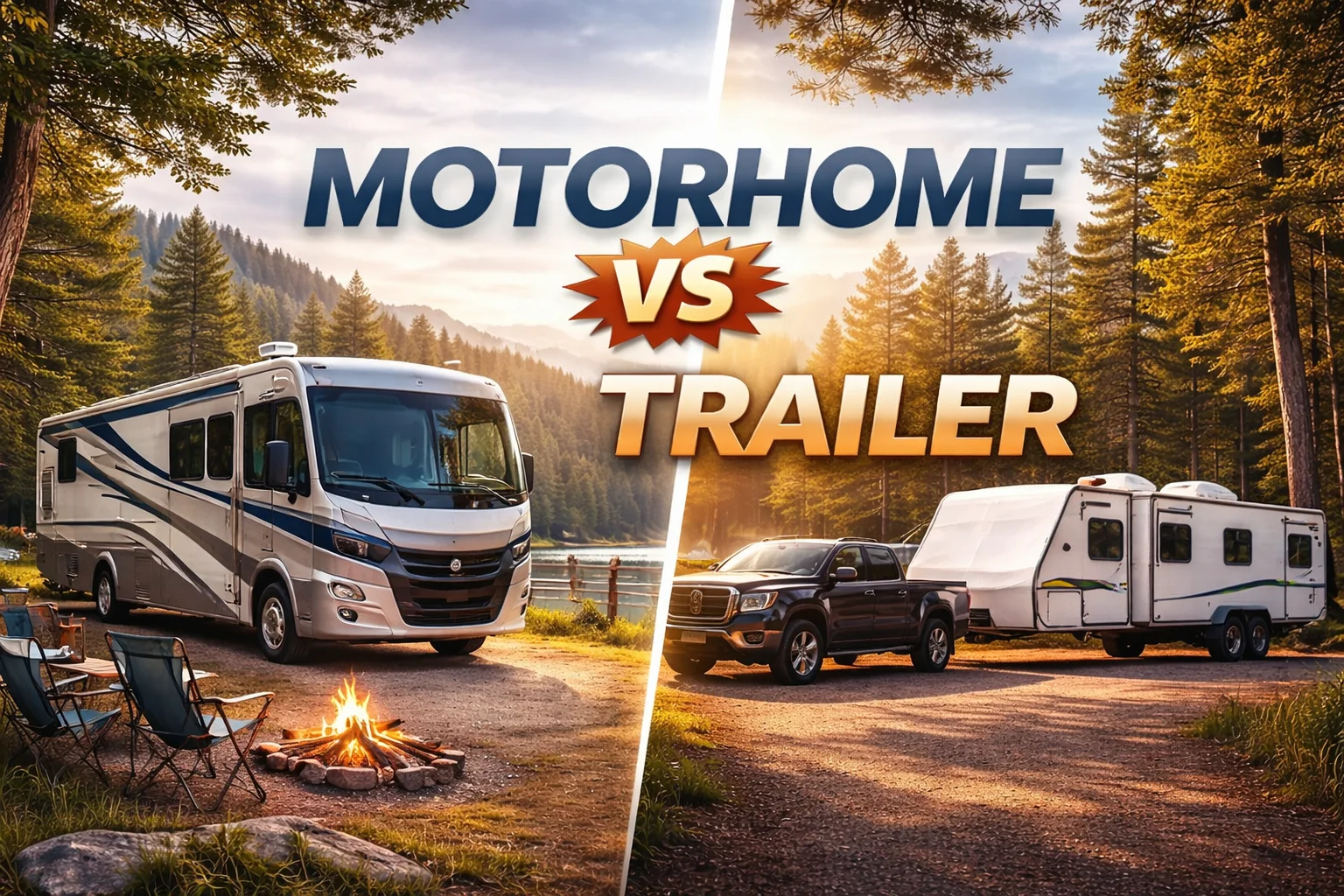
However, the key difference lies in how they move and how they are used. One is a self-driving vehicle, while the other must be pulled by another vehicle.
Although they look similar, they serve completely different purposes.
In this complete guide to motorhome vs trailer, you’ll learn their meanings, how they work, real-life usage examples, key differences, and which option might be the best choice for your travel style.
What Is a Motorhome?
A motorhome is a self-contained recreational vehicle that includes its own engine. This means you can drive it like a bus or large van, without needing another vehicle to tow it.
Motorhomes are often referred to as RV motor vehicles, combining transportation and living space in one unit.
Meaning and Purpose
A motorhome is essentially a house on wheels that allows travelers to drive, sleep, cook, and relax in the same vehicle.
Motorhomes are ideal for people who want:
- Long road trips
- Comfortable living space
- All-in-one travel convenience
When comparing motorhome vs trailer, the motorhome stands out because it doesn’t require a towing vehicle.
Types of Motorhomes
Motorhomes usually come in three main classes:
Class A Motorhome
- Large bus-style RV
- Most spacious and luxurious
- Often used for long-term travel
Class B Motorhome
- Smaller camper vans
- Easier to drive and park
- Popular with solo travelers or couples
Class C Motorhome
- Mid-sized RV
- Built on a truck chassis
- Recognizable over-cab sleeping area
These categories help buyers understand the size and comfort level when evaluating motorhome vs trailer options.
Features of Motorhomes
Most motorhomes include:
- Kitchen and appliances
- Bathroom and shower
- Sleeping beds
- Storage cabinets
- Electricity and water systems
Because of these built-in features, motorhomes are often chosen for full-time RV living.
Example Sentences
- “We rented a motorhome for our cross-country road trip.”
- “Driving a motorhome feels like driving a small bus.”
- “When comparing motorhome vs trailer, motorhomes offer more convenience.”
Historical Note
Motorhomes became popular in the 1960s and 1970s, when road travel and camping culture expanded across North America. Companies like Winnebago Industries helped make motorhomes widely accessible.
What Is a Trailer?
A trailer (often called a travel trailer) is a towable RV that does not have its own engine. Instead, it must be pulled by another vehicle, such as a truck or SUV.
In the motorhome vs trailer comparison, the biggest difference is simple:
Motorhome = drive it
Trailer = tow it
Meaning and Purpose
Travel trailers provide a mobile living space that attaches to another vehicle using a hitch.
They are designed for people who want:
- Flexible travel setups
- Lower purchase cost
- Ability to detach the living space
When discussing motorhome vs trailer, many travelers prefer trailers because they allow you to park the camper and still use your car separately.
Types of Travel Trailers
There are several kinds of trailers used for camping.
Conventional Travel Trailer
- Most common RV trailer
- Towed by SUVs or trucks
Fifth-Wheel Trailer
- Larger and more stable
- Requires a pickup truck with special hitch
Teardrop Trailer
- Very small and lightweight
- Minimal living features
These variations provide many options when deciding between motorhome vs trailer.
Features of Travel Trailers
Depending on size and price, trailers can include:
- Beds and sleeping areas
- Kitchens
- Bathrooms
- Dining areas
- Storage space
Despite being towable, many modern trailers offer luxury features similar to motorhomes.
Example Sentences
- “We bought a travel trailer so we could tow it with our truck.”
- “Parking the trailer at the campsite makes exploring easier.”
- “Between motorhome vs trailer, trailers are usually cheaper.”
Regional and Usage Notes
Travel trailers are extremely popular in North America, where large highways and camping parks make towing easy.
Manufacturers such as Airstream produce iconic aluminum trailers known worldwide.
Key Differences Between Motorhome and Trailer
Understanding the difference between motorhome vs trailer becomes easier when looking at their main features.
Quick Differences
- Motorhomes have engines; trailers do not
- Trailers must be towed by another vehicle
- Motorhomes are more expensive
- Trailers offer more flexibility
- Motorhomes are easier to set up at campsites
These differences are central to the motorhome vs trailer decision.
Comparison Table: Motorhome vs Trailer
| Feature | Motorhome | Trailer |
|---|---|---|
| Engine | Built-in engine | No engine |
| Driving | Driven like a vehicle | Towed by another vehicle |
| Setup | Quick and simple | Requires hitching |
| Cost | More expensive | Usually cheaper |
| Flexibility | Limited mobility once parked | Detach and use towing vehicle |
| Maintenance | Vehicle + RV maintenance | Mostly RV maintenance |
| Fuel Use | Higher fuel consumption | Depends on towing vehicle |
| Best For | Long-distance travel | Flexible camping |
This table clearly highlights the motorhome vs trailer differences.
Real-Life Conversation Examples
Dialogue 1
A: “Should we rent a motorhome or trailer?”
B: “Do we want to tow something?”
A: “Not really.”
B: “Then a motorhome might be easier.”
🎯 Lesson: Motorhomes are simpler because they don’t require towing.
Dialogue 2
A: “Why do people prefer trailers?”
B: “Because they can leave the trailer at the campsite and drive their car.”
🎯 Lesson: Trailers provide more flexibility.
Dialogue 3
A: “Motorhomes look expensive.”
B: “Yes, trailers are usually more affordable.”
🎯 Lesson: Cost is a major factor in motorhome vs trailer decisions.
Dialogue 4
A: “Is towing a trailer difficult?”
B: “It takes practice, but many people get used to it quickly.”
🎯 Lesson: Towing trailers requires driving skills.
Dialogue 5
A: “Which one is better for long road trips?”
B: “Motorhomes are usually more comfortable for driving long distances.”
🎯 Lesson: Motorhomes combine driving and living space.
When to Use Motorhome vs Trailer
Choosing between motorhome vs trailer depends on your travel style.
Choose a Motorhome If You Want
✔ An all-in-one travel vehicle
✔ Easy setup at campsites
✔ Comfortable long-distance driving
✔ A luxury RV experience
Motorhomes are especially popular for cross-country travel and full-time RV living.
Choose a Trailer If You Want
✔ Lower purchase price
✔ Flexibility after parking
✔ Ability to use your car separately
✔ Different size options
In many motorhome vs trailer comparisons, trailers win for budget-conscious travelers.
Simple Memory Trick
Here’s an easy rule:
Motorhome = Motor inside
Trailer = Tow behind
This trick helps remember the core difference in the motorhome vs trailer debate.
Fun Facts About RV Travel
1. The RV Industry Is Huge
The recreational vehicle market generates billions of dollars annually, especially in North America where road trips are extremely popular.
Companies like Thor Industries produce thousands of RV units every year.
2. Some Motorhomes Are Ultra-Luxurious
High-end motorhomes can include:
- King-size beds
- Fireplaces
- Large TVs
- Slide-out rooms
Some luxury motorhomes cost over $1 million.
Conclusion
Understanding the difference between motorhome vs trailer is essential when choosing the right RV for your travels. A motorhome is a self-driving vehicle that combines transportation and living space, making it perfect for long-distance trips and convenience. A trailer, on the other hand, must be towed by another vehicle but offers greater flexibility and usually costs less.
Both options provide unique advantages depending on your travel style, budget, and comfort preferences. If you want simplicity and luxury, a motorhome may be ideal. If you prefer flexibility and affordability, a trailer could be the better choice.
Next time someone mentions motorhome vs trailer, you’ll know exactly what they mean!