
Introduction
If you enjoy cooking, reading recipes, or watching food videos, you have probably seen the words marinade and marinate used—sometimes even interchangeably. At first glance, they look almost identical and clearly belong to the same culinary family. That similarity causes confusion for beginners, home cooks, and even experienced writers who are unsure which word fits best in a sentence.
The confusion becomes stronger because both words often appear together in recipes: one describes a mixture, while the other describes an action. Since they share the same root and pronunciation style, many people assume they mean the same thing.
Although they look/sound similar, they serve completely different purposes.
In this detailed guide, you will learn the exact difference between marinade vs marinate, how each word is used correctly, common mistakes, real-life examples, and simple tricks to remember them forever.
What Is Marinade?
Meaning
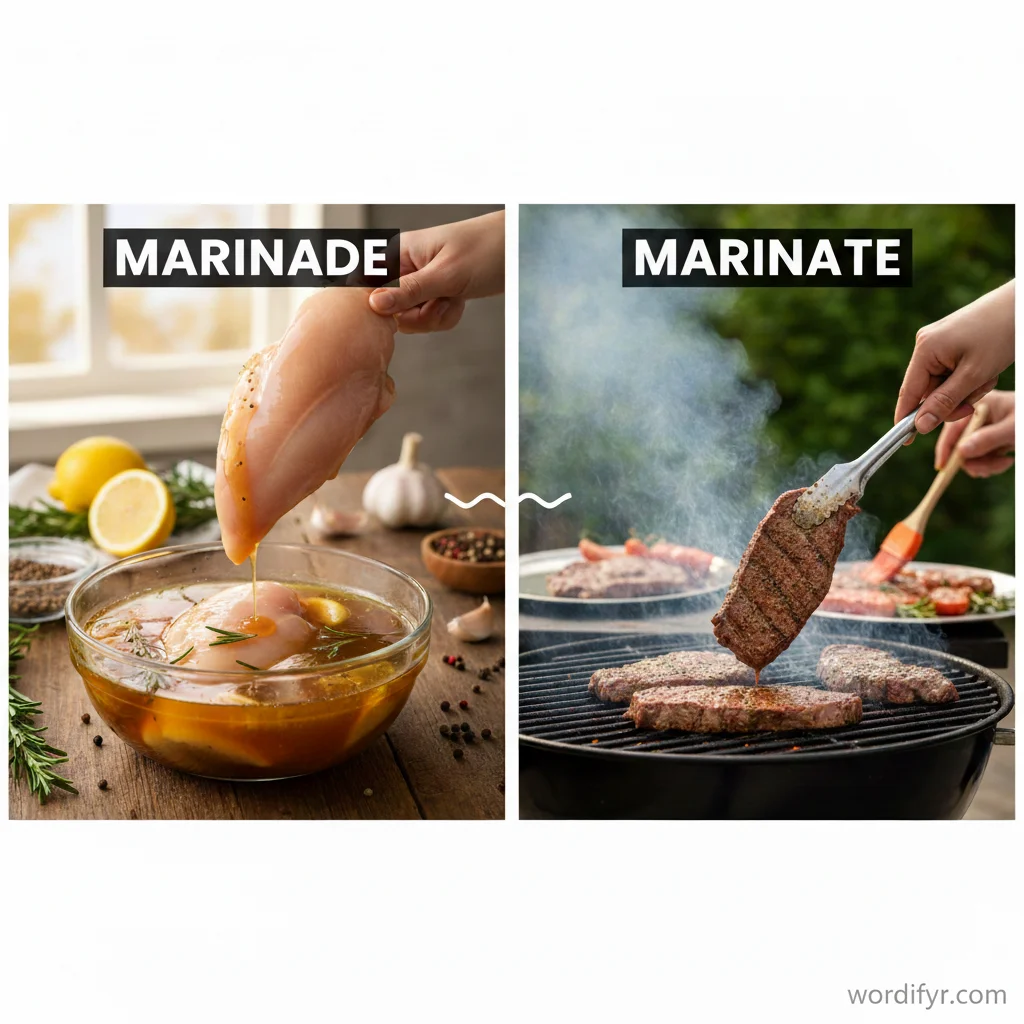
A marinade is a liquid mixture used to soak food—usually meat, fish, vegetables, or tofu—to add flavor and improve texture before cooking.
In simple terms, a marinade is the thing you prepare.
How It’s Used
Marinade is always used as a noun. It refers to the sauce or mixture itself, not the action of soaking food.
A typical marinade may include:
- Oil
- Acid (vinegar, lemon juice, yogurt)
- Herbs and spices
- Salt or sugar
Where It’s Used
- Common in American and British English
- Widely used in cooking, recipes, restaurants, and food blogs
- No regional spelling differences
Examples in Sentences
- This chicken marinade is full of flavor.
- She prepared a garlic and lemon marinade.
- The steak sat in the marinade overnight.
Short History or Usage Note
The word marinade comes from the French word mariner, meaning “to pickle in brine.” Historically, marinades were used not only for flavor but also for food preservation. Today, they are mainly used to enhance taste and tenderness.
What Is Marinate?
Meaning
Marinate means to soak food in a marinade for a period of time so it absorbs flavor and becomes more tender.
In short, marinate is the action.
How It’s Used
Marinate is a verb. It describes what you do with the food, not the mixture itself.
It can appear in different verb forms:
- Marinate
- Marinated
- Marinating
Where It’s Used
- Used globally in all forms of English
- Common in recipes, cooking instructions, and spoken language
- No spelling variations by region
Examples in Sentences
- Marinate the chicken for at least two hours.
- The fish is marinated in soy sauce and ginger.
- Let the vegetables marinate overnight.
Grammar and Usage Notes
You always marinate food, but you never “marinate a sauce.” The action applies to the ingredient being soaked, not the liquid.
Key Differences Between Marinade and Marinate
Quick Bullet Points
- Marinade is a noun; marinate is a verb
- Marinade = the mixture
- Marinate = the action
- You prepare a marinade
- You marinate food
- One is a thing; the other is something you do
Comparison Table
| Feature | Marinade | Marinate |
|---|---|---|
| Part of Speech | Noun | Verb |
| Meaning | Flavoring liquid | Soaking food in marinade |
| Refers To | The mixture | The action |
| Used In Recipes | Ingredient list | Cooking instructions |
| Can Be Tasted | Yes | No |
| Example | “This marinade is spicy.” | “Marinate the meat overnight.” |
Real-Life Conversation Examples
Dialogue 1
A: “Did you make the marinade yourself?”
B: “Yes, and I’ll marinate the chicken soon.”
🎯 Lesson: Marinade is the mixture; marinate is the action.
Dialogue 2
A: “How long should I marinade the meat?”
B: “You mean marinate.”
A: “Oh, right!”
🎯 Lesson: Marinade cannot be used as a verb.
Dialogue 3
A: “This marinade smells amazing.”
B: “Wait until the chicken finishes marinating.”
🎯 Lesson: Marinade describes flavor; marinate describes process.
Dialogue 4
A: “Can I marinate vegetables?”
B: “Yes, but use a lighter marinade.”
🎯 Lesson: You marinate food, not liquids.
When to Use Marinade vs Marinate
Use Marinade When:
- Referring to a sauce or liquid
- Talking about ingredients
- Describing flavor combinations
- Writing recipe ingredient sections
Examples:
- A spicy marinade
- This marinade includes olive oil and herbs
Use Marinate When:
- Giving cooking instructions
- Describing preparation steps
- Talking about soaking time
- Writing recipe methods
Examples:
- Marinate the beef for six hours
- The tofu has marinated well
Simple Memory Tricks
- MarinadE = Eat (noun)
- MarinatE = Execute (verb/action)
Or remember:
- If you can taste it, it’s a marinade
- If you can do it, it’s marinate
Fun Facts or History
- Acidic marinades can break down proteins too much if used too long, making meat mushy.
- Contrary to popular belief, marinades usually flavor the surface of food, not the deep interior.
Conclusion
The difference between marinade vs marinate is simple once you know the rule. A marinade is the flavorful liquid you prepare, while marinate is the action of soaking food in that liquid. One is a noun, the other is a verb, and they are never interchangeable. Understanding this distinction improves your cooking instructions, recipe writing, and everyday communication. Once you separate the mixture from the action, the confusion disappears. Next time someone uses these two words, you’ll know exactly what they mean!