Introduction
If you follow discussions about oil, natural gas, or energy production, you’ve probably heard the terms fracing and fracking. They appear frequently in news reports, environmental debates, and energy industry conversations. Because the words look and sound almost identical, many people assume they represent two different processes.
However, the confusion usually comes from spelling variations rather than actual differences in meaning. Some writers prefer fracing, while others use fracking, which leads to uncertainty about which one is correct.
Although they look similar, they serve completely different purposes in spelling preference rather than meaning. In reality, both words describe the same oil and gas extraction technique, but one spelling is more common in everyday language.
In this guide, we’ll explore the difference between fracing vs fracking, how the terms are used, their origins, and when to use each one correctly.
What Is “Fracing”?
The term fracing refers to the process of hydraulic fracturing, a technique used to extract oil or natural gas from underground rock formations.
Clear Meaning
Fracing is a shortened form of hydraulic fracturing, where high-pressure fluid is injected into underground rock layers to create fractures. These fractures allow trapped oil or natural gas to flow more easily to the surface.
How It’s Used
In technical and industry contexts, fracing is sometimes used as a simplified spelling of fracturing. Engineers, drilling companies, and petroleum specialists may use this spelling in technical documents or industry reports.
Where It’s Used
You may see fracing used in:
- Oil and gas engineering reports
- Industry documentation
- Technical drilling manuals
- Energy production discussions
Although fracing vs fracking both refer to the same method, fracing often appears in professional or technical environments.
Examples in Sentences
- “The company began fracing operations in the shale formation last year.”
- “New technology has improved the efficiency of fracing wells.”
- “Environmental regulations now control fracing activities more strictly.”
Short Historical Note
The process of hydraulic fracturing dates back to the 1940s, when oil companies began experimenting with pressurized fluids to increase production from underground reservoirs. Over time, the technique evolved, and terms like fracing vs fracking emerged as shorthand descriptions of the process.
What Is “Fracking”?
The word fracking also refers to hydraulic fracturing, but it is the most widely used spelling in media, public discussions, and everyday language.
Clear Meaning
Fracking describes the same process: injecting high-pressure water, sand, and chemicals into underground rock formations to release oil or natural gas.
How It’s Used
In most conversations about fracing vs fracking, the word fracking is the term people recognize. It appears frequently in:
- News reports
- Environmental debates
- Political discussions
- Public policy conversations
Spelling and Usage Differences
The spelling fracking includes an extra “k.” This version became popular because it reflects the pronunciation of “fracturing.”
While both words technically refer to the same method, fracking became the dominant spelling in journalism and public discussions.
Examples in Sentences
- “The government introduced new laws regulating fracking operations.”
- “Many communities debate the environmental effects of fracking.”
- “The region experienced rapid economic growth after fracking began.”
Regional or Usage Notes
In most countries, including the United States, Canada, and the United Kingdom, fracking is the more commonly used term in everyday communication.
When discussing fracing vs fracking, the difference usually comes down to technical vs public terminology rather than meaning.
Key Differences Between Fracing and Fracking
Understanding fracing vs fracking becomes easier once you realize that both words describe the same extraction technique.
Quick Summary Points
- Both terms refer to hydraulic fracturing.
- Fracing is often used in technical or industry contexts.
- Fracking is more common in media and everyday language.
- The spelling difference does not change the meaning.
- Both involve extracting oil or gas from underground rock formations.
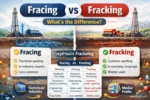
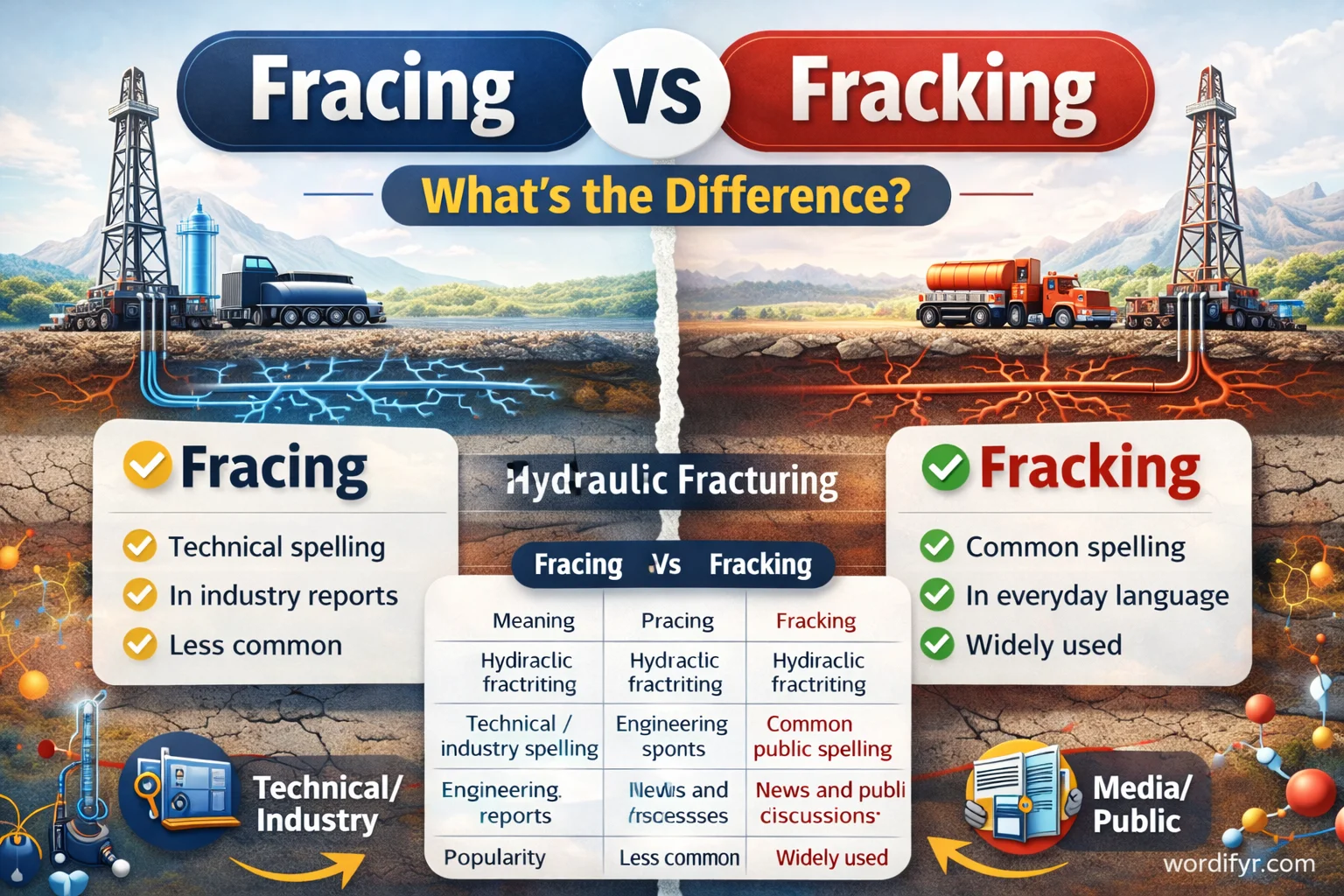
Fracing vs Fracking Comparison Table
| Feature | Fracing | Fracking |
|---|---|---|
| Meaning | Hydraulic fracturing | Hydraulic fracturing |
| Spelling Style | Technical / industry spelling | Common public spelling |
| Usage Context | Engineering reports | News and public discussions |
| Popularity | Less common | Widely used |
| Process | Extracting oil or gas from rock formations | Same process |
Real-Life Conversation Examples
Dialogue 1
Alex: Is the company planning new fracking wells?
Jordan: Yes, they’re expanding production in that shale field.
🎯 Lesson: Fracking is the most common term used in public conversations.
Dialogue 2
Engineer: The fracing operation will begin tomorrow.
Technician: Are the pumps ready for high pressure?
🎯 Lesson: Fracing often appears in technical or industry discussions.
Dialogue 3
Reporter: Communities are concerned about fracking near residential areas.
Analyst: Environmental monitoring will be required.
🎯 Lesson: News media almost always use the term fracking.
Dialogue 4
Student: Is fracing different from fracking?
Professor: No, they describe the same hydraulic fracturing process.
🎯 Lesson: The difference is mainly spelling preference.
When to Use Fracing vs Fracking
Use “Fracing” When:
- Writing technical or engineering documents
- Discussing drilling operations professionally
- Referencing industry terminology
Examples:
- Fracing equipment
- Fracing wells
- Fracing operations
Use “Fracking” When:
- Writing for general audiences
- Publishing news articles
- Discussing environmental policy
Examples:
- Fracking regulations
- Fracking debate
- Fracking industry
Simple Memory Trick
Think of it this way:
Fracking = common spelling people recognize
So if you’re writing for a general audience, fracking is usually the safer choice.
Fun Facts About Fracking
1. Fracking Has Been Used for Decades
Although many people think it’s a modern technique, hydraulic fracturing has been used in the energy industry since 1947.
2. Fracking Helped Boost Global Energy Production
Advancements in fracking technology allowed companies to access previously unreachable oil and natural gas reserves, dramatically increasing global energy supply.
Conclusion
The difference between fracing vs fracking is mostly about spelling and usage rather than meaning. Both terms refer to hydraulic fracturing, a process used to extract oil and natural gas from underground rock formations. However, fracing is more common in technical or industry contexts, while fracking is widely used in news media and everyday discussions.
Understanding this distinction helps you communicate clearly, especially when writing about energy production or environmental policy.
Next time someone uses these two words, you’ll know exactly what they mean!