
Introduction
English has many confusing word pairs, especially when two words sound almost the same but have completely different meanings. One example that often causes confusion is feigning vs feening. Many people see these words online or hear them in conversation and assume they mean the same thing.
The confusion usually happens because both words are pronounced similarly in casual speech. In addition, “feening” often appears in slang, social media, and music lyrics, which makes people wonder whether it’s simply another spelling of feigning.
However, the truth is quite different.
Although they look and sound similar, they serve completely different purposes.
Understanding the distinction between feigning vs feening is important for clear communication, especially when writing professionally or academically. In this guide, we’ll explore the meaning, origin, usage, examples, and key differences between these two words so you can use them confidently in any situation.
What Is Feigning?
Meaning of Feigning
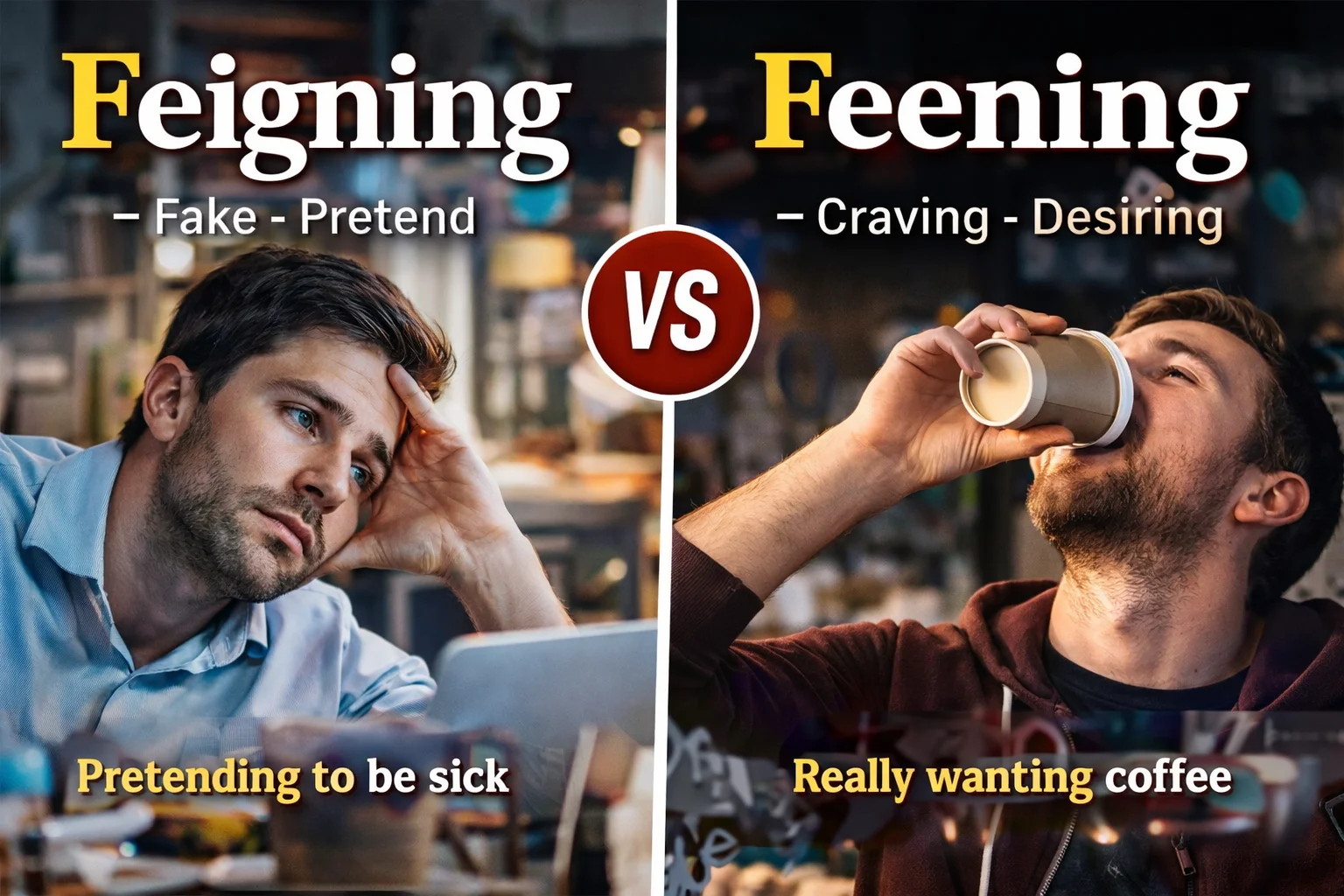
The word feigning comes from the verb “feign,” which means to pretend, fake, or give a false appearance of something.
When someone is feigning, they are deliberately acting as if something is true when it is not.
In discussions of feigning vs feening, feigning is the standard, correct English word recognized in dictionaries and formal writing.
How “Feigning” Is Used
People typically use feigning when someone pretends to feel or experience something.
Common situations include:
- Pretending to be sick
- Acting innocent
- Faking emotions
- Hiding true intentions
Example Sentences
Here are several examples of feigning in everyday English:
- “He was feigning illness to avoid the meeting.”
- “She kept feigning surprise even though she knew the truth.”
- “The child was feigning sleep so he wouldn’t have to go to school.”
In each example, feigning means pretending or faking something.
Historical or Usage Note
The word feign comes from the Latin “fingere,” which means to shape, invent, or pretend. Over time, it became widely used in English literature to describe deception or imitation of feelings.
For example, writers often describe characters feigning ignorance or feigning love.
What Is Feening?
Meaning of Feening
The word feening is informal slang, mainly used in urban slang and internet culture.
In many contexts, feening means:
- Craving something intensely
- Being desperate for something
- Strongly wanting something
Because of its slang nature, feening is not considered standard English in formal writing.
When comparing feigning vs feening, this difference in formality is very important.
Origins of “Feening”
The slang term feening is believed to come from the word “fiend.”
In slang usage, a “fiend” refers to someone who is addicted or extremely eager for something.
Over time, expressions like “fiending for something” evolved into the spelling “feening.”
Example Sentences
Here are some examples of feening used in casual speech:
- “I’m feening for some coffee right now.”
- “He’s feening for the new video game.”
- “They were feening for tickets to the concert.”
In these examples, feening means strongly craving something.
Grammar and Regional Notes
Unlike feigning, which appears in formal English, feening is mostly used in casual conversations, social media, or slang-heavy contexts.
You would rarely see feening used in academic writing or professional communication.
Key Differences Between Feigning vs Feening
Understanding feigning vs feening becomes easier when comparing their meanings and usage.
Main Differences
- Feigning means pretending or faking something
- Feening means craving or strongly wanting something
- Feigning is standard English
- Feening is slang
- Feigning is used in formal writing
- Feening is used mostly in casual speech
Comparison Table
| Feature | Feigning | Feening |
|---|---|---|
| Meaning | Pretending or faking | Craving or strongly wanting |
| Word Type | Standard English verb form | Informal slang |
| Formal Usage | Yes | No |
| Example | “He was feigning sleep.” | “I’m feening for pizza.” |
| Origin | Latin “fingere” | Slang from “fiend” |
| Writing Context | Academic, professional | Social media, casual speech |
Real-Life Conversation Examples
Dialogue 1
A: Why didn’t he come to work today?
B: I think he was feigning illness.
🎯 Lesson: Feigning means pretending or faking.
Dialogue 2
A: I haven’t had coffee all day.
B: Same here—I’m feening for caffeine.
🎯 Lesson: Feening means craving something strongly.
Dialogue 3
A: She looked shocked during the announcement.
B: That was just her feigning surprise.
🎯 Lesson: Feigning describes pretending emotions.
Dialogue 4
A: Everyone is feening for the new movie release.
B: The hype is real!
🎯 Lesson: Feening is casual slang for strong desire.
When to Use Feigning vs Feening
Knowing when to use feigning vs feening depends mainly on context and formality.
Use Feigning When:
- Writing formally
- Describing someone pretending
- Talking about fake emotions or actions
Examples:
- “He was feigning confidence during the interview.”
- “She was feigning interest in the conversation.”
Use Feening When:
- Speaking casually
- Writing informal messages
- Expressing cravings or excitement
Examples:
- “I’m feening for burgers tonight.”
- “Fans are feening for the new album.”
Easy Memory Trick
Here’s a simple trick to remember feigning vs feening:
Feigning → Fake
Feening → Fierce craving
This small connection helps you quickly recall the difference.
Fun Facts About Feigning vs Feening
1️⃣ Feigning Appears Often in Literature
Writers frequently use feigning to describe characters hiding their true feelings.
Example:
- “He was feigning innocence.”
2️⃣ Feening Became Popular Through Music
The slang feening became more widespread through hip-hop culture and internet slang, where it is often used to describe strong desire for something.
Conclusion
The difference between feigning vs feening lies mainly in meaning and formality. Feigning is a standard English word that means pretending or faking something, and it is widely used in formal writing, literature, and professional communication. Feening, on the other hand, is informal slang that describes a strong craving or desire for something.
Because of their similar pronunciation, these words are often confused, but their meanings are completely different. Understanding this distinction will help you communicate more clearly and avoid common mistakes.
Next time someone uses feigning vs feening, you’ll know exactly what they mean!