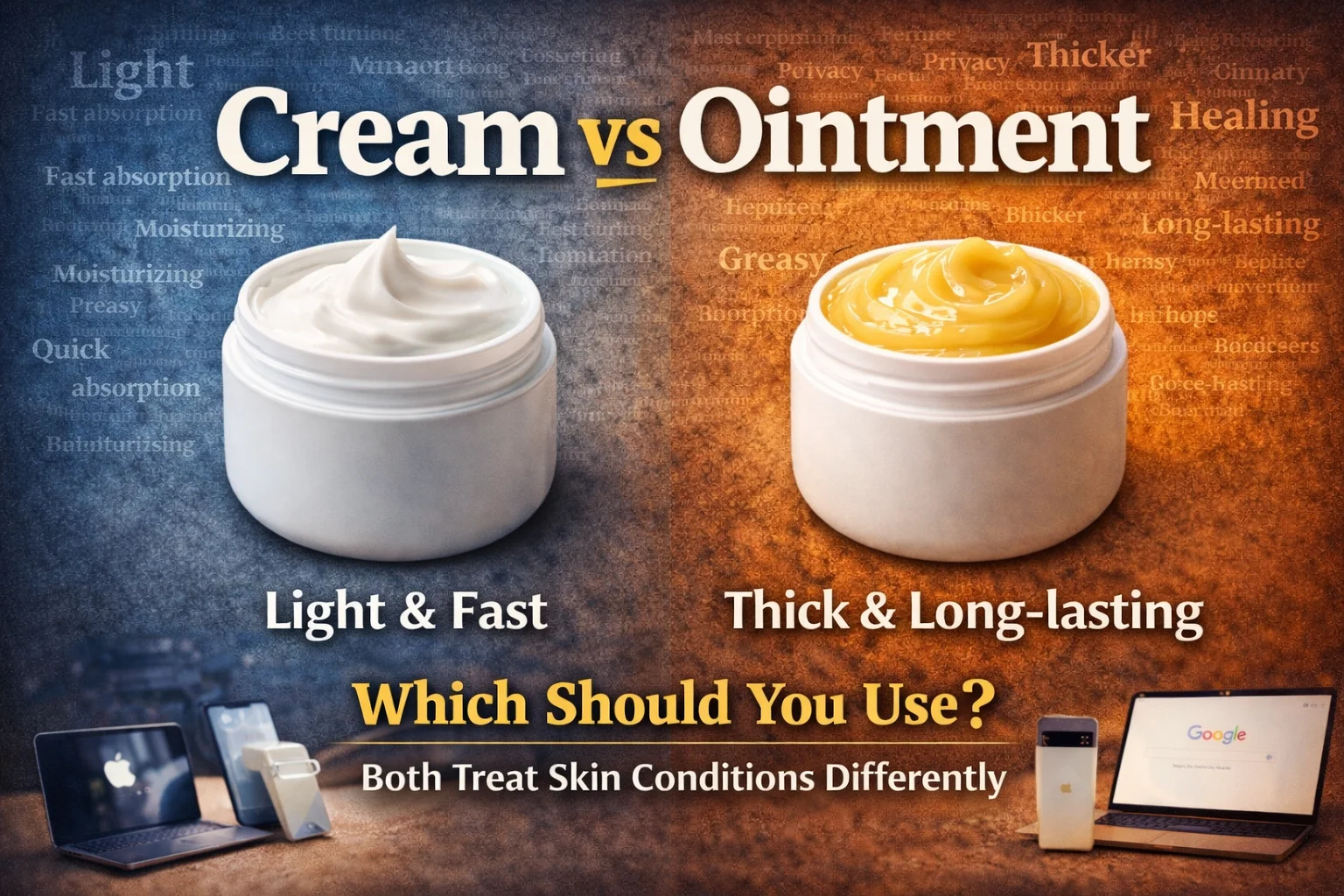
When choosing a topical skincare or medical product, you’ll often see two common options: cream and ointment. While they may look similar, they work very differently on the skin. Understanding the difference between cream vs ointment helps you choose the right product for faster healing, better absorption, and fewer side effects.
Let’s break it down in simple terms.
What Is a Cream?
A cream is a semi-solid topical product made from a balanced mixture of water and oil. Because of its higher water content, it feels light and absorbs quickly into the skin.
Key Characteristics of Creams
- Lightweight and non-greasy
- Absorbs quickly
- Easy to spread
- Often feels cooling on application
Best Uses for Creams
- Mild skin conditions (rashes, redness, itching)
- Moisturizing normal to slightly dry skin
- Hairy or exposed areas (face, arms, hands)
- Daytime use under clothing or makeup
What Is an Ointment?
An ointment is thicker and oil-based, usually containing little to no water. It forms a protective barrier on the skin, locking in moisture and medication for longer periods.
Key Characteristics of Ointments
- Thick and greasy texture
- Slow absorption
- Long-lasting effect
- Strong moisture retention
Best Uses for Ointments
- Very dry, cracked, or damaged skin
- Severe eczema or psoriasis
- Wounds, burns, and infections
- Nighttime treatment or covered areas
Cream vs Ointment: Side-by-Side Comparison
| Feature | Cream | Ointment |
|---|---|---|
| Water Content | High | Very low or none |
| Texture | Light, smooth | Thick, greasy |
| Absorption | Fast | Slow |
| Moisture Retention | Moderate | High |
| Best for | Mild conditions | Severe dryness or wounds |
| Comfort for Daily Use | High | Lower |
Which One Is Better?
There’s no universal winner—it depends on your skin condition:
- Choose a cream if you want quick absorption, comfort, and daily usability.
- Choose an ointment if you need intense moisture, protection, or prolonged medication contact.
Doctors often prescribe ointments for serious skin issues and creams for routine or mild problems.
Common Mistakes to Avoid
- Using ointment on oily or acne-prone skin (can clog pores)
- Applying cream on severely cracked skin (may not be strong enough)
- Assuming both work the same—they don’t
Final Verdict
Creams are ideal for comfort and everyday use, while ointments are best for healing, protection, and severe skin conditions. Always match the product to your skin’s needs—and follow your doctor’s advice for medical treatments.