
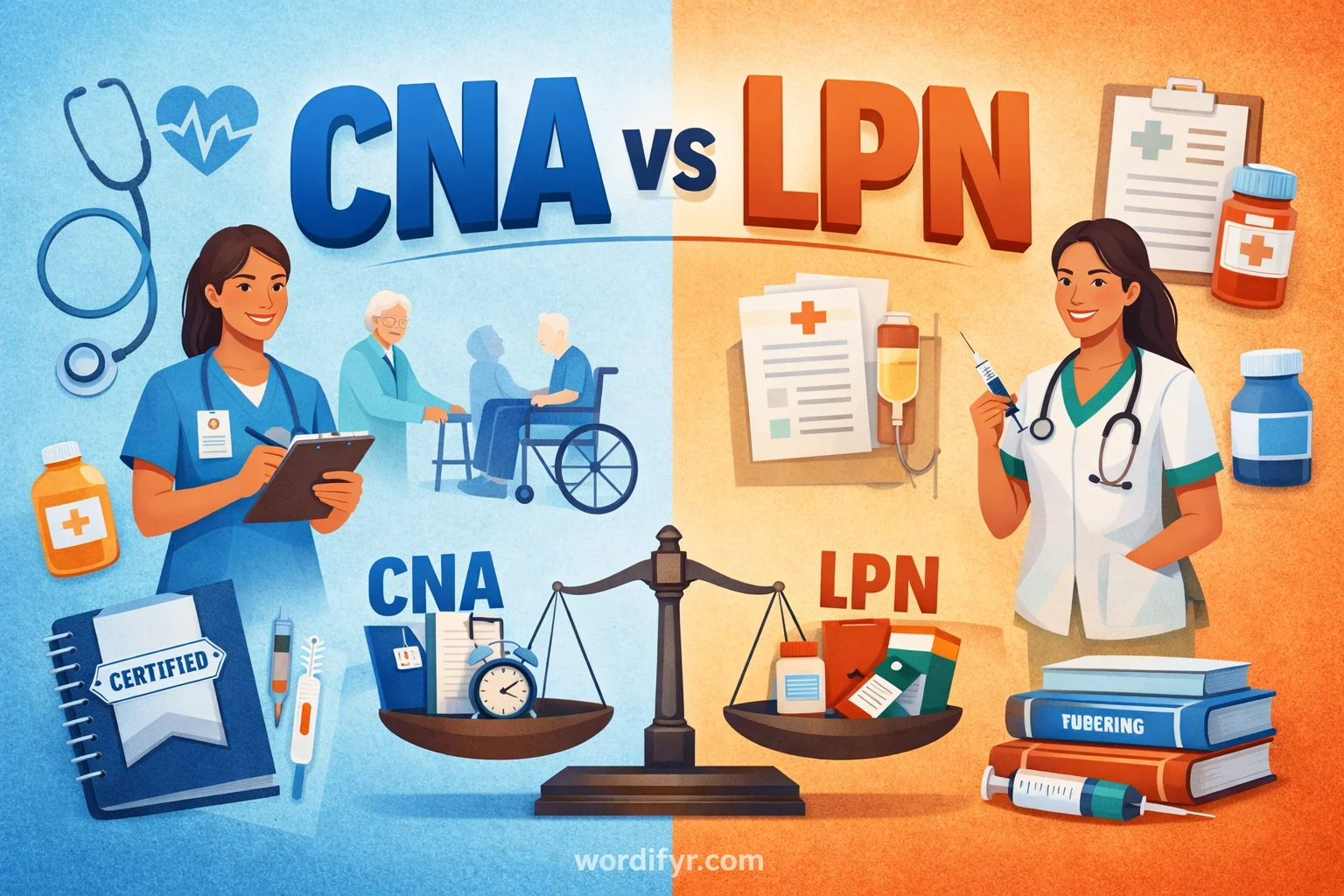
Introduction
If you’re exploring a career in healthcare, chances are you’ve come across the terms CNA and LPN—and felt a little confused. Many people assume these roles are interchangeable because both work closely with patients, wear scrubs, and operate under the nursing umbrella. That confusion is completely understandable. The acronyms sound similar, they often work side by side, and both are essential to patient care.
However, the reality is quite different. Although they look/sound similar, they serve completely different purposes. From education and certification to job responsibilities, salary, and career growth, CNA vs LPN is not a small distinction—it’s a major one. Whether you’re a student, career switcher, or someone planning long-term growth in healthcare, understanding this difference can save you time, money, and frustration. Let’s break it all down clearly and practically.
Section 1: What Is a CNA?
A CNA, or Certified Nursing Assistant, is an entry-level healthcare professional who provides basic, hands-on patient care under the supervision of licensed nurses.
Clear Meaning
A CNA assists patients with daily living activities and helps maintain their comfort, hygiene, and safety. They do not diagnose conditions or administer complex medical treatments.
How It’s Used
In the CNA vs LPN discussion, CNA is considered the starting point in nursing-related careers. CNAs focus on physical care rather than clinical decision-making.
Where It’s Used
CNAs are commonly employed in:
- Nursing homes
- Long-term care facilities
- Hospitals
- Rehabilitation centers
- Home healthcare (mainly in the U.S.)
Certification rules vary slightly by country and state, but the role itself is internationally recognized.
Typical Responsibilities
- Bathing, dressing, and feeding patients
- Taking vital signs (temperature, pulse, blood pressure)
- Assisting with mobility and transfers
- Changing bed linens
- Observing and reporting patient changes
Examples in Sentences
- “She works as a CNA in a long-term care facility.”
- “The CNA helped the patient walk after surgery.”
- “Many students start with CNA training before nursing school.”
Short Historical Note
The CNA role gained prominence in the mid-20th century as hospitals expanded and required trained support staff to assist registered nurses. It was designed as a fast-entry healthcare role, which remains true today.
Section 2: What Is an LPN?
An LPN, or Licensed Practical Nurse, is a licensed healthcare professional who performs clinical nursing duties under the supervision of a Registered Nurse (RN) or physician.
Clear Meaning
In the CNA vs LPN comparison, an LPN has more education, authority, and responsibility. LPNs deliver medical care—not just personal care.
How It’s Used
LPNs actively participate in clinical treatment, medication administration, and patient monitoring. They bridge the gap between CNAs and RNs.
Where It’s Used
LPNs work in:
- Hospitals
- Clinics
- Nursing homes
- Doctor’s offices
- Home healthcare
In some countries, the role is called Practical Nurse (PN), but the scope remains similar.
Typical Responsibilities
- Administering medications
- Monitoring IVs (depending on state laws)
- Performing wound care
- Recording patient medical data
- Assisting doctors and RNs
Examples in Sentences
- “The LPN administered medication to the patient.”
- “She became an LPN after one year of nursing school.”
- “The LPN reported changes in vital signs to the RN.”
Regional and Licensing Notes
LPNs must:
- Complete a state-approved nursing program
- Pass the NCLEX-PN licensing exam
Licensing requirements differ by country and U.S. state.
Key Differences Between CNA and LPN
Quick Bullet Comparison
- Education: CNA (weeks) vs LPN (12–18 months)
- License: CNA is certified; LPN is licensed
- Scope of Practice: LPNs perform clinical tasks
- Salary: LPNs earn significantly more
- Career Growth: LPNs have more advancement options
CNA vs LPN Comparison Table (Mandatory)
| Feature | CNA | LPN |
|---|---|---|
| Full Form | Certified Nursing Assistant | Licensed Practical Nurse |
| Education Length | 4–12 weeks | 12–18 months |
| License Required | No (certification only) | Yes |
| Clinical Duties | Very limited | Moderate |
| Medication Administration | ❌ No | ✅ Yes |
| Average Salary (US) | Lower | Higher |
| Career Growth | Limited | Strong |
| Supervision Level | High | Moderate |
Real-Life Conversation Examples
Dialogue 1
A: “I’m thinking of healthcare—should I become a CNA or LPN?”
B: “If you want quick entry, CNA. If you want clinical work, LPN.”
🎯 Lesson: CNA vs LPN depends on time and responsibility level.
Dialogue 2
A: “Why does the LPN give injections but the CNA doesn’t?”
B: “Because LPNs are licensed nurses.”
🎯 Lesson: Licensing defines authority.
Dialogue 3
A: “I started as a CNA—now I’m in LPN school.”
B: “That’s a smart career path.”
🎯 Lesson: CNA can be a stepping stone to LPN.
Dialogue 4
A: “Do CNAs and LPNs earn the same?”
B: “No, LPNs earn more due to higher responsibility.”
🎯 Lesson: Salary reflects scope of practice.
Dialogue 5
A: “Patients trust the LPN with medications.”
B: “That’s because of clinical training.”
🎯 Lesson: Education builds patient trust.
When to Use CNA vs LPN
Choose CNA When:
- You want fast entry into healthcare
- You prefer hands-on personal care
- You’re exploring nursing as a future option
- You need low training costs
Choose LPN When:
- You want clinical responsibility
- You plan long-term growth in nursing
- You want a higher salary
- You’re comfortable with medical tasks
Simple Memory Trick
- CNA = Care Now (basic care)
- LPN = Licensed Practical Nursing
US vs International Usage
- The CNA vs LPN structure is primarily U.S.-based
- Other countries may combine or rename roles, but responsibilities remain similar
Fun Facts or History
- CNA programs were originally designed during nursing shortages to support hospitals quickly.
- Many RNs and even doctors started their healthcare journey as CNAs or LPNs.
Conclusion
Understanding the difference between CNA vs LPN is essential before choosing a healthcare career path. While both roles are vital to patient care, they are not interchangeable. CNAs focus on daily patient support and comfort, while LPNs handle clinical tasks and medical responsibilities. The right choice depends on your career goals, education timeline, and desired level of responsibility. If you want a fast start, CNA is ideal. If you want growth, authority, and higher pay, LPN is the smarter investment. Next time someone uses these two terms, you’ll know exactly what they mean!