Introduction
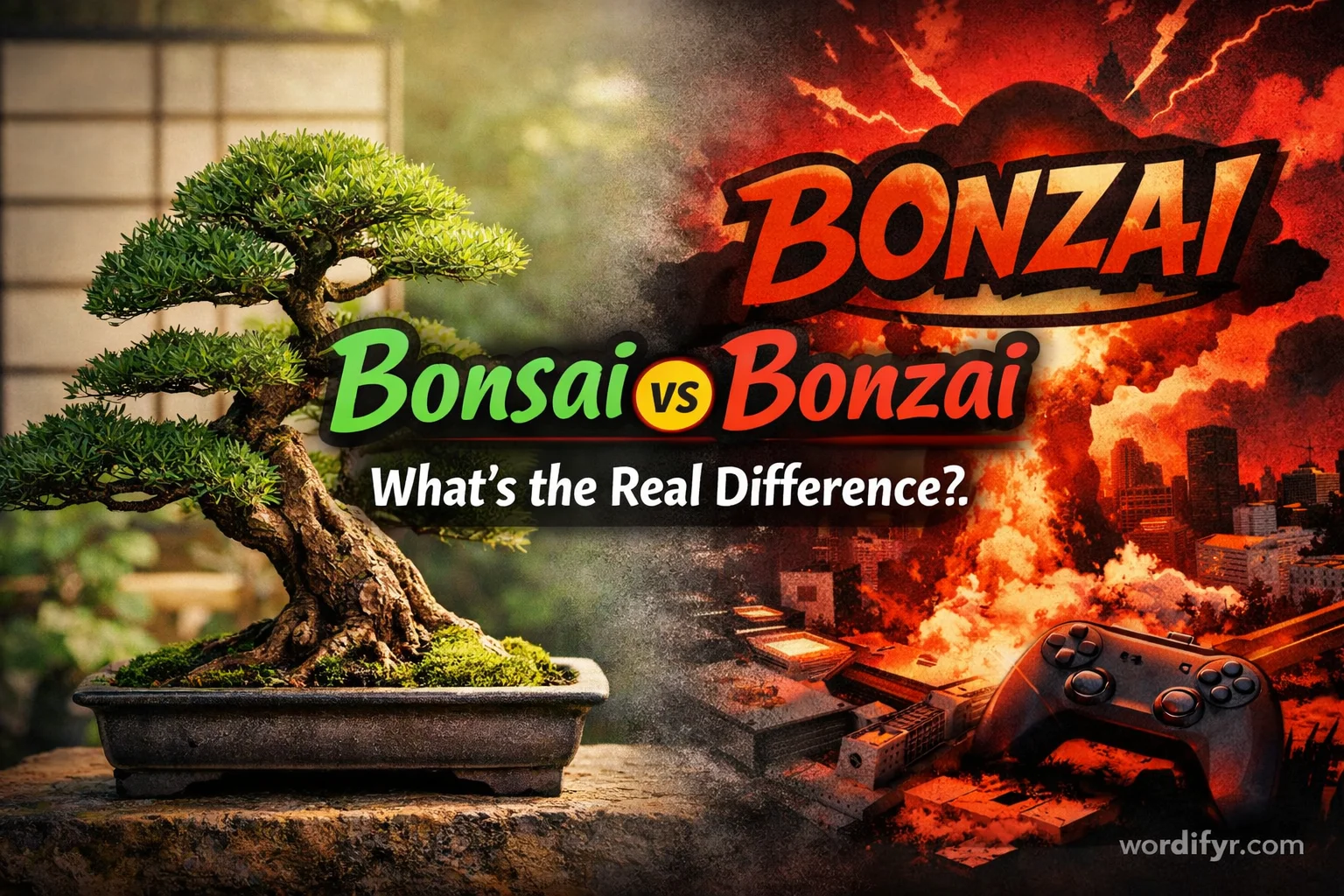
If you’ve ever searched for bonsai vs bonzai, you’re not alone. These two words look almost identical, sound nearly the same, and often appear interchangeably online. Social media posts, memes, and even product listings frequently mix them up, which only adds to the confusion. Many people assume they are just different spellings of the same thing—but that assumption can lead to misunderstandings, especially in writing, branding, or professional communication.
The confusion mainly comes from pronunciation and internet slang. When spoken quickly, both words sound similar, making it hard to tell which one is correct. However, the meanings behind them could not be more different.
Although they look/sound similar, they serve completely different purposes.
In this guide, we’ll break down bonsai vs bonzai in simple, clear language. You’ll learn what each term actually means, how and where it’s used, real-life examples, and practical tips to avoid mistakes. By the end, you’ll never confuse these two words again.
What Is “Bonsai”?
Bonsai is a real, traditional word with deep cultural and historical significance. It refers to the Japanese art of growing miniature trees in containers while maintaining their natural shape and beauty.
Meaning of Bonsai
The word bonsai comes from Japanese:
- Bon (盆) = tray or shallow container
- Sai (栽) = to plant or cultivate
Together, bonsai literally means “planted in a container.”
It does not mean genetically small trees. Instead, bonsai trees are carefully pruned, wired, and maintained to stay miniature while remaining healthy and natural.
How Bonsai Is Used
Bonsai is used when discussing:
- Gardening and horticulture
- Japanese culture and art
- Home décor and meditation spaces
- Professional tree cultivation
It is always used as a noun.
Where Bonsai Is Used
- Originated in Japan
- Practiced worldwide today
- Accepted spelling in all forms of English (US, UK, Australian, etc.)
There are no regional spelling differences for bonsai—it is universal.
Examples of Bonsai in Sentences
- “She keeps a bonsai tree on her office desk.”
- “Learning bonsai requires patience and discipline.”
- “The museum displayed centuries-old bonsai specimens.”
- “He spends his weekends trimming his bonsai collection.”
Short History of Bonsai
Although strongly associated with Japan, bonsai was influenced by Chinese penjing, an earlier art form. Japan refined and popularized bonsai over hundreds of years, turning it into a disciplined art that symbolizes balance, harmony, and mindfulness.
When discussing bonsai vs bonzai, remember: bonsai is authentic, traditional, and culturally rooted.
What Is “Bonzai”?
Bonzai is not the same thing as bonsai—and in many contexts, it isn’t even a legitimate word.
Meaning of Bonzai
The term bonzai is commonly:
- A misspelling of bonsai
- A slang or stylized variation used online
- A brand name, username, or fictional term
Unlike bonsai, bonzai has no traditional meaning related to trees or gardening.
How Bonzai Is Used
Bonzai may appear in:
- Internet memes or casual posts
- Brand names (intentionally altered spelling)
- Video games, anime references, or pop culture
- Incorrect product listings or blog posts
It is not accepted in formal writing when referring to miniature trees.
Regional or Usage Notes
- Not recognized in standard dictionaries as a gardening term
- Often used by mistake due to pronunciation
- Sometimes confused with “banzai”, a Japanese exclamation meaning “ten thousand years”
This adds another layer of confusion to the bonsai vs bonzai debate.
Examples of Bonzai in Sentences
- “The seller advertised it as a bonzai tree.” (incorrect usage)
- “Bonzai Gaming is launching a new app.” (brand usage)
- “I thought it was spelled bonzai, but I was wrong.”
Important Clarification
If you are talking about miniature trees, bonzai is incorrect. The correct term is always bonsai.
Key Differences Between Bonsai and Bonzai
Understanding bonsai vs bonzai becomes easy when you look at their purpose, origin, and correctness.
Bullet-Point Differences
- Bonsai is a real Japanese art form
- Bonzai is usually a misspelling or slang
- Bonsai has cultural and historical roots
- Bonzai has no formal definition
- Bonsai is correct in professional writing
- Bonzai is incorrect when referring to trees
Comparison Table: Bonsai vs Bonzai
| Feature | Bonsai | Bonzai |
|---|---|---|
| Correct Spelling | ✅ Yes | ❌ No (for trees) |
| Meaning | Miniature tree art | Misspelling / slang |
| Origin | Japanese culture | Internet or branding |
| Dictionary Accepted | Yes | No (gardening context) |
| Professional Use | Appropriate | Not appropriate |
| Related to Trees | Yes | No |
| SEO & Writing | Safe and correct | Risky and incorrect |
This table alone resolves most bonsai vs bonzai confusion.
Real-Life Conversation Examples
Dialogue 1
A: “I just bought a bonzai tree online.”
B: “You mean a bonsai tree, right?”
A: “Oh wow, I didn’t know there was a difference.”
🎯 Lesson: Bonsai is the correct spelling for miniature trees.
Dialogue 2
A: “Why does my article editor keep changing bonzai to bonsai?”
B: “Because bonzai is incorrect in formal writing.”
🎯 Lesson: Professional content always uses bonsai.
Dialogue 3
A: “Is bonzai a Japanese word too?”
B: “No, only bonsai is. Bonzai is just a common mistake.”
🎯 Lesson: Bonsai has cultural roots; bonzai does not.
Dialogue 4
A: “This brand spells it Bonzai on purpose.”
B: “That’s fine for branding, but not for gardening.”
🎯 Lesson: Bonzai may exist as a brand name only.
Dialogue 5
A: “Why do people confuse bonsai vs bonzai so much?”
B: “Because they sound the same when spoken.”
🎯 Lesson: Pronunciation causes confusion, spelling defines meaning.
When to Use Bonsai vs Bonzai
Use “Bonsai” When:
- Talking about miniature trees
- Writing blogs, articles, or guides
- Creating educational or SEO content
- Selling or describing plants
- Writing in US, UK, or global English
Examples:
- “This bonsai tree is over 20 years old.”
- “Bonsai care requires patience.”
- “She studies Japanese bonsai techniques.”
Use “Bonzai” Only When:
- Referring to a brand name
- Quoting incorrect usage for explanation
- Writing fictional or stylized content
Simple Memory Trick
Think:
- Bonsai = real trees + real tradition
- Bonzai = typo or branding
If it involves plants, nature, or Japan → bonsai.
Fun Facts and History
1. Bonsai Trees Can Live for Centuries
Some bonsai trees are over 800 years old, passed down through generations as living art.
2. Bonsai Is About Control, Not Size
Bonsai trees are genetically normal. Their small size comes from careful pruning and training, not dwarf species.
These facts reinforce why accuracy matters in the bonsai vs bonzai discussion.
Conclusion
The difference between bonsai vs bonzai is simpler than it first appears. Bonsai is the correct, culturally rich term that refers to the Japanese art of growing miniature trees. Bonzai, on the other hand, is usually a misspelling, slang term, or intentional branding choice with no connection to horticulture. While they may sound alike, their meanings are worlds apart. Using the correct word improves clarity, professionalism, and credibility—especially in writing and SEO content. Now that you know the distinction, you can confidently use the right term every time.
Next time someone uses these two words, you’ll know exactly what they mean!