Introduction
Classroom learning has changed dramatically in recent years, and educational games are now a core part of modern teaching. Among the most popular platforms, Blooket vs Gimkit is a comparison teachers, students, and parents frequently search for. Both tools turn quizzes into interactive games, boost student engagement, and make learning feel less like work and more like play. However, despite serving similar goals, they operate very differently.
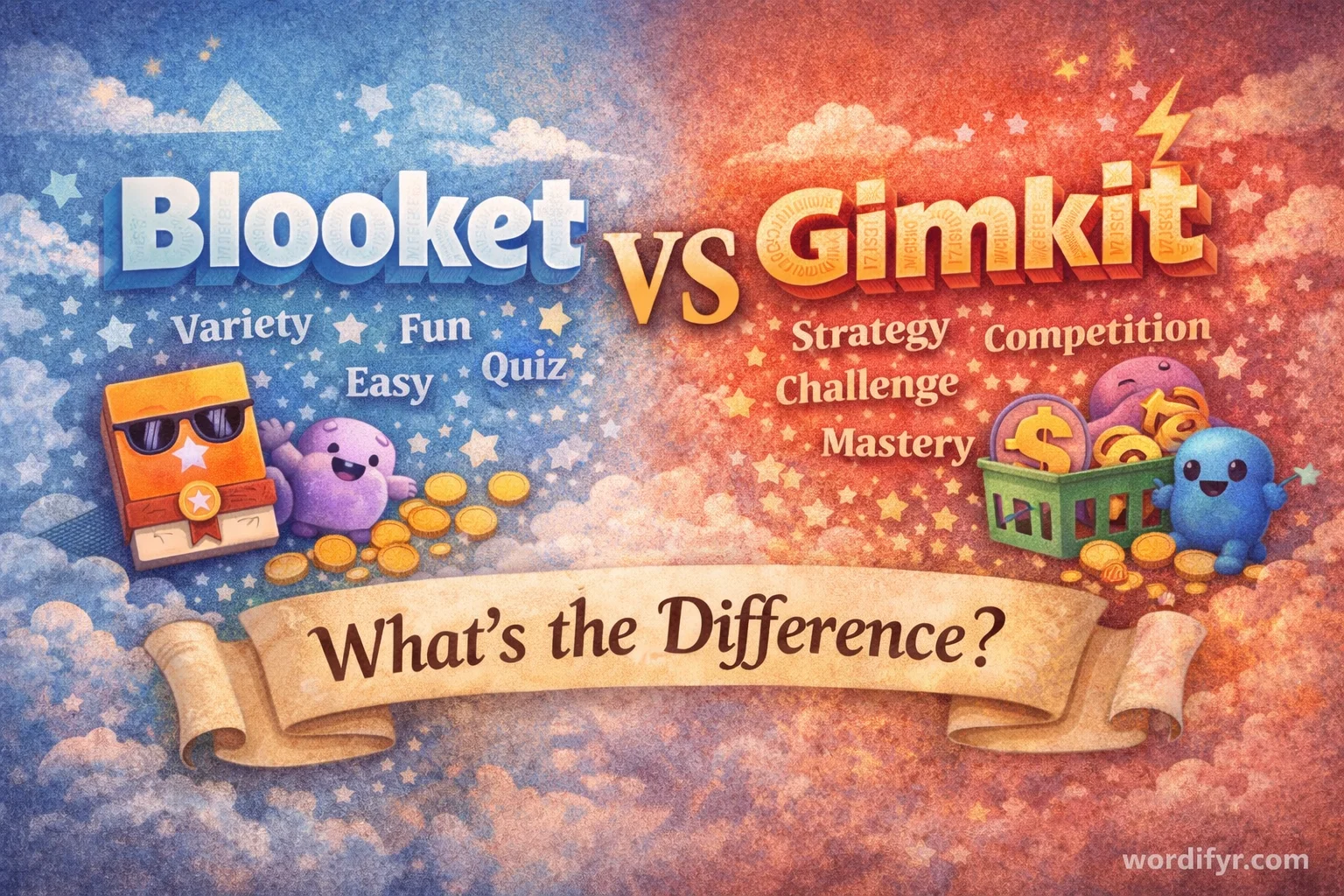
Many people confuse Blooket and Gimkit because both are quiz-based, browser-friendly, and widely used in schools. At first glance, they may even look interchangeable. Although they look/sound similar, they serve completely different purposes. One focuses on variety and fun game modes, while the other emphasizes strategy, competition, and deep engagement.
This guide breaks down Blooket vs Gimkit clearly, helping you choose the right platform for your classroom needs.
What Is Blooket?
Meaning
Blooket is an online educational game platform that allows teachers to create or use pre-made question sets and present them through multiple interactive game modes.
How It’s Used
Blooket turns traditional quizzes into fast-paced, visually engaging games. Students answer questions individually while the game mechanics handle scoring, power-ups, and progression.
Teachers typically use Blooket for:
- Review sessions
- Homework assignments
- Exam preparation
- Low-pressure formative assessments
Where It’s Used
Blooket is widely used in:
- United States
- United Kingdom
- Canada
- International English-medium schools
It follows general educational technology standards and works in both American and British classrooms.
Examples in Practice
- A teacher uses Blooket’s “Gold Quest” mode for vocabulary revision.
- Students join with a game code and answer questions independently.
- Scores update automatically, keeping learners motivated.
Short History / Usage Note
Launched in 2020, Blooket gained popularity quickly during remote learning. Its wide variety of game modes became its strongest selling point, appealing especially to younger students.
What Is Gimkit?
Meaning
Gimkit is a game-based learning platform that combines quizzes with strategy, economy systems, and competition.
How It’s Used
In Gimkit, students earn virtual currency by answering questions correctly. They then use that currency to:
- Buy power-ups
- Upgrade abilities
- Sabotage opponents
- Develop long-term strategies
This makes Gimkit feel more like a strategy game than a quiz.
Where It’s Used
Gimkit is popular in:
- Middle schools
- High schools
- Tech-forward classrooms
- Competitive learning environments
It is primarily designed for American classrooms but is used globally.
Examples in Practice
- Students earn money for correct answers.
- They invest earnings into multipliers or defenses.
- Strategic thinking becomes as important as subject knowledge.
Regional / Grammar Notes
Gimkit terminology and gameplay lean heavily on game mechanics, making it especially effective for older students who enjoy competitive challenges.
Key Differences Between Blooket vs Gimkit
Bullet Point Summary
- Blooket focuses on variety and simplicity
- Gimkit emphasizes strategy and competition
- Blooket offers many game modes
- Gimkit offers deeper gameplay mechanics
- Blooket suits younger learners
- Gimkit suits older or competitive students
Comparison Table
| Feature | Blooket | Gimkit |
|---|---|---|
| Core Focus | Fun & variety | Strategy & competition |
| Game Style | Multiple short games | Long strategic sessions |
| Difficulty Level | Beginner-friendly | Moderate to advanced |
| Best For | Elementary & middle school | Middle & high school |
| Learning Depth | Surface-level review | Deep engagement |
| Customization | Moderate | High |
| Student Strategy | Minimal | Essential |
Real-Life Conversation Examples
Dialogue 1
Teacher A: My students love Blooket.
Teacher B: Mine prefer Gimkit—it feels more competitive.
🎯 Lesson: Student preferences vary by engagement style.
Dialogue 2
Student: Blooket is fun, but Gimkit makes me think more.
Teacher: That’s because Gimkit uses strategy.
🎯 Lesson: Different tools encourage different thinking skills.
Dialogue 3
Teacher: Should I use Blooket or Gimkit for revision?
Coach: Blooket for quick review, Gimkit for mastery.
🎯 Lesson: Match the tool to the learning goal.
Dialogue 4
Student: Why does Gimkit feel harder?
Teacher: Because it combines knowledge with decision-making.
🎯 Lesson: Complexity increases engagement for older learners.
When to Use Blooket vs Gimkit
Use Blooket When:
- Teaching younger students
- Running short review sessions
- Wanting simple, fast-paced fun
- Managing large classes
- Introducing new topics
Examples:
- Vocabulary drills
- Math fact practice
- Ice-breaker activities
Use Gimkit When:
- Teaching middle or high school
- Encouraging strategic thinking
- Running longer sessions
- Promoting competition
- Reinforcing mastery
Examples:
- Exam preparation
- Concept reinforcement
- Team-based challenges
Simple Memory Trick
- Blooket = playful variety
- Gimkit = strategic depth
If the goal is fun, choose Blooket.
If the goal is thinking + competition, choose Gimkit.
US vs UK Classroom Use
Both platforms are used internationally. However:
- Blooket aligns better with mixed-ability and younger UK classrooms
- Gimkit fits competitive, exam-oriented US environments
Fun Facts or History
1. Student-Built Origins
Gimkit was famously created by a high school student, which explains its strong focus on gameplay and strategy.
2. Game Mode Advantage
Blooket’s rotating game modes keep content fresh, preventing boredom during repeated practice.
Conclusion
The debate between Blooket vs Gimkit isn’t about which platform is better overall—it’s about which is better for your specific classroom goals. Blooket excels at fun, accessibility, and variety, making it ideal for younger students and quick reviews. Gimkit shines in strategic depth, competition, and long-term engagement, making it perfect for older learners. Both platforms are powerful educational tools when used correctly. Next time someone asks about these two platforms, you’ll know exactly what they mean!