Introduction
If you’ve ever stood in a paint aisle, shopped for clothes online, or designed a website, you’ve probably paused at this question: beige vs tan — are they the same color? At first glance, they look incredibly similar. Many people even use the words interchangeably, assuming there’s no real difference between them. That’s where confusion begins.
Although they look/sound similar, they serve completely different purposes.
In reality, beige and tan are distinct shades, each with its own undertone, mood, and best-use scenario. Designers, fashion experts, and decorators treat them very differently—and so should you. In this guide, we’ll clearly explain the difference between beige vs tan, show how each color is used in real life, provide easy examples, and help you choose the right one every time.
Section 1: What Is Beige?
Clear Meaning
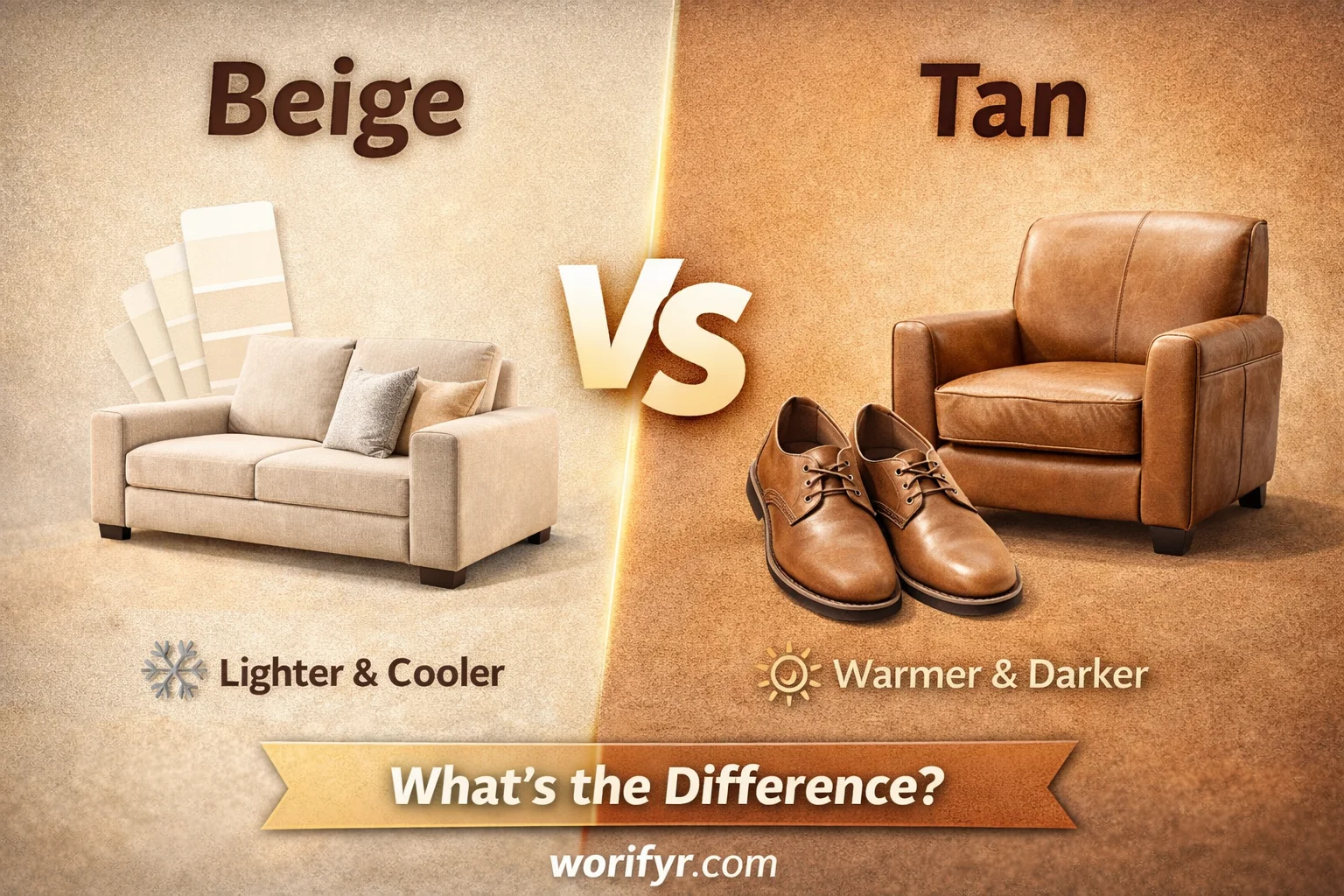
Beige is a light, neutral color that typically sits between off-white and light brown, often with cool, gray, or creamy undertones. It’s known for being soft, subtle, and understated.
In the beige vs tan comparison, beige is generally lighter and cooler in appearance.
How It’s Used
Beige is widely used to create calm, clean, and elegant looks. You’ll often see it in:
- Interior design (walls, sofas, carpets)
- Fashion basics (coats, trousers, knitwear)
- Web and UI design backgrounds
- Corporate branding
- Minimalist aesthetics
It works well as a base color that doesn’t overpower other elements.
Where It’s Used
Beige is universally recognized and used across:
- US English
- UK English
- European design standards
- Global fashion and interior industries
There are no regional spelling or meaning differences.
Examples in Sentences
- “The living room walls are painted beige for a calm feel.”
- “She wore a beige trench coat to work.”
- “Beige backgrounds make text easier to read.”
- “The hotel chose beige tones for a minimalist look.”
Short History or Usage Note
The word beige comes from French, originally referring to natural, undyed wool. Over time, it became associated with neutral, soft, and understated tones, which explains why beige is often linked to simplicity and elegance.
Section 2: What Is Tan?
Clear Meaning
Tan is a warm, light brown color with yellow or golden undertones. It is darker and warmer than beige and often associated with sun, leather, and earth tones.
In the beige vs tan comparison, tan stands out as richer, warmer, and more noticeable.
How It’s Used
Tan is commonly used when warmth and depth are desired, such as in:
- Leather products (shoes, bags, sofas)
- Casual and outdoor fashion
- Rustic or traditional interiors
- Automotive interiors
- Skin-tone descriptions (informal use)
Tan adds a natural, grounded feel without being too dark.
Where It’s Used
Tan is used globally in:
- American English
- British English
- Fashion and textile industries
- Interior and product design
The meaning stays consistent across regions.
Examples in Sentences
- “He bought tan leather boots.”
- “The sofa is a warm tan color.”
- “She prefers tan jackets over darker browns.”
- “The walls were painted tan to add warmth.”
Regional or Usage Notes
Unlike beige, tan is often described as more casual and earthy. It’s frequently chosen when designers want warmth without going fully brown.
Key Differences Between Beige vs Tan
Quick Bullet Points
- Beige is lighter and cooler
- Tan is warmer and slightly darker
- Beige feels minimal and modern
- Tan feels natural and cozy
- Beige works well as a background
- Tan works well as a statement neutral
Comparison Table (Mandatory)
| Feature | Beige | Tan |
|---|---|---|
| Color Tone | Light neutral | Warm light brown |
| Undertones | Cream, gray, soft yellow | Yellow, golden, warm |
| Brightness | Lighter | Slightly darker |
| Mood | Calm, clean, minimalist | Warm, cozy, earthy |
| Common Uses | Walls, backgrounds, basics | Leather, furniture, fashion |
| Design Style | Modern, minimalist | Rustic, casual, classic |
Real-Life Conversation Examples
Dialogue 1
A: “Is this sofa beige or tan?”
B: “It’s tan—it has warmer undertones.”
🎯 Lesson: Warmth usually points to tan.
Dialogue 2
A: “I want a neutral wall color.”
B: “Go with beige—it’s lighter.”
🎯 Lesson: Beige works better for subtle backgrounds.
Dialogue 3
A: “Why does this beige jacket look darker?”
B: “It’s probably tan, not beige.”
🎯 Lesson: Tan appears richer than beige.
Dialogue 4
A: “Which looks more modern—beige vs tan?”
B: “Beige, especially for minimal designs.”
🎯 Lesson: Beige feels more contemporary.
When to Use Beige vs Tan
Use Beige When:
- You want a light, neutral base
- Designing minimalist interiors
- Creating clean website backgrounds
- Styling professional or formal outfits
- Avoiding strong color contrast
Memory Trick:
👉 Beige = Barely there
Use Tan When:
- You want warmth without dark colors
- Choosing leather or wood tones
- Designing cozy or rustic spaces
- Styling casual or outdoor fashion
- Adding depth to neutral palettes
Memory Trick:
👉 Tan = Touched by sun
Writing & Design Tip (US vs UK)
There is no spelling or meaning difference between US and UK usage for beige vs tan. The choice depends purely on color tone, not geography.
Fun Facts or History
1️⃣ Beige Is Often Called “Boring” — But Designers Love It
Beige gained a reputation for being dull, yet modern designers rely on it for balance, readability, and elegance.
2️⃣ Tan Comes from Tanning Leather
The word tan is historically linked to the leather tanning process, which explains why tan is strongly associated with leather goods today.
Conclusion
The difference between beige vs tan may seem subtle, but it matters more than most people realize. Beige is lighter, cooler, and perfect for clean, minimalist designs, while tan is warmer, richer, and ideal for cozy or natural looks. Understanding these differences helps you make better choices in fashion, interior design, branding, and everyday purchases. Once you train your eye to notice undertones, you’ll never confuse them again. Next time someone uses these two words, you’ll know exactly what they mean!